 Save to Pinterest
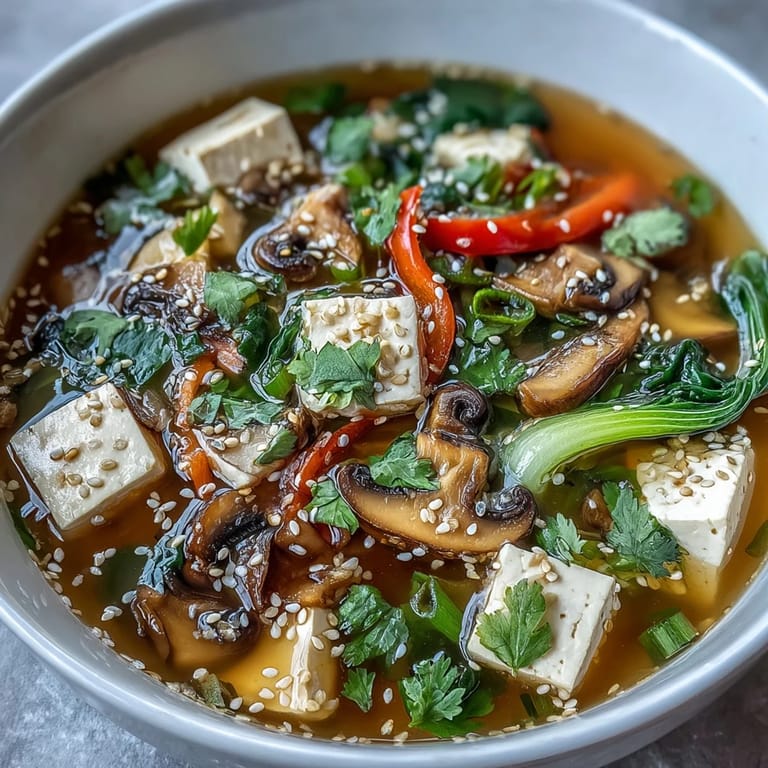
 My neighbor stopped by on a rainy Tuesday with leftover silken tofu from her market run, and we ended up making this soup together just to use it up. What started as a casual fix-it moment turned into something I craved all winter—the kind of dish that tastes light but somehow fills you up completely. There's something about how the delicate tofu floats in that ginger-scented broth that makes you slow down and actually taste each spoonful. I've made it dozens of times since, sometimes with whatever vegetables I had on hand, and it never disappointed. It became the soup I reach for when I need comfort without heaviness.
I made this for my friend who was recovering from being sick, and she called me three days later asking if I could teach her how to make it herself. There's something about a bowl of this soup that feels like someone's taking care of you—the warmth, the soft vegetables, the delicate protein that doesn't demand much from your body. She's been making it for her own family ever since, which made me realize this recipe travels well beyond my kitchen.
Ingredients
- Low-sodium vegetable broth (1.5 liters): This is your foundation, so use something you'd actually drink on its own—skip the super salty varieties that mask rather than build flavor.
- Soy sauce (2 tablespoons) or tamari: The savory backbone that brings everything into focus; tamari keeps it gluten-free and honestly tastes a touch smoother.
- Fresh ginger (1 tablespoon, thinly sliced): Slicing rather than mincing lets the ginger flavor bloom without becoming sharp or overwhelming in your mouth.
- Garlic (2 cloves, minced): Minced fine enough that it melts into the oil before the broth hits the pot, so you get pure aromatic warmth.
- Sesame oil (1 teaspoon): A small amount goes a long way here—it's your secret ingredient that makes people ask what's different about this soup.
- Carrot (1 medium, julienned): Cut into thin matchsticks so they cook quickly and stay bright; they also look beautiful floating in the bowl.
- Shiitake mushrooms (100 g, sliced): These earthy fungi add umami depth that makes the whole broth taste more intentional and complex.
- Baby bok choy (100 g, chopped): The tender greens wilt in seconds and add a subtle sweetness that balances the savory elements.
- Red bell pepper (1 small, thinly sliced): A touch of sweetness and color, and the thin slices soften without losing their shape.
- Spring onions (2, sliced): Add these near the end so they stay bright and slightly crisp rather than melting into nothing.
- Silken tofu (300 g, cubed): The silken variety breaks apart if you're rough with it, but that delicate texture is exactly what makes this soup special.
- Fresh cilantro (optional, for garnish): I always add it because those herbal notes feel essential, but if cilantro tastes like soap to you, skip it guilt-free.
- Toasted sesame seeds (1 teaspoon, optional garnish): A nutty finishing touch that adds texture and deepens the toasty flavors already in the broth.
- Lime wedges (optional, for serving): A squeeze of lime right before eating brightens everything up and makes the flavors pop.
Tired of Takeout? 🥡
Get 10 meals you can make faster than delivery arrives. Seriously.
One email. No spam. Unsubscribe anytime.
Instructions
- Wake up your aromatics:
- Heat that sesame oil over medium heat until it shimmers and releases its toasty smell. Add your minced garlic and sliced ginger right away and let them sizzle for about a minute until your whole kitchen smells incredible. You want them fragrant but not brown, so keep the heat honest.
- Build your broth base:
- Pour in the vegetable broth and soy sauce together, give it a stir, and let it come to a gentle simmer—you're not looking for a rolling boil, just small bubbles breaking the surface. This is the moment to taste and adjust if you think it needs more soy sauce.
- Start with the hardy vegetables:
- Add your julienned carrot, sliced shiitake mushrooms, and bell pepper strips. Let them simmer for five minutes so the carrots soften just enough to be pleasant but not mushy. The mushrooms will darken and release their earthiness into the broth.
- Add the greens:
- Toss in your chopped bok choy and sliced spring onions and give everything a gentle stir. Cook for two to three minutes until the bok choy is tender but still has a bit of life to it—you can taste the difference between slightly cooked and completely wilted.
- Introduce the tofu gently:
- This is where patience matters; add your cubed silken tofu slowly and stir the broth around the pieces rather than directly stirring them. Let everything simmer for two minutes, long enough to warm through but short enough that the tofu stays intact.
- Taste and finish:
- Grab a spoon, taste the broth, and decide if it needs another pinch of soy sauce or anything else. If you're adding chili oil or fresh chili for heat, this is the moment to do it.
- Serve with intention:
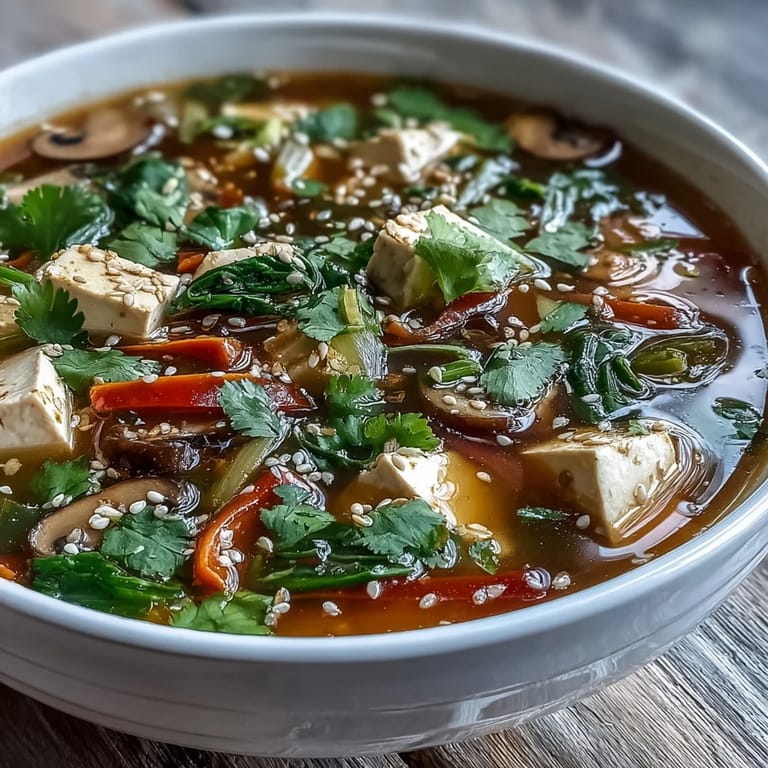
- Ladle the soup into bowls so everyone gets vegetables and tofu in every spoonful. Add cilantro, sesame seeds, and a squeeze of lime to each bowl so people can adjust the brightness to their taste.
 Save to Pinterest
 There was a moment during a small dinner party when someone asked for a second bowl and mentioned they'd forgotten how good real food could taste, how simple could actually mean better. That comment stuck with me because it captured exactly why I keep making this soup—it's not trying to be anything other than what it is, which somehow makes it everything you need.
Variations That Work
This soup welcomes improvisation without losing its soul. I've added enoki mushrooms for a delicate thread-like texture, swapped in napa cabbage for a more substantial green, and thrown in snow peas when I wanted something with a gentle crunch. The beauty is that the broth stays consistent while the vegetables can shift with the season or whatever you have on hand. One winter I added a tiny splash of rice vinegar at the end, which made everything taste sharper and more alive, and that's become my go-to adjustment when the broth tastes a touch too mild.
Heat Options If You Want It
The soup as written is gentle and soothing, but some people want a edge to their food. A few drops of chili oil stirred in right before serving adds heat without taking over, or you can slice fresh Thai chili right into your bowl if you want to control the intensity yourself. I've also whisked in a tiny bit of sriracha, which adds both heat and a touch of sweetness that rounds out the spice.
Why Silken Tofu Matters Here
Silken tofu is completely different from firm tofu, and using the right one changes the entire character of the soup. Firm tofu would give you chunks and chew, but silken dissolves almost into the broth if you're gentle, creating this luxurious creaminess without any actual cream. Some people prefer the texture of firm tofu and that's fine—just know you're making a different soup. The first time I accidentally grabbed firm tofu instead, the whole thing felt more like a vegetable stew, which isn't bad but wasn't what I wanted.
- Silken tofu needs gentle handling and late addition so it doesn't break apart into sad fragments.
- If you're using firm tofu instead, you can add it earlier and stir more freely without worry.
- Always buy tofu from the refrigerated section and use it within a few days of opening for the best texture and taste.
 Save to Pinterest
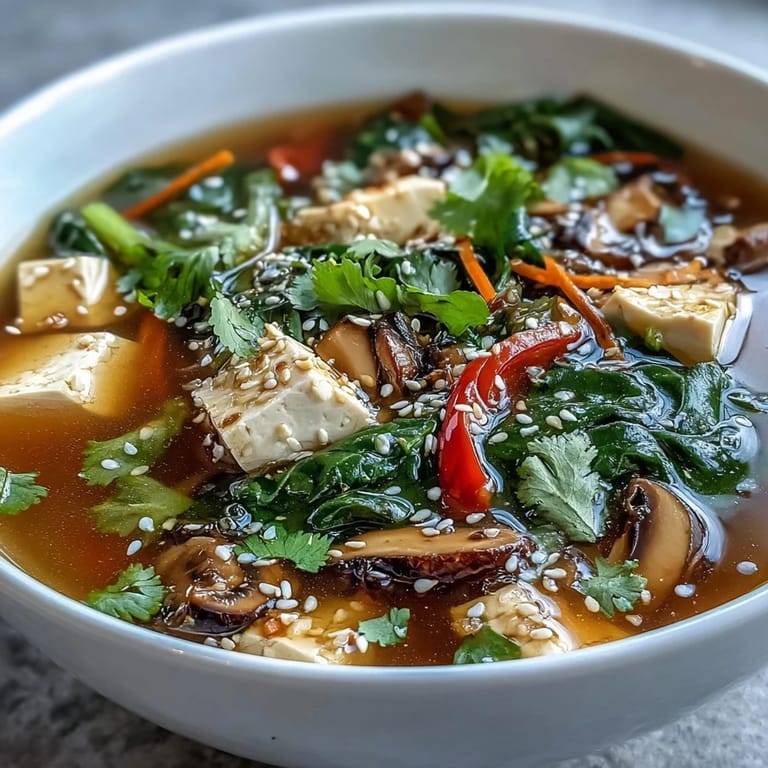
 This soup taught me that sometimes the most nourishing meals are the simplest ones, the kind that let you taste each ingredient without distraction. Make it when you need comfort, make it when you want to feed someone you care about, or just make it because thirty minutes later you deserve something warm and honest.
Recipe FAQs
- → What type of tofu works best for this soup?
Silken tofu is ideal because its delicate texture complements the light broth and absorbs flavors beautifully. However, firm tofu can be substituted if you prefer more substantial cubes that hold their shape well during simmering.
- → Can I make this soup ahead of time?
Yes, the broth and vegetables can be prepared up to 2 days in advance. Add the tofu just before reheating and serving to prevent it from breaking apart. Store components separately in airtight containers in the refrigerator.
- → How do I add more protein to this dish?
Consider adding edamame, cooked lentils, or diced chicken for omnivores. You could also increase the tofu quantity to 400-500g or stir in beaten eggs at the end to create ribbons similar to egg drop soup.
- → What vegetables can I substitute?
Snow peas, napa cabbage, spinach, enoki mushrooms, or bamboo shoots work wonderfully. The base formula remains flexible—use whatever fresh Asian vegetables you have available for a varied bowl each time.
- → Is this soup gluten-free?
Yes, simply use tamari instead of regular soy sauce. All other ingredients including the vegetable broth, tofu, and fresh vegetables are naturally gluten-free. Always double-check labels on packaged ingredients to be certain.
- → How can I make this soup spicy?
Stir in chili oil, sriracha, or sliced fresh chilies during the last minute of cooking. You can also add red pepper flakes with the garlic and ginger, or serve with chili paste on the side for customizable heat.