 Save to Pinterest
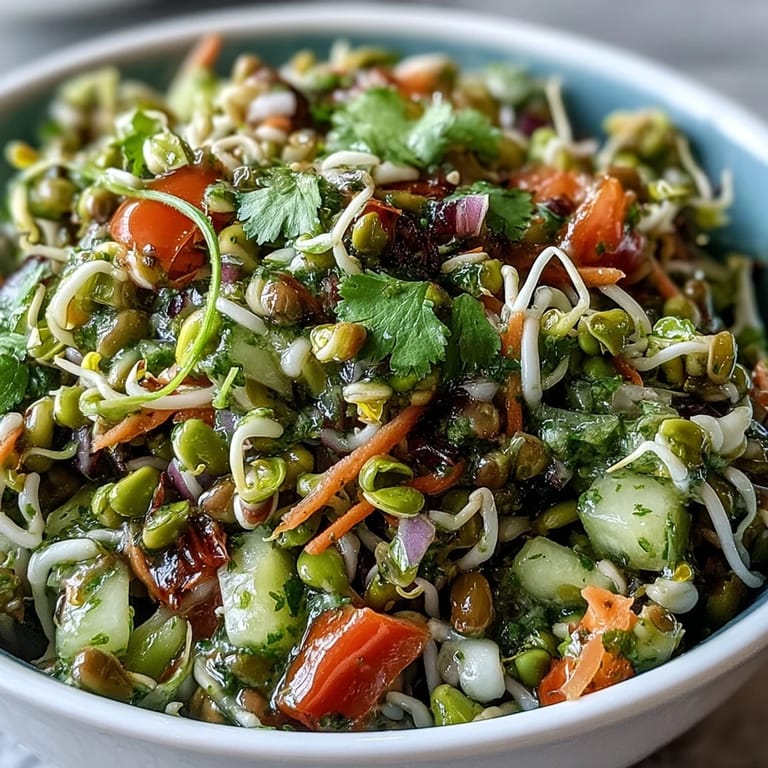
 There's something almost magical about watching sprouts transform a simple bowl into a celebration of growth and vitality. I discovered this salad on a particularly gray morning when my fridge felt empty but my sprout jar was overflowing, and I realized that sometimes the most nourishing meals come from working with what's quietly thriving in front of you. The combination of tender, living sprouts with crisp vegetables creates this texture that keeps surprising your mouth with each bite. It became my go-to when I needed to feel genuinely good about what I was eating, not just satisfied by it.
I made this for my friend who'd been talking about wanting to eat lighter, and watching her come back for seconds while telling me how much energy she had afterward was genuinely touching. She started growing her own sprouts after that, and now we text photos of our jars like we're comparing houseplants. That salad became the reason we started having lunch together regularly, which meant more to me than any recipe ever could.
Ingredients
- Mung bean sprouts: These are delicate and mild, with a tender bite that anchors the whole salad without overpowering anything else.
- Alfalfa sprouts: Bring a slightly peppery note and that airy texture that makes the salad feel light rather than heavy.
- Radish sprouts: These little guys pack unexpected heat, so don't skip them even if you think you don't like radishes, because sprouted they're something entirely different.
- Cucumber: Choose one that's firm and snappy, not the watery kind that's been sitting around, because that crunch matters here.
- Tomato: Pick one that actually smells like tomato when you bring it to your nose, a small trick that saves disappointing bites.
- Red bell pepper: The sweetness balances the peppery sprouts and adds brightness without needing much else to shine.
- Carrot: Grating it rather than chopping means it distributes through the salad and creates little pockets of sweetness you discover as you eat.
- Red onion: A modest amount gives you that sharp, clean edge that wakes everything up without dominating.
- Fresh cilantro: If you're one of those people who thinks cilantro tastes like soap, just skip it and add parsley instead, no judgment.
- Extra-virgin olive oil: This is the one place where quality actually matters because it's doing real work, so don't substitute the cheap stuff.
- Lemon juice: Freshly squeezed changes everything about the brightness and prevents that flat taste you get from bottled.
- Honey or maple syrup: Just a touch to soften the acidity and make the dressing feel balanced rather than aggressive.
- Sea salt and black pepper: These ground the whole thing and make every other flavor more vivid.
Tired of Takeout? 🥡
Get 10 meals you can make faster than delivery arrives. Seriously.
One email. No spam. Unsubscribe anytime.
Instructions
- Rinse and drain your sprouts like you're giving them a final fresh start:
- Hold them under cool running water and let your fingers gently tumble them so you reach all the layers, then let them sit in a fine strainer for a minute to release all their moisture. This small step prevents a watery salad and keeps everything crisp.
- Combine all your sprouts in a large bowl:
- Just pile them together without any real fussing, letting them nestle loosely so they don't get packed down. You want them to stay airy and alive.
- Add your vegetables with intention:
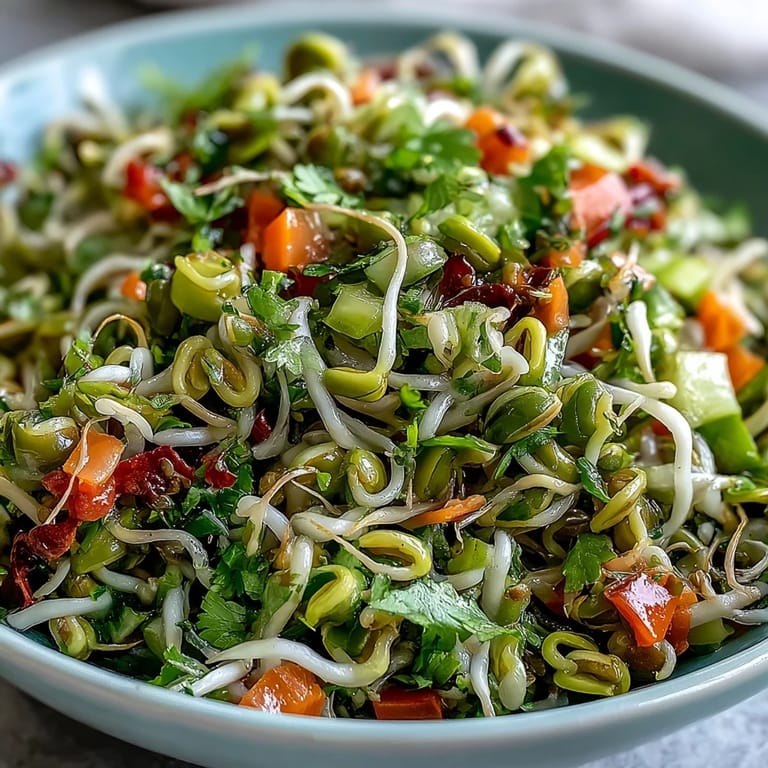
- Scatter the cucumber, tomato, pepper, carrot, onion, and cilantro over the sprouts, distributing them so every forkful will have a little bit of everything. Don't overthink it, but do try to spread things around.
- Whisk your dressing until it comes together:
- In a small bowl, combine the oil, lemon juice, sweetener if using, salt, and pepper, whisking until it emulsifies and looks slightly thicker and paler than plain oil. This emulsification is what makes the dressing coat rather than just sit on top.
- Dress and serve right away:
- Pour the dressing over everything and toss gently but thoroughly, making sure each sprout gets touched by the dressing without getting bruised in the process. Serve immediately so the sprouts stay crisp and that fresh, living quality stays intact.
 Save to Pinterest
 There was an evening when I served this to my family and my dad, who usually eats like someone racing against time, actually paused between bites and asked what made it taste so alive. I realized that's exactly what sprouts do, that they carry something like potential in every tender shoot, and that sometimes food is about more than just fuel or flavor. It's about eating something that reminds you that things are still growing.
Why Sprouts Matter
Growing sprouts in jars on my kitchen counter became oddly meditative, watching them unfold over a few days from seeds into living vegetables. There's something grounding about the ritual of rinsing them, draining them, and knowing exactly how fresh they are because you grew them yourself. Even if you buy them from the store, knowing that they're full of enzymes and nutrients that haven't been sitting in a field or a fridge for weeks means you're giving your body something genuinely nourishing.
Making It Your Own
This salad is forgiving in the best way, thriving on substitution and adaptation rather than rigid rules. I've made it with lime instead of lemon when that's what I had, thrown in avocado when I was craving richness, and scattered toasted seeds across the top when I needed more substance. The core stays the same, but the flexibility means you can eat this salad seasonally or based on what your body is asking for, which is the real mark of a recipe worth keeping.
Storage and Timing Tips
One thing I learned by making mistakes is that this salad demands to be eaten fresh, so don't attempt to make it hours ahead thinking you're being efficient. The vegetables can be prepped earlier, and the dressing can be whisked in advance, but the actual assembly needs to happen just before eating. If you're bringing this somewhere, pack the components separately and dress it just before serving, which takes two minutes and preserves everything that makes it special.
- Prep vegetables earlier in the day but keep sprouts in the fridge in their container until the last moment.
- Make dressing ahead and store it in a jar, shaking it quickly right before using.
- Pack sprouts in a separate container if traveling, and combine everything just before eating.
 Save to Pinterest
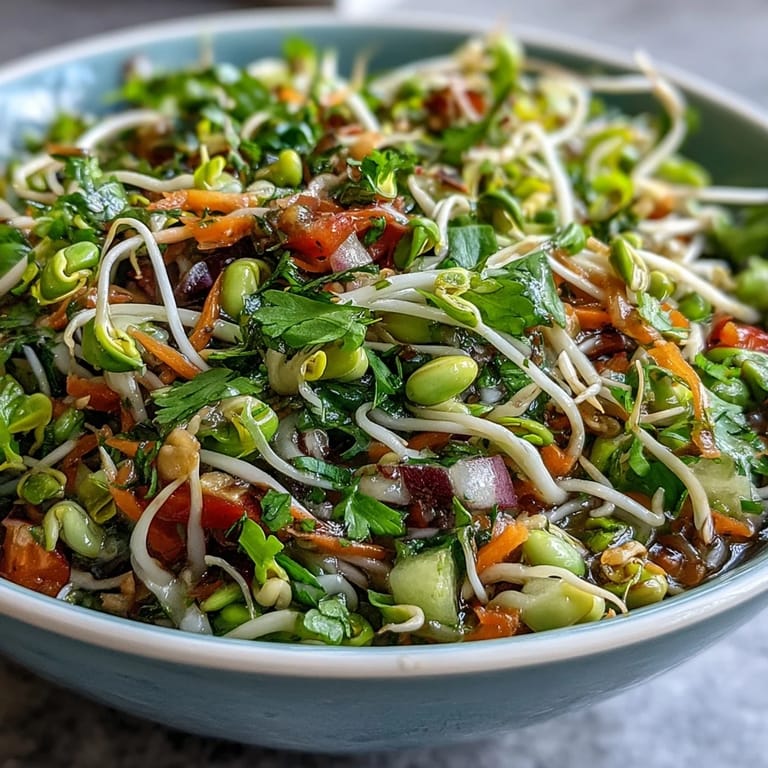
 This salad taught me that eating well doesn't require complexity or expense, just attention and freshness. It's become my quiet way of taking care of myself on ordinary days.
Recipe FAQs
- → How long do sprouted vegetables stay fresh?
Fresh sprouts typically last 3-5 days when refrigerated in a sealed container with a paper towel to absorb moisture. For best quality and food safety, consume them as soon as possible after purchasing.
- → Can I use different types of sprouts?
Absolutely. Broccoli, clover, or lentil sprouts work beautifully in this dish. Feel free to mix and match based on availability and personal preference for varied flavors and textures.
- → How do I properly wash sprouts?
Rinse sprouts thoroughly under cold running water for at least 30 seconds. Gently agitate them with your hands to remove any debris, then drain well in a colander or spin dry before using.
- → Can I make this ahead of time?
Prepare the vegetables and dressing separately up to 4 hours in advance. Store them in sealed containers in the refrigerator and toss together just before serving to maintain crisp texture.
- → What makes the dressing emulsify properly?
Whisking continuously while slowly drizzling in the olive oil helps create a stable emulsion. The combination of acidic lemon juice and oil with a touch of sweetener helps bind the dressing together.
- → Is this suitable for meal prep?
Yes, though it's best stored in components. Keep chopped vegetables and sprouts separate from the dressing, then combine when ready to eat. This prevents wilting and maintains optimal freshness.