 Save to Pinterest
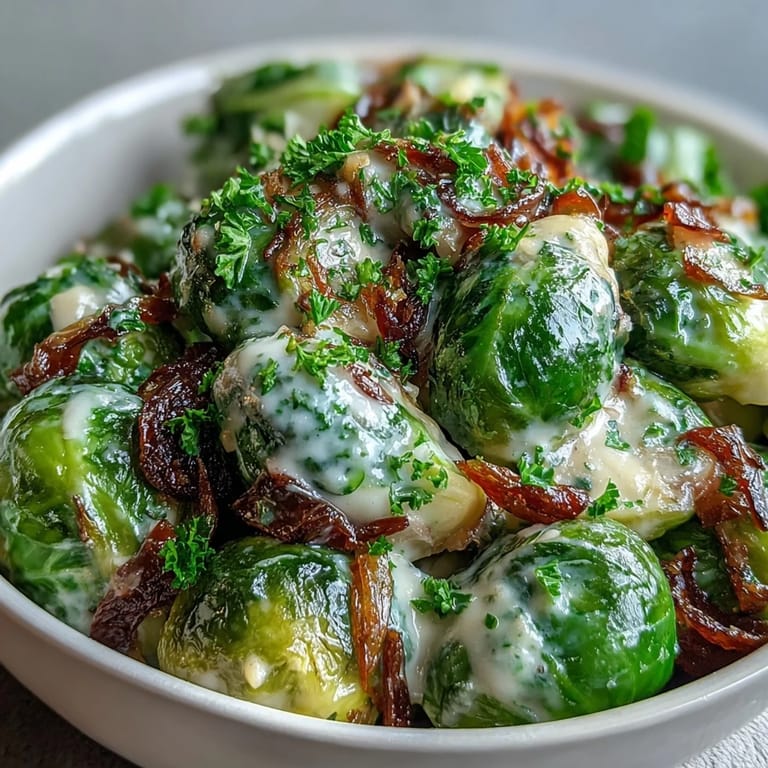
 The first time I tossed Brussels sprouts in a creamy mustard sauce, I was skeptical they'd hold their texture. But watching them glisten in that tangy, silky coating changed everything. The sharp edge of Dijon softened by cream cheese turned what I thought was a boring vegetable into something I actually craved. Now, every time I smell butter hitting the pan with onions, I know something good is about to happen. It's become my go-to when I want vegetables to feel like comfort food.
I made this for a small dinner last autumn when my friend insisted she hated Brussels sprouts. She finished her portion and asked if there was more in the pan. That quiet moment of her going back for seconds without saying a word told me everything. Sometimes the best compliment is just an empty plate and no excuses. I've served it dozens of times since, and it always wins people over.
Ingredients
- 600 g Brussels sprouts, cleaned and trimmed: Trim the stems flush and pull off any loose outer leaves so they cook evenly and don't turn mushy.
- 1 small onion, finely chopped: A small dice ensures the onion melts into the sauce instead of announcing itself in every bite.
- 1 garlic clove, minced: One clove is enough to add warmth without overpowering the delicate cream sauce.
- Fresh chopped parsley, for garnish: The brightness of parsley cuts through the richness and makes the dish look alive on the plate.
- 150 g cream cheese: This is what makes the sauce cling and gives it that smooth, luxurious body without needing flour.
- 2 tablespoons Dijon mustard: The sharpness here is essential, it balances the cream and brings the whole dish into focus.
- 150 ml vegetable broth: Use a good quality broth because it thins the sauce and adds a savory backbone.
- 2 tablespoons butter: Real butter makes the onions sweeten properly and adds a subtle richness you can taste.
- 1 teaspoon lemon juice: Just a splash lifts everything and keeps the sauce from feeling flat.
- Salt and pepper to taste: Season carefully after adding the broth and mustard, both bring their own salt.
Tired of Takeout? 🥡
Get 10 meals you can make faster than delivery arrives. Seriously.
One email. No spam. Unsubscribe anytime.
Instructions
- Boil the Brussels Sprouts:
- Bring a large pot of salted water to a rolling boil and drop in the trimmed sprouts. Cook them for 5 to 7 minutes until they're tender but still have a little bite, then drain them well so they don't water down your sauce.
- Sauté the Onion:
- Melt the butter in a large skillet over medium heat and add the chopped onion. Stir occasionally and let it soften for 3 to 4 minutes until it turns translucent and smells sweet.
- Add the Garlic:
- Toss in the minced garlic and stir for about a minute until it's fragrant. Don't let it brown or it'll taste bitter.
- Build the Sauce:
- Lower the heat and add the cream cheese and Dijon mustard, stirring until they melt together into a smooth, thick paste. This is where the magic starts.
- Loosen with Broth:
- Pour in the vegetable broth gradually, whisking or stirring constantly so the sauce stays silky and doesn't break. It should be creamy and pourable, not thick like frosting.
- Season the Sauce:
- Add salt, pepper, and lemon juice, tasting as you go. The lemon should brighten without making it sour.
- Coat the Sprouts:
- Add the drained Brussels sprouts to the skillet and toss gently to coat them evenly in the sauce. Let them warm through for 2 to 3 minutes so the flavors marry.
- Garnish and Serve:
- Transfer everything to a serving dish and scatter fresh chopped parsley over the top. Serve it warm while the sauce is still glossy.
 Save to Pinterest
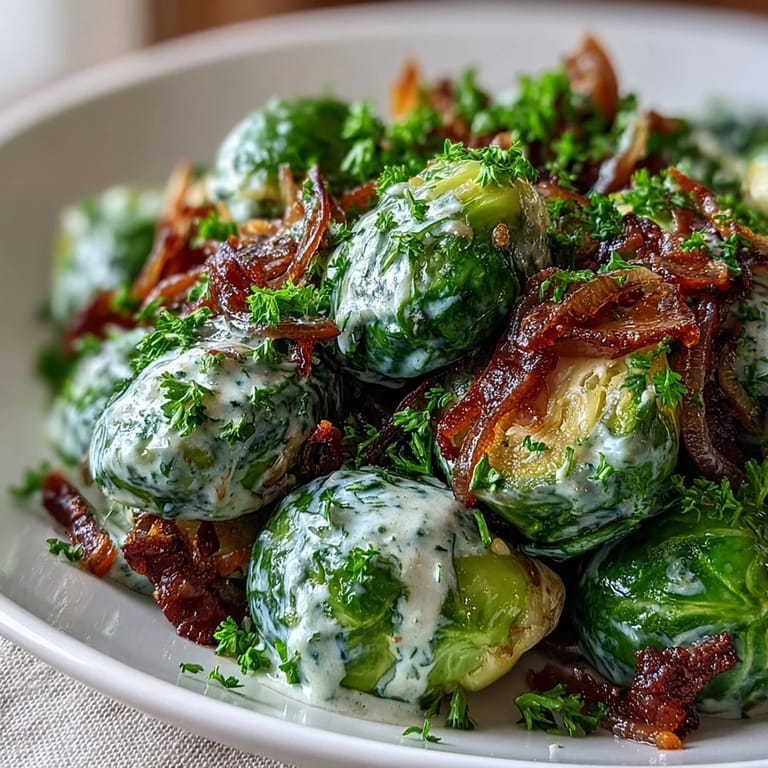
 There's something quietly satisfying about watching people take their first bite and pause. The creamy tang, the slight bitterness of the sprouts, the way the parsley adds a fresh note at the end—it all works together in a way that feels both familiar and a little special. I've served this next to roasted chicken, pork chops, and even just with crusty bread when I wanted something simple. It holds its own no matter what's on the table.
Serving Suggestions
This pairs beautifully with roasted meats like pork loin, chicken thighs, or even a simple grilled steak. I've also served it as a main with a grain like farro or quinoa when I wanted a lighter vegetarian dinner. The sauce is rich enough to feel like a centerpiece, but it never competes with what's next to it. A crisp white wine or sparkling water with lemon feels just right alongside.
Storage and Reheating
Leftovers keep well in an airtight container in the fridge for up to three days. The sauce thickens as it cools, so when you reheat it, add a splash of broth or water and warm it gently in a skillet over low heat. I've even eaten it cold straight from the container as a quick snack, and it still tastes good. The sprouts soften a bit more after sitting, but the flavor deepens in a way I actually like.
Variations and Substitutions
If you want a little heat, stir in a pinch of cayenne or red pepper flakes with the garlic. You can swap the cream cheese for a soft goat cheese if you want a tangier, lighter sauce. I've used whole grain mustard instead of Dijon when that's all I had, and it added a nice texture. For a vegan version, use cashew cream and vegan butter, and skip the cream cheese entirely or use a plant-based alternative.
- Try adding crispy bacon or pancetta for a smoky, savory twist.
- Toss in toasted walnuts or pecans for crunch and richness.
- Use the leftover sauce as a spread on sandwiches or a dip for roasted vegetables.
 Save to Pinterest
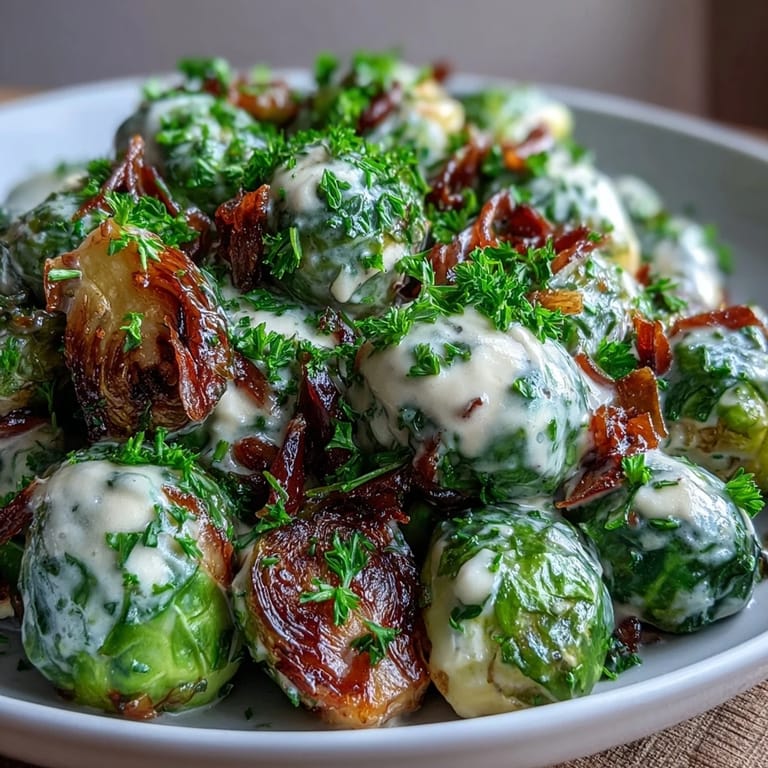
 This dish has a way of turning skeptics into believers without trying too hard. It's creamy, tangy, and just rich enough to feel like a treat without weighing you down.
Recipe FAQs
- → How do I keep Brussels sprouts from getting mushy?
Cook the sprouts just until tender but still firm, about 5–7 minutes in boiling water. Immediately drain and set aside to stop the cooking process. This preserves their crisp texture for the final dish.
- → Can I use frozen Brussels sprouts instead of fresh?
Fresh sprouts work best for maintaining texture. If using frozen, thaw and pat them dry thoroughly before cooking, and reduce the initial boiling time to 3–4 minutes to prevent them from becoming too soft.
- → What can I substitute for Dijon mustard?
Whole grain mustard adds a nice texture, while spicy brown mustard provides more heat. For a milder flavor, use a smooth yellow mustard or reduce the amount and add a touch of white wine for acidity.
- → How do I store leftovers and reheat properly?
Store in an airtight container in the refrigerator for up to 4 days. Reheat gently in a skillet over low heat, adding a splash of broth if the sauce has thickened. Avoid high heat to prevent separating the cream cheese sauce.
- → Can I make this dish dairy-free?
Substitute the cream cheese with a dairy-free cream cheese alternative and use olive oil or vegan butter instead of regular butter. The sauce may be slightly less rich but will still be creamy and flavorful.
- → What proteins pair well with this dish?
This creamy side complements roasted chicken, pork tenderloin, or German sausages beautifully. It also works well alongside baked fish or can stand alone as a hearty vegetarian main with crusty bread.