 Save to Pinterest
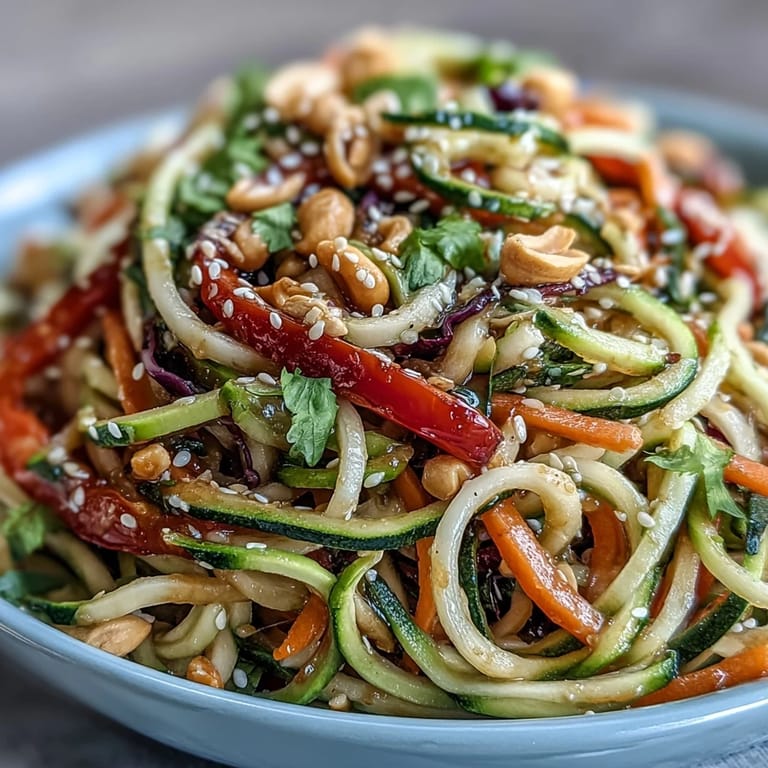
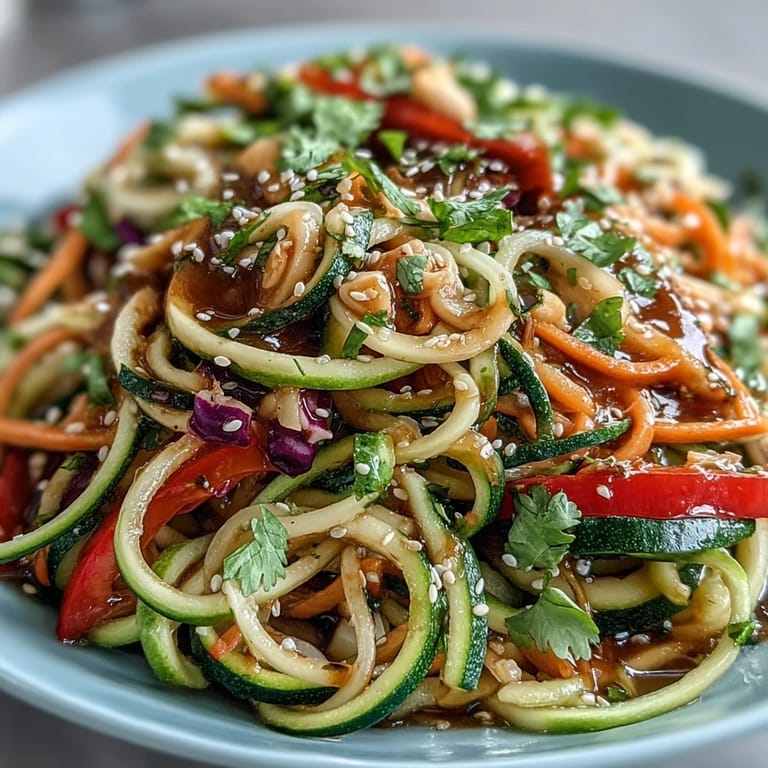
 My friend texted me a photo of her spiralizer one Tuesday afternoon, and I remember staring at it thinking, what am I supposed to do with that? Fast forward three weeks, and I was standing in my kitchen on the hottest day of summer with absolutely no appetite for anything cooked. I pulled that spiralizer out of her loanable kitchen gadget collection and started creating ribbons of zucchini just to see what would happen. Twenty minutes later, I had this bowlful of raw vegetable noodles glistening with sesame-ginger dressing, and suddenly summer felt manageable again.
I brought this to a potluck where someone had already claimed the salad slot, so I almost didn't go. But I decided to bring it anyway, and watched this quiet coworker go back to the bowl three times. She asked for the recipe right there by the chips and dip, which felt like the highest compliment a home cook could receive from someone who clearly knew their way around a kitchen.
Ingredients
- Zucchini, spiralized: Use a firm one that hasn't gotten soft sitting in your crisper drawer, or the noodles will turn mushy.
- Carrot, spiralized: The sweetness balances the sesame perfectly, but avoid baby carrots since they're too thin and break apart.
- Red bell pepper: Slice it thin enough that it bends without snapping, which takes maybe thirty seconds longer but changes the whole texture.
- Red cabbage, shredded: This keeps the salad from getting soggy because it holds its structure even when dressed hours ahead.
- Cucumber, spiralized: Add this last or it'll release water and dilute your dressing, which I learned by trial and error.
- Green onions and cilantro: Fresh herbs make this taste alive instead of just healthy.
- Toasted sesame oil: This is non-negotiable—regular sesame oil tastes like you forgot the whole point of making this salad.
- Rice vinegar: It's gentler than other vinegars and lets the ginger do its thing.
- Low-sodium soy sauce or tamari: Tamari works if you need gluten-free, and honestly tastes a touch better to me anyway.
- Fresh ginger: Grate it right before mixing the dressing so you get those little sharp moments in every bite.
- Maple syrup or honey: Just enough to round out the sharp flavors without making it dessert.
- Garlic, lime juice, and chili flakes: These three are your secret weapons for depth—don't skip the chili flakes even if you're not someone who likes heat.
- Sesame seeds and nuts: Toast them yourself if you have five minutes, because the difference between toasted and raw is everything.
Tired of Takeout? 🥡
Get 10 meals you can make faster than delivery arrives. Seriously.
One email. No spam. Unsubscribe anytime.
Instructions
- Spiralize and slice your vegetables:
- Run each vegetable through the spiralizer and thinly slice or chop the ones that don't spiral, then pile everything into a large bowl. The meditative part of cooking is happening right now, so don't rush it.
- Whisk your dressing into existence:
- In a separate bowl, combine the sesame oil, rice vinegar, soy sauce, ginger, maple syrup, garlic, lime juice, and chili flakes, then whisk until it emulsifies slightly and the flavors start playing nice together. Taste it here and adjust the ginger or lime to your preference before it meets the vegetables.
- Marry the vegetables and dressing:
- Pour the dressing over your pile of vegetables and toss gently with your hands or two spoons until every noodle has a light coating. This is when the kitchen smells like sesame and ginger, which is basically the smell of good decisions.
- Let time work for you:
- Set a timer for five to ten minutes and let the salad sit on the counter while you pour something cold to drink. The vegetables will soften just slightly and the flavors will meld, making the whole thing taste intentional instead of hastily assembled.
- Finish and serve:
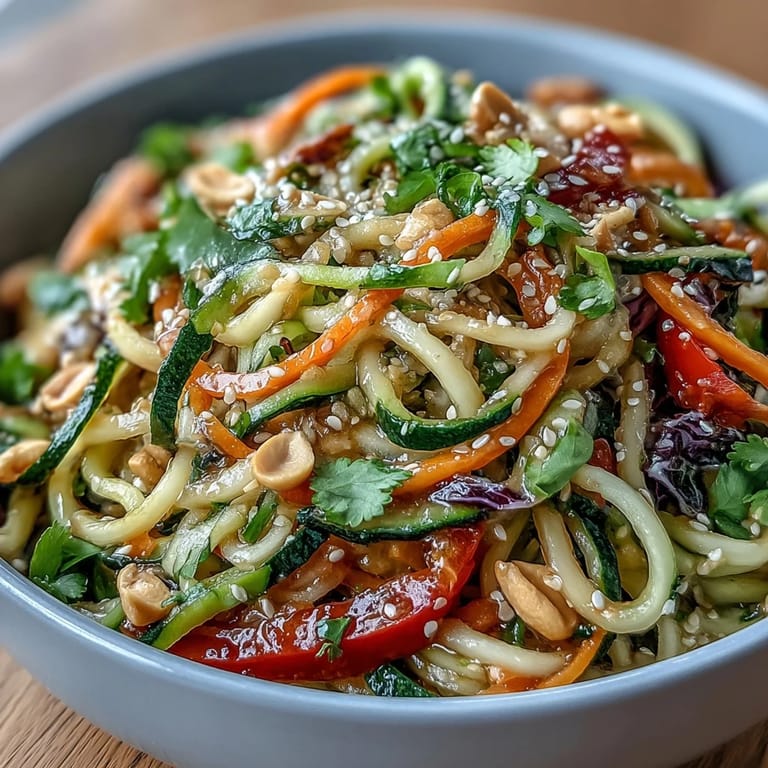
- Transfer to a serving platter or individual bowls, scatter sesame seeds and nuts across the top, and add another pinch of cilantro if you want to be fancy. Serve immediately so the texture stays bright, though honestly this salad is forgiving enough to sit for thirty minutes without falling apart.
 Save to Pinterest
 My mom made this for a family dinner and my dad, who genuinely believes salad is what food eats, had seconds. That moment changed how I understood food, which is that sometimes the simplest versions are the ones that actually get eaten instead of leaving wilted leaves in the bottom of a bowl.
When to Make This
Summer is obviously when this salad makes the most sense, but I've made it in March when I was desperate to feel less heavy after a week of comfort food. It's also the kind of dish that works as a side for grilled fish, or bulks up nicely with baked tofu if you're making it the main event. The no-cook aspect means you can assemble it while something else is on the stove, which is underrated as a life skill.
Building Flavor Layers
The reason this salad tastes like it took hours to develop is because the dressing does the heavy lifting with its combination of salty, sweet, sour, and spicy. Each element serves a purpose—the sesame oil gives richness, the ginger gives sharpness, the maple syrup keeps it from being one-note, and that tiny pinch of chili flakes makes you wonder what the secret is. Understanding why these flavors matter together means you can adjust the recipe to match what you're in the mood for instead of following it blindly.
Make-Ahead Magic and Storage
I've packed this in a container for work and eaten it cold three days later, which shouldn't work but somehow does. The trick is storing the dressing separately if you're planning to eat it over multiple days, then tossing everything together when you're ready. If you're serving it all at once, you can actually make it up to an hour ahead without losing much crispness, which is a gift when you're trying to put together a meal that doesn't involve heating up your kitchen.
- Keep dressing in a separate container and shake it before pouring to recombine the sesame oil and vinegar.
- Store spiralized vegetables in a paper towel-lined container to absorb excess moisture before dressing.
- Add nuts and seeds right before serving so they don't absorb dressing and lose their toast.
 Save to Pinterest
 This salad taught me that sometimes the best meals are the ones that require no actual cooking, just intention and good ingredients. Make it when you need something that feels both nourishing and exciting, which is more often than most of us admit.
Recipe FAQs
- → Can I prepare this salad ahead of time?
Yes, this salad holds up well for 2-3 days when refrigerated. The vegetables maintain their crunch, and flavors actually improve as the dressing marinates the vegetables. Store in an airtight container and toss gently before serving.
- → What vegetables work best for spiralizing?
Zucchini, carrots, cucumber, yellow squash, and daikon radish spiralize beautifully. Avoid soft vegetables like tomatoes or watery ones that release too much moisture. Bell peppers and cabbage work better when thinly sliced rather than spiralized.
- → How can I add more protein to this dish?
Top with baked tofu, edamame, or grilled chicken for a complete meal. The roasted peanuts and cashews already provide some protein, about 4g per serving. You can also add shredded cooked chicken or pan-seared shrimp for a heartier version.
- → Is there a substitute for sesame oil?
For allergies, try olive oil or avocado oil with a pinch of toasted sesame seeds to maintain that nutty flavor. The dressing won't have quite the same depth, but it will still be delicious and coat the vegetables well.
- → Can I make this nut-free?
Absolutely. Simply omit the peanuts and cashews from the garnish. You can add sunflower or pumpkin seeds for crunch instead. Double-check that your sesame oil and other condiments are processed in nut-free facilities if allergies are a concern.
- → What's the best way to spiralize vegetables without special equipment?
If you don't have a spiralizer, use a julienne peeler to create thin noodle-like strips. Alternatively, a standard vegetable peeler works for wide ribbons, or simply slice vegetables into very thin matchsticks with a sharp knife—the result will be just as delicious.