 Save to Pinterest
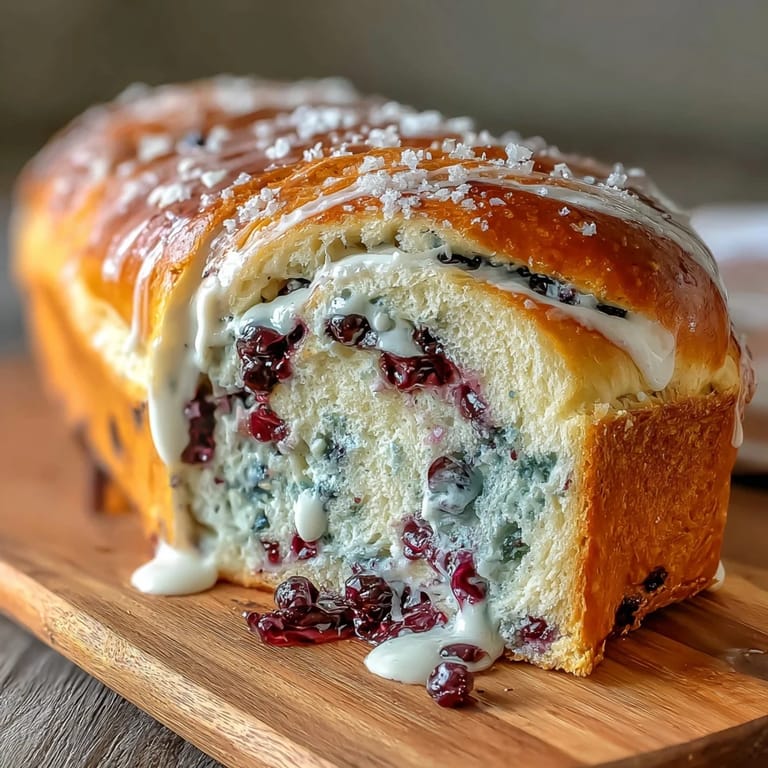
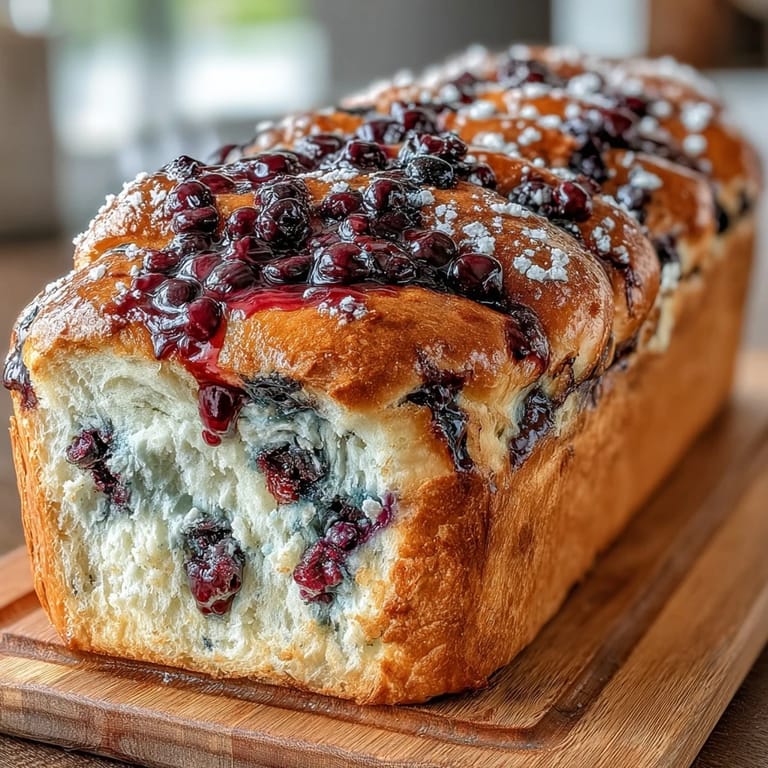
 There's something almost magical about the moment when you crack open a warm loaf and see those purple swirls running through golden crumb like veins of jam. My kitchen smelled like a lemon grove that afternoon, and I'd made the mistake of checking on the bread every five minutes—my impatience finally paid off when I pulled it out, listened for that hollow tap, and knew I'd nailed it. This sourdough marries the tangy complexity of a long ferment with bright citrus and bursts of tart blueberries, creating something that tastes both comforting and unexpectedly sophisticated.
I brought this to a weekend brunch expecting polite nods, but watched my friend immediately ask for the recipe before finishing her first slice. She's not even a baker, but something about the tartness paired with fresh coffee seemed to unlock a sudden interest in baking projects. That's when I realized this bread does more than taste good—it creates moments where people slow down and actually enjoy their breakfast instead of rushing through it.
Ingredients
- Bread flour (3 cups/370 g): The protein content gives you that chewy structure that makes sourdough sing; don't substitute with all-purpose unless you enjoy dense, gummy bread.
- Active sourdough starter (1/2 cup/120 g at 100% hydration): This is your flavor engine—the longer your starter's been alive, the more complex your loaf will taste, so use your most active and bubbly culture.
- Whole milk, lukewarm (1 cup/240 ml): The milk adds richness and helps with browning; room temperature lets your starter wake up without thermal shock.
- Unsalted butter, softened (1/4 cup/55 g): Softened means it actually blends in, creating a tender crumb instead of little butter pockets.
- Granulated sugar (1/4 cup/50 g for dough): Just enough to feed the yeast and add subtle sweetness without making this cake.
- Egg (1 large): The binder that gives you structure and helps with that beautiful golden crust.
- Fine sea salt (1 tsp): Strengthens gluten and balances sweetness; use fine salt or you'll end up with bitter pockets.
- Lemon zest (from 1 lemon): Zest before juicing, and don't be shy—that fragrant burst is what people remember.
- Fresh or frozen blueberries (1 cup/150 g): Frozen works just as well and actually holds its shape better when cooked down.
- Lemon juice (2 tbsp for swirl, plus 1–2 tbsp for glaze): Adds tartness that cuts through the bread's richness and keeps the swirl from tasting one-dimensional.
- Cornstarch (1 tbsp): Thickens the berry filling so it doesn't seep all over your dough or make the finished loaf soggy.
- Powdered sugar (1/2 cup/60 g, optional): A drizzle of glaze adds sweetness and a professional finish if you want it.
Tired of Takeout? 🥡
Get 10 meals you can make faster than delivery arrives. Seriously.
One email. No spam. Unsubscribe anytime.
Instructions
- Cook down the berry swirl:
- Heat blueberries, sugar, and lemon juice in a saucepan over medium heat, stirring occasionally until the berries burst and release their juice (about 5–7 minutes). The moment you see the liquid thicken and the berries start to break apart, stir in cornstarch and cook for another minute or two until it's glossy and thick, then pour it into a bowl and let it cool completely—this step is non-negotiable if you don't want your dough to turn purple mush.
- Mix the dough:
- In a large bowl or stand mixer, combine lukewarm milk, your bubbling sourdough starter, softened butter, sugar, egg, salt, and lemon zest, stirring until everything's roughly combined. Gradually add the flour while mixing, then knead by hand or machine for 8–10 minutes until the dough feels smooth, elastic, and slightly tacky but not sticky—you're looking for that satisfying resistance when you push into it.
- First rise:
- Place your dough in a lightly greased bowl, cover it with a damp towel or plastic wrap, and let it sit at room temperature until it's roughly doubled in size (4–6 hours depending on how active your starter is and how warm your kitchen runs). You'll know it's ready when you poke it and the indent slowly springs back halfway.
- Shape the loaf:
- Turn the puffed dough onto a floured surface and gently roll it into a 9x16-inch rectangle with your rolling pin—the goal is even thickness so it bakes uniformly. Spread that cooled blueberry swirl evenly across the dough, leaving about a 1-inch border around the edges so the filling doesn't squeeze out when you roll it.
- Roll and pan:
- Starting from one of the short ends, roll the dough tightly toward you like you're making a cinnamon roll, sealing the seam with the heel of your hand. Gently place it seam-side down into a greased 9x5-inch loaf pan, nestling it so it fits snugly but not uncomfortably.
- Second rise:
- Cover the loaf pan with a towel or plastic wrap and let it rise at room temperature for 1–2 hours until it's puffy, nearly doubled, and touching the top of the pan when you peek. The dough should look airy and feel soft, not dense—if you press gently, it should spring back slowly rather than immediately or not at all.
- Bake until golden:
- Preheat your oven to 350°F (175°C). Bake the loaf for 35–40 minutes until it's a rich golden brown and sounds hollow when you tap the bottom—the hollow tap is your proof that the inside is cooked through and not gummy. If the top is browning too fast, tent it with foil for the last 10 minutes.
- Glaze (optional):
- Whisk together powdered sugar and lemon juice until smooth, and drizzle it over the cooled bread for a subtle sweetness and glossy finish.
 Save to Pinterest
 I realized this bread had become something more than a recipe the morning my teenage nephew asked to help make it, and for three hours we didn't look at our phones. The ritual of watching dough transform, the conversations that happen while you're waiting and folding and shaping, the pride when that hollow tap confirms you nailed it—that's what made this become a regular in our rotation. Food that brings people together and gives them something to do with their hands while they catch up feels increasingly rare.
Why Sourdough Takes Time
Long fermentation isn't just about flavor, though the tang you get from sourdough is irreplaceable and improves digestibility compared to commercial yeast bread. The slow rise allows the dough to develop strength naturally, creating an open crumb structure with irregular holes instead of dense, uniform texture. Your patience is doing real work here—the gluten is relaxing and becoming elastic, the starter is feeding on the flour and multiplying, and acids are developing that make this taste like actual bread instead of sweet, pillow-soft sandwich fodder.
Making Swirls That Actually Stay
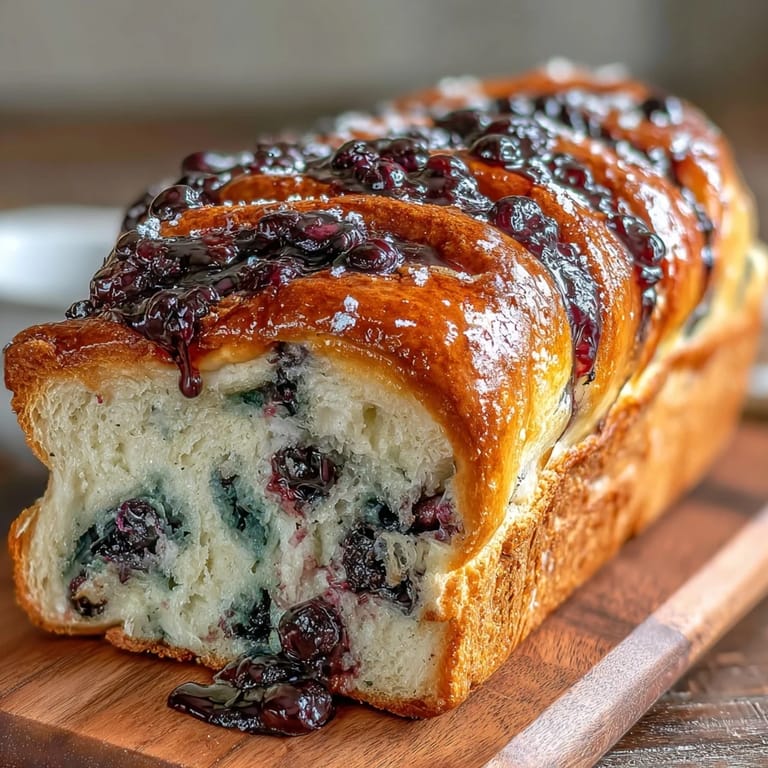
The secret to beautiful, distinct swirls is understanding that your filling needs to be thicker and cooler than you think. When your berry mixture hits the warm dough before it's fully set, the natural heat starts to thin it out, and by the time you roll everything up, you end up with streaks instead of pockets. I've learned that slightly undercooking the swirl in terms of texture, then letting it cool to room temperature on a plate where it continues to set, gives you filling that stays put and creates those gorgeous purple veins people photograph before eating.
Variations and Substitutions
Once you understand how this recipe works, you can absolutely riff on it without changing the fundamentals. Raspberries work beautifully in place of blueberries and add a different kind of tartness, or you could experiment with a blackberry-thyme combination if you're feeling adventurous. The lemon zest in the dough is non-negotiable for me, but if you wanted an orange-blueberry version or even a vanilla-blueberry loaf, the structure stays the same and your kitchen still smells incredible.
- Try adding a tablespoon of vanilla extract to the dough for subtle depth without changing the overall flavor profile.
- A pinch of ground cardamom or nutmeg in the swirl adds an unexpected warmth that surprises people.
- If you want less sweetness, reduce the sugar in both dough and swirl by a quarter—the bread still rises, just tastes less like dessert.
 Save to Pinterest
 This bread proves that patient, simple cooking still matters in a world obsessed with convenience. It's worth the 6 to 9 hours of waiting because what you get at the end tastes like you actually cared enough to slow down.
Recipe FAQs
- → How do I prepare the blueberry lemon swirl?
Cook blueberries with sugar and lemon juice until soft and juice is released, then thicken with cornstarch. Cool completely before spreading.
- → What is the best way to shape the loaf?
Roll the dough into a rectangle, spread the cooled swirl leaving a border, then roll tightly from the short end and place seam-side down in the pan.
- → How long should the dough rise?
Allow a first rise of 4–6 hours until doubled, then after shaping, let it rise another 1–2 hours until puffy and near doubled.
- → Can I substitute other berries for blueberries?
Yes, raspberries or other soft berries can be used for a different fruity twist while maintaining the citrus balance.
- → Is the lemon glaze necessary?
The glaze is optional but adds a sweet citrus finish. Simply mix powdered sugar with lemon juice and drizzle once the loaf has cooled.