 Save to Pinterest
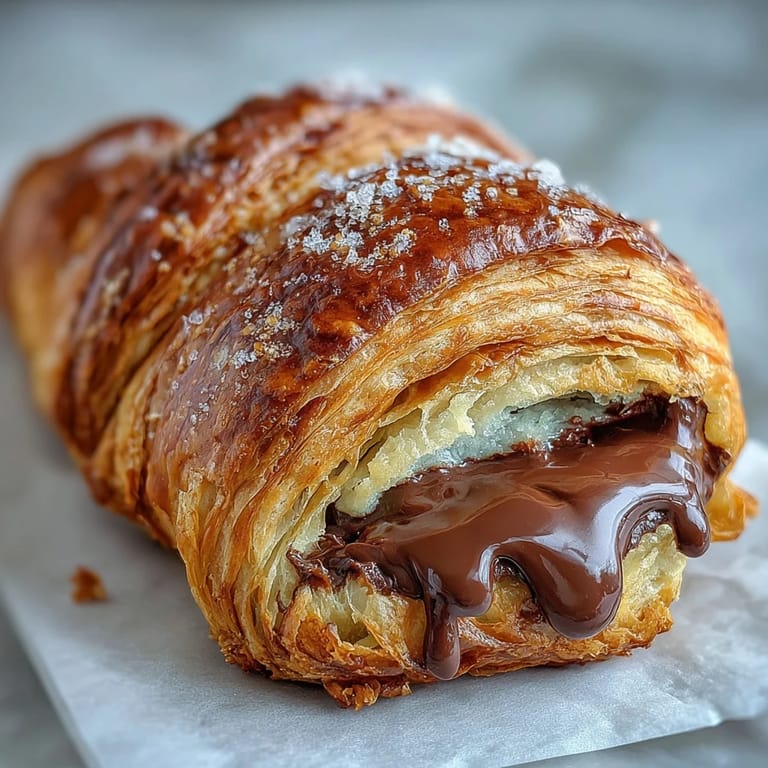
 There's a particular kind of magic that happens when sourdough tanginess meets French lamination—I discovered it by accident one winter when I had leftover starter and an ambitious weekend ahead. My kitchen smelled like butter and fermentation for what felt like days, and honestly, I didn't mind one bit. These croissants emerged from the oven with a shattering crackle and a tender, honeycombed interior that made me understand why people queue around the block for good pastry. The dark chocolate filling softens just enough to meld with the warm layers, creating this moment of pure indulgence in every bite.
I made these for my sister's birthday breakfast, and watching her close her eyes after that first bite was worth every minute of planning and chilling. She's someone who has had croissants in Paris and Copenhagen, so there was real pressure, but when she asked for a second one before I'd even plated dessert, I knew something had clicked. That's when I realized these aren't just pastries—they're edible evidence that you care enough about someone to spend two days in your kitchen perfecting butter layers.
Ingredients
- Bread flour (500 g): The protein content matters here more than it does in soft breads—it gives you the structural integrity to handle all that lamination without tearing. Don't swap it for all-purpose unless you enjoy unpredictable results.
- Active sourdough starter (100 g): This should be bubbly and at peak activity when you use it; a sluggish starter will drag out your timeline and mute the subtle tang that makes these special.
- Whole milk (220 ml, cold): Keep it refrigerated until the moment you mix—cold milk helps you control fermentation timing and keeps the dough temperature manageable.
- Granulated sugar (60 g): Feeds both the starter and the yeast, supporting rise and browning; it's not there to make these sweet, just to fuel the living dough.
- Fine sea salt (10 g): Strengthens gluten and seasons subtly—coarser salt won't dissolve evenly, creating unpredictable pockets of saltiness.
- Unsalted butter (30 g, softened for dough): This initial butter enriches the dough; unsalted lets you control the total salt content across the recipe.
- European-style butter (250 g, cold for laminating): The higher fat content (84% vs. 80%) makes a real difference in flakiness and flavor—this is where you don't compromise, and it must be cold and firm.
- High-quality dark chocolate (120 g, 60% cocoa minimum): Cheap chocolate turns waxy when it cools; good chocolate stays snappy and tastes like chocolate should, not like sugar with cocoa dust.
- Egg (1 large, for wash): Beaten with water, this creates that glossy golden-brown shell that catches light and tells everyone these are handmade.
Tired of Takeout? 🥡
Get 10 meals you can make faster than delivery arrives. Seriously.
One email. No spam. Unsubscribe anytime.
Instructions
- Bring the dough together:
- Combine your flour, starter, cold milk, sugar, salt, and softened butter in a bowl, mixing until everything is shaggy and incorporated. Knead for 4 to 5 minutes—you want smooth and slightly elastic, not perfect, since the lamination will develop the gluten further.
- Let it breathe:
- Cover and rest at room temperature for 30 minutes while you mentally prepare for the hours ahead. This isn't laziness; it's giving the dough time to relax before asking it to do heavy lifting.
- Build strength through folding:
- Bulk ferment for 2 to 3 hours, doing stretch-and-folds every hour—pull one section of dough up and over itself, rotate the bowl, repeat. You'll feel the dough becoming more cohesive, almost alive under your hands.
- Chill and plan ahead:
- Refrigerate overnight (8 to 12 hours) so the dough is cold and the flavors deepen. This is your time to rest too—overnight fermentation in a cold fridge is essential, not optional.
- Prepare your butter weapon:
- Place cold butter between parchment sheets and pound it into a 20 by 20 centimeter square, working methodically until it's even and firm. Keep it refrigerated until lamination time.
- Begin lamination carefully:
- Roll chilled dough into a 30 by 30 centimeter square on a lightly floured surface, then center your butter block on top. Fold the dough corners over to fully encase the butter, then roll gently into a 60 by 20 centimeter rectangle.
- Master the letter fold:
- Fold the rectangle into thirds like a business letter—imagine sending the dough through the postal service—then chill for 30 minutes. Repeat this rolling and folding process two more times with 30-minute chills between, and you'll understand why lamination is both frustrating and meditative.
- Shape with chocolate intentions:
- Roll final dough to 60 by 30 centimeters, roughly 4 millimeters thick, then cut into 12 long triangles with a base of about 10 centimeters. Place one chocolate baton at the wide end of each triangle and roll snugly toward the point, creating a spiral of cocoa promise.
- Arrange on sheets:
- Place shaped croissants tip-side down on parchment paper, spacing them generously because they're about to puff dramatically. Seeing them naked and ready feels like the moment before something important happens.
- Final proof with patience:
- Cover loosely and let them proof at room temperature for 4 to 5 hours until visibly doubled and puffy—they should jiggle slightly when you gently shake the sheet. If your kitchen is chilly, find a warm corner away from drafts and let time do its work.
- Glaze and bake:
- Preheat your oven to 200°C (400°F), brush each croissant with beaten egg mixed with water for shine, then bake 18 to 22 minutes until the exterior is deep golden and crisp all over. You'll hear them crackling softly as they cool—that's the sound of success.
- Cool before yielding:
- Transfer to a wire rack and wait at least 15 minutes before biting in, though the chocolate inside will still be warm and slightly molten. Patience now means perfectly set chocolate layers later.
 Save to Pinterest
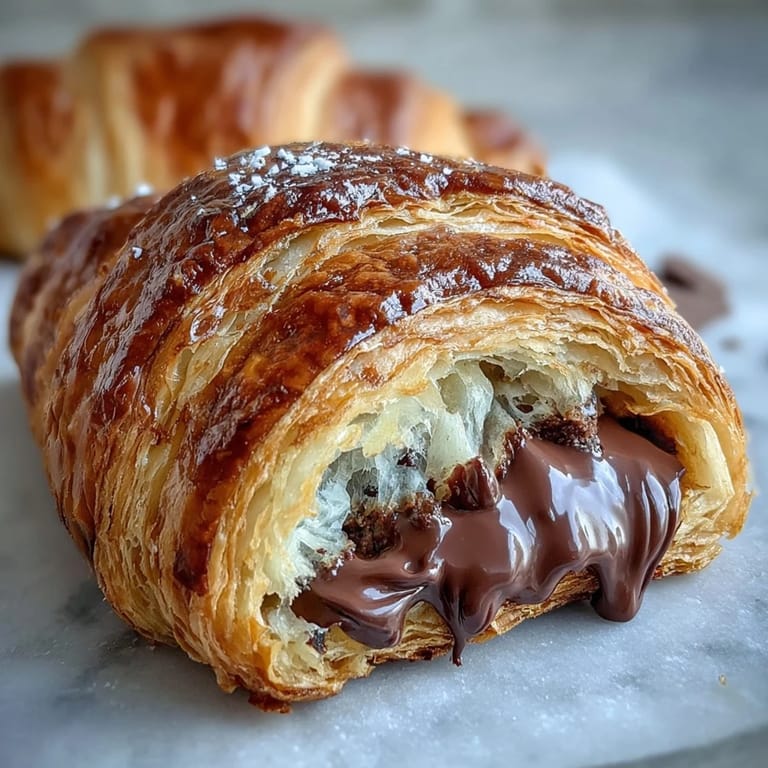
 The moment someone tears into one of these croissants and that chocolate catches the light as it peeks through the layers, you realize food is sometimes about more than hunger or taste. It's about the small rebellion of doing something difficult, something that demands respect for ingredients and process, in a world that usually wants everything fast. These croissants are proof that some things—the best things—are worth the wait.
Why Sourdough Changes Everything
Regular croissant dough uses commercial yeast and whips up quickly, which is fine if you're just chasing flakiness. But sourdough starter brings this subtle fermented note that somehow makes the chocolate taste richer, the butter taste butterier, and the whole experience feel like you're eating something with actual history. The long, slow fermentation also develops flavor at a molecular level that rushing simply can't achieve. Once you've made sourdough croissants, the quick versions feel a bit hollow by comparison.
Lamination Isn't as Scary as It Sounds
The lamination process—folding butter into dough repeatedly—sounds technical and intimidating until you realize it's just asking the dough to hold onto a lot of butter without letting it escape. Think of it like packing a suitcase: you're not doing anything exotic, just being intentional about placement and pressure. The key is keeping everything cold so the butter stays separated from the dough in distinct layers rather than melting in and creating one homogeneous mass. Those layers are what shatter when you bite into them.
Chocolate Selection and Storage Matter More Than You'd Think
I learned this lesson the hard way when I grabbed whatever chocolate was on sale and ended up with waxy, grainy ones that made the final croissants taste like a good idea executed with mediocre ingredients. High-quality chocolate with 60% cocoa or higher keeps its snap as it cools and tastes genuinely like chocolate rather than sweet brown nothing. Cut your chocolate into slim batons or sticks before you start shaping—trying to wedge thick chunks into dough triangles is frustrating and uneven.
- Store your chocolate in a cool, dry place away from other strong-smelling foods, which can flavor it over time.
- If your chocolate batons seem dry, you're good to go; any moisture creates steam pockets that make dough soggy.
- Consider adding a tiny pinch of fleur de sel to the chocolate before rolling if you want to echo the croissant's subtle saltiness in the filling.
 Save to Pinterest
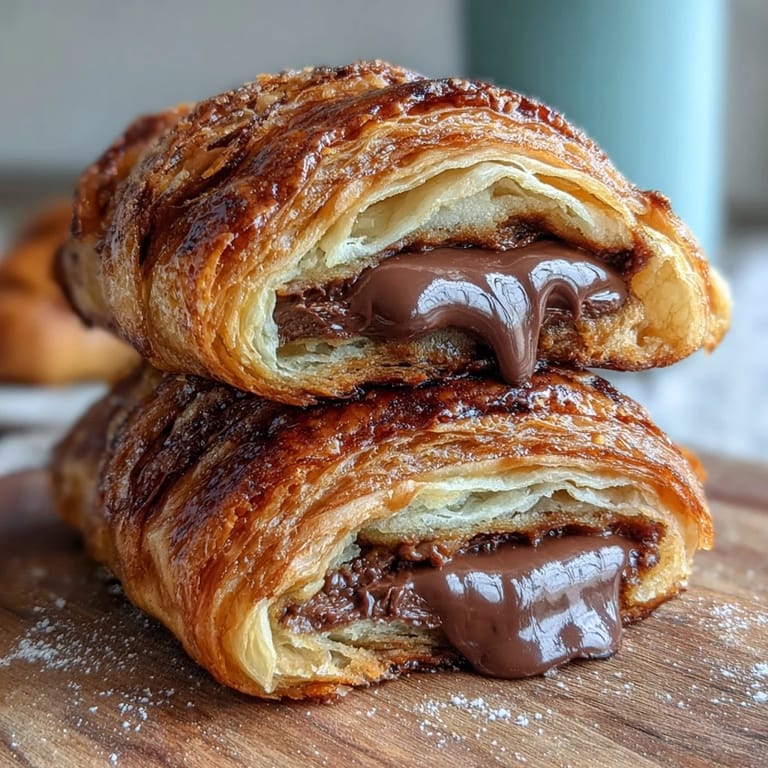
 These croissants represent something bigger than breakfast: they're edible proof that homemade and restaurant-quality don't have to live in separate universes. The combination of sourdough tang, laminated butter flake, and dark chocolate richness creates something you genuinely cannot replicate from a bakery shelf at home.
Recipe FAQs
- → How do I achieve the flaky layers in sourdough croissants?
Flaky layers come from laminating the dough by folding cold butter into the dough multiple times with resting periods. This creates distinct butter layers that puff up during baking.
- → Why is a long proofing time necessary?
Extended proofing allows the sourdough culture to develop flavor and the dough to rise properly, producing a tender crumb with a pleasant tang.
- → What type of chocolate works best for filling?
High-quality dark chocolate with at least 60% cocoa provides a rich, balanced flavor that melts beautifully inside the croissant.
- → Can I add extra flavors to the dough?
Yes, adding orange zest or sprinkling flaky sea salt before baking enhances the croissants’ complexity and brightness.
- → How should the croissants be stored after baking?
They’re best enjoyed fresh but can be gently reheated in an oven to restore crispness and warmth.