 Save to Pinterest
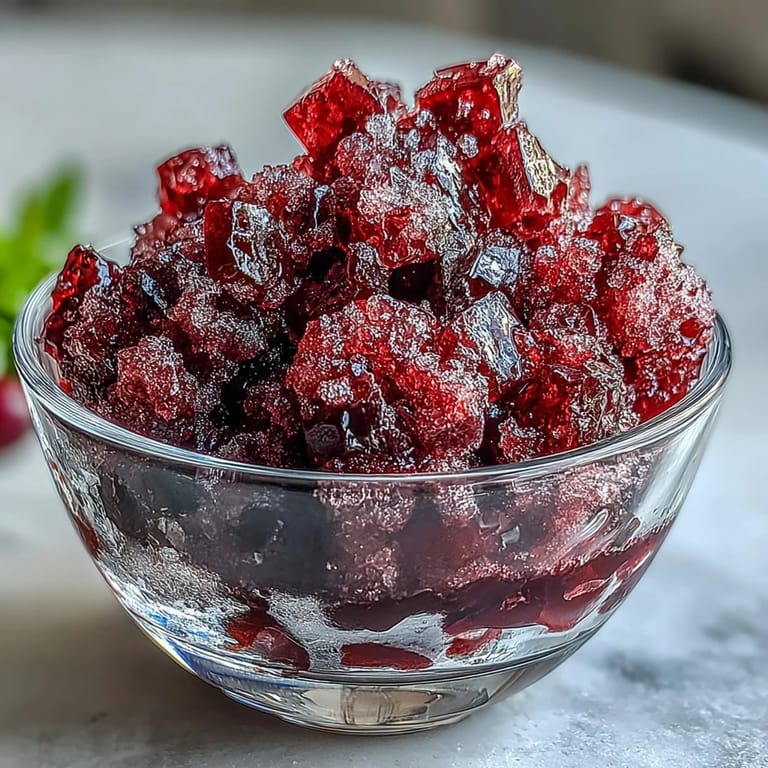
 There's something magical about watching a fork break through frozen granita on a hot afternoon, that moment when crystalline ice shatters into delicate shards on your tongue. I discovered black currant granita during a particularly sweltering July, when a farmer's market vendor handed me a basket of these dark, glossy berries and whispered that they were too tart for most people but perfect for those who wanted something truly different. That first batch taught me that the best desserts don't need to be complicated, just intentional, and this one captures summer in its purest frozen form.
I made this for a dinner party where a guest mentioned she was tired of desserts that felt heavy and predictable, and watching her face light up when she tasted it felt like vindication for every fork-scraping session I'd done that afternoon. The conversation shifted immediately to how different this was, how the tartness made everyone want another spoonful, and suddenly this simple frozen mixture became the star of the evening in a way elaborate cakes rarely manage.
Ingredients
- Fresh or frozen black currants, 500 g (about 3 cups): These berries are the backbone of everything here, delivering that distinctive tangy-sweet complexity that makes people pause and ask what they're tasting; if you can't find them fresh, frozen works beautifully and sometimes tastes even more vibrant since they're picked at peak ripeness.
- Granulated sugar, 150 g (3/4 cup): This amount balances the currants' natural tartness without masking their bold flavor, and I learned through trial that too much sugar creates a syrupy texture rather than those delicate ice crystals you're after.
- Water, 400 ml (1 2/3 cups): The liquid base transforms fruit and sugar into something completely different, and using filtered water if you have it makes a subtle but noticeable difference in clarity.
- Freshly squeezed lemon juice, 1 tablespoon: This brightens everything without announcing itself, adding dimension that makes people wonder what's making it taste so alive.
Tired of Takeout? 🥡
Get 10 meals you can make faster than delivery arrives. Seriously.
One email. No spam. Unsubscribe anytime.
Instructions
- Prepare your fruit:
- Rinse the black currants thoroughly under cool water, and if you're using fresh ones, take a moment to remove the stems, which is oddly meditative work. If you're using frozen currants, you can skip this step and work directly from the freezer, which is one of those kitchen shortcuts that nobody should feel guilty about.
- Build the base:
- In a medium saucepan, combine the black currants, sugar, and water, then bring everything to a gentle simmer over medium heat, stirring occasionally as the sugar dissolves and the berries begin to burst and release their dark, jewel-toned juice. You'll know you're there when the mixture smells intensely fruity and the berries have softened enough to collapse easily, usually around 10 minutes.
- Cool and puree:
- Remove the pan from heat and let it cool for just a few minutes so you don't burn yourself, then transfer everything to a blender or use an immersion blender to create a completely smooth puree with no visible berry solids. This is important because any remaining texture will freeze into unwanted iciness.
- Strain for elegance:
- Pour the puree through a fine-mesh sieve into a large bowl, pressing gently with the back of a spoon to extract every drop of liquid while leaving the seeds and skins behind; this step feels fussy but creates that pristine, sophisticated texture granita is known for. Stir in the lemon juice once the mixture has finished draining completely.
- Freeze with intention:
- Pour the strained mixture into a shallow metal baking dish, then place it in the freezer where it will begin its transformation. After 45 minutes, the edges will have started to crystallize, and this is when the real work begins: use a fork to scrape and break up those icy edges, creating a mixture that's somewhere between liquid and solid.
- Scrape and fluff repeatedly:
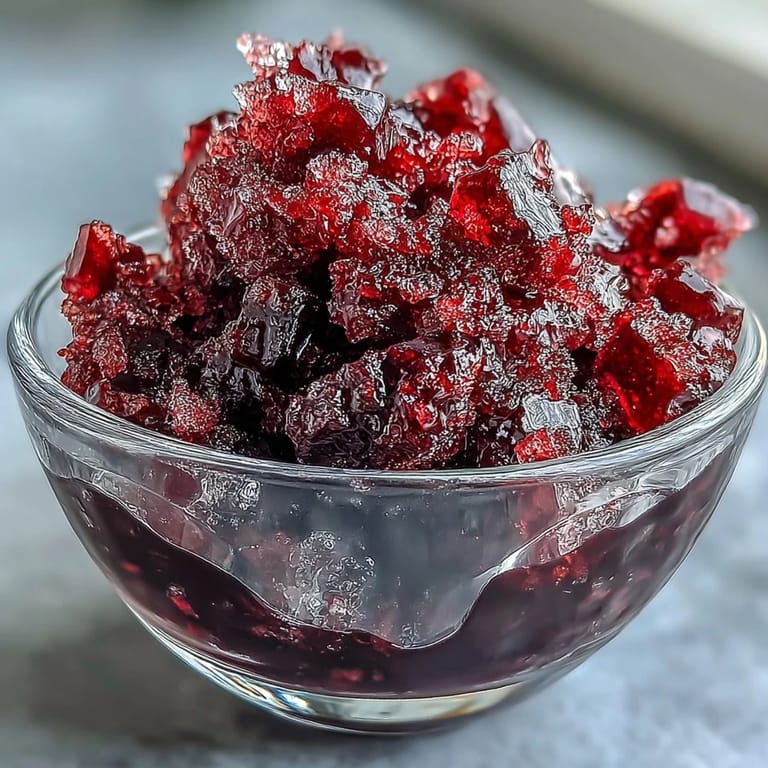
- Return the dish to the freezer and set a timer for every 30 to 45 minutes; each time the timer goes off, pull out the dish and use a fork to break up the crystallizing edges, pulling them toward the center and fluffing the entire mixture. You're essentially creating ice crystals gradually, and after about 4 hours total, you'll have something that looks crystalline and fluffy rather than solid like ice cream.
- Serve at the moment of perfection:
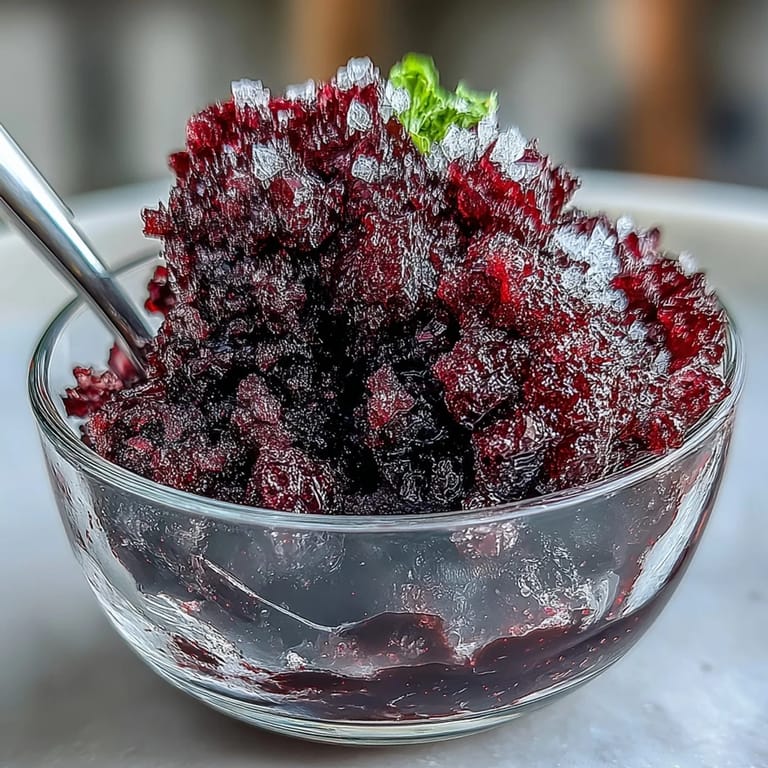
- Spoon the granita immediately into chilled glasses or bowls, and serve it right away before it melts back into liquid; the temperature and texture matter here, and that fresh-from-the-freezer moment is when it tastes best.
 Save to Pinterest
 One evening, I served this to someone who mentioned they'd never tasted black currants before, and watching them experience that bold flavor for the first time reminded me why simple, pure-tasting desserts matter so much more than elaborate ones. Food moments like that, where someone's palate wakes up and takes notice, are what keep me returning to the kitchen.
The Science Behind the Scraping
Granita works differently than ice cream because you're not incorporating air with churning or creating a smooth emulsion; instead, you're deliberately forming ice crystals and keeping them small and distinct, which is why that fork-scraping every 30-45 minutes is absolutely central to the final texture. When ice crystals form too slowly or too quickly without interruption, you end up with either a slushy mess or a solid block of ice, but that patient, rhythmic scraping creates something entirely different that feels almost ethereal on the tongue.
Black Currants: Understanding the Star Ingredient
Black currants carry a reputation for tartness that intimidates some home cooks, but that bold flavor is exactly what makes them fascinating; they're not trying to be gentle or familiar, and when you work with rather than against that intensity, something special happens. The berries have a complex taste that sits somewhere between berry, black tea, and subtle stone fruit, and freezing actually amplifies those nuances instead of muting them.
Customization and Serving Ideas
Once you understand the basic technique, this dessert becomes a playground for subtle variations that feel sophisticated without requiring any additional skill. The simplest version is perfect on its own, but there are directions worth exploring once you've made it once and feel confident with the process.
- For an adult version, stir in 2 tablespoons of crème de cassis or black currant liqueur just before freezing, which adds a subtle depth without making the dessert taste boozy.
- Fresh mint leaves or a small handful of whole black currants scattered on top right before serving turn a simple bowl into something that looks intentional and special.
- This can be made up to 2 days in advance and stored in an airtight container in the freezer; just give it a quick fluff with a fork before serving to restore the fluffy texture.
 Save to Pinterest
 This granita reminds me that the most memorable desserts often come from simplicity and intention rather than complexity, and once you've made it once, you'll understand why people have been freezing fruit this way for centuries. It's the kind of recipe that belongs in regular rotation, not just for special occasions.
Recipe FAQs
- → What makes granita different from sorbet or ice cream?
Granita has a coarser, crystalline texture achieved by periodically scraping the freezing mixture with a fork. Unlike ice cream, it contains no dairy or fat, and unlike sorbet, it's not churned, resulting in lighter, flaky ice crystals rather than a smooth consistency.
- → Can I use frozen black currants instead of fresh?
Absolutely. Frozen currants work just as well since they'll be cooked and pureed. No need to thaw first—simply add them directly to the saucepan. The flavor and texture will be identical to the fresh version.
- → How long does homemade granita keep in the freezer?
Properly stored in an airtight container, granita maintains its texture for up to 2 days. For longer storage, the texture may become overly hard—simply let it soften at room temperature for 5 minutes, then scrape with a fork to fluff before serving.
- → Why do I need to strain the mixture?
Straining removes the skins, seeds, and pulp, resulting in the smooth, refined texture essential for proper granita. This step ensures the ice crystals form cleanly without fibrous bits, creating that signature melt-in-your-mouth experience.
- → Can I reduce the sugar in this preparation?
Sugar serves two purposes: sweetness and texture. It lowers the freezing point, preventing the mixture from becoming a solid block of ice. Reducing sugar may result in harder, icier texture that's difficult to scrape. For best results, maintain the specified ratio.