 Save to Pinterest
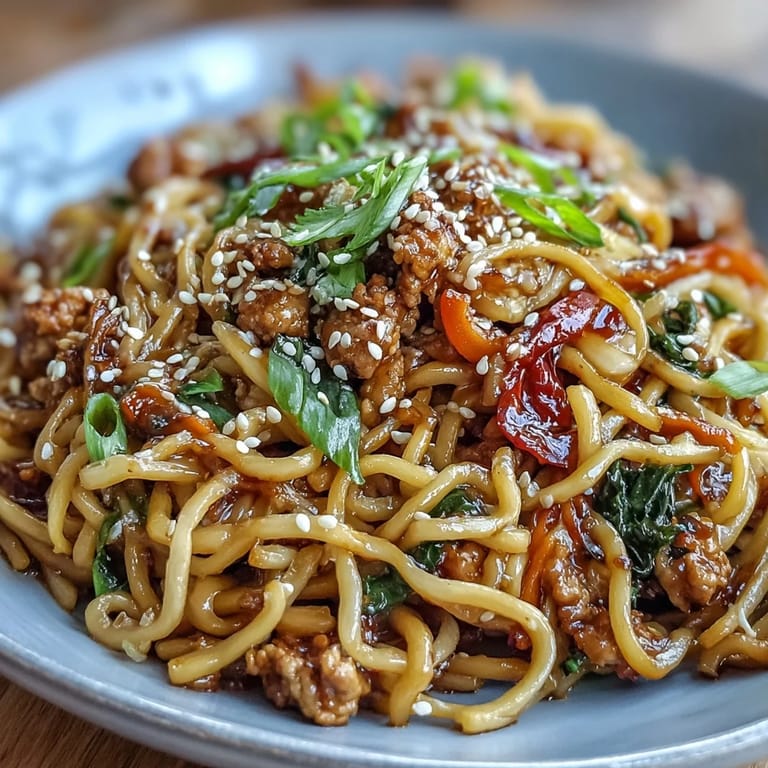
 My sister called one Tuesday evening asking if I could throw together something fast for her chaotic weeknight, and I found myself reaching for ground turkey and whatever vegetables were lingering in the crisper drawer. What emerged was this Korean-inspired fried noodle situation that honestly surprised us both—tangy, savory, with just enough heat to make you feel like you'd actually cooked something intentional. She's asked me to make it roughly every other week since, which tells you something about how quickly it comes together and how satisfying it tastes.
I made this for a dinner party once when I was trying to impress someone who traveled through Seoul regularly, and they actually got quiet mid-bite, which felt like the highest compliment possible. The way the noodles soaked up that sauce, how the vegetables stayed crisp but weren't raw—it all just worked. That's when I realized this recipe deserves to be in regular rotation, not just emergency weeknight rotation.
Ingredients
- Ground turkey: One pound gives you enough protein to feel substantial without the heavier feeling you get from beef, and it absorbs the sauce beautifully.
- Fresh or dried wheat noodles: I prefer fresh udon for their chewiness, but dried ramen works just fine—just don't overcook them or they'll turn mushy once they hit the pan.
- Carrots: Shredded means they soften quickly but maintain a slight snap, which balances the tender turkey perfectly.
- Red bell pepper: The sweetness cuts through the spice in the most natural way, plus the color makes the whole dish feel less monochromatic.
- Napa cabbage: This is your secret weapon for volume and that slightly sweet, delicate crunch that makes every bite interesting.
- Green onions: Some go into the stir-fry for subtle onion flavor, some garnish at the end for fresh brightness—it's the difference between good and memorable.
- Soy sauce: Use full-sodium if you can; low-sodium versions taste thin and sad by comparison.
- Gochujang: This is non-negotiable—it's where all the personality comes from, so don't skip it or substitute with sriracha.
- Sesame oil: Just a tablespoon, but it makes the whole thing smell impossibly good and adds a nuttiness you can't fake.
- Brown sugar: Sounds weird but it balances the heat and salt into something almost addictive.
- Garlic and ginger: Fresh, minced, and added to the sauce base where they have time to perfume everything evenly.
- Rice vinegar: A touch of brightness that keeps the sauce from feeling flat or one-note.
- Toasted sesame seeds: The garnish that makes people think you actually know what you're doing.
Tired of Takeout? 🥡
Get 10 meals you can make faster than delivery arrives. Seriously.
One email. No spam. Unsubscribe anytime.
Instructions
- Build your sauce first:
- Whisk soy sauce, gochujang, sesame oil, brown sugar, minced garlic, rice vinegar, and ginger together in a small bowl, stirring until the paste breaks down and everything melds. This takes about a minute and saves you from scrambling later when the heat's on.
- Get noodles ready:
- Cook them according to package instructions, then drain and rinse under cold water to stop them from cooking further and to prevent them from sticking together in a solid block. Cold noodles will finish cooking when they hit the hot pan with everything else.
- Brown the turkey:
- Heat your skillet or wok over medium-high heat, add a drizzle of oil, then crumble in the ground turkey, breaking it into small pieces as it cooks for 4 to 5 minutes until it's no longer pink and starting to look lightly browned. You'll know it's ready when there are no more gray bits and it smells savory and meaty.
- Build the vegetable base:
- Add your onion, carrots, and bell pepper to the cooked turkey, stirring constantly for 2 to 3 minutes until they start to soften slightly at the edges but still have backbone. Then add the cabbage and give it another 2 minutes—it will wilt down more than you think it will.
- Bring it all together:
- Pour that sauce you made earlier over everything, tossing constantly so every piece of turkey and vegetable gets coated in that glossy, spiced mixture. You should see the sauce start to caramelize slightly at the pan edges, which is exactly what you want.
- Unite with noodles:
- Add the cooked noodles to the skillet and toss everything together, stirring gently but thoroughly for 2 to 3 minutes until the noodles are heated through and evenly coated. This is also when you might taste it and decide if you want more heat—add gochugaru now if you're going that direction.
- Finish and serve:
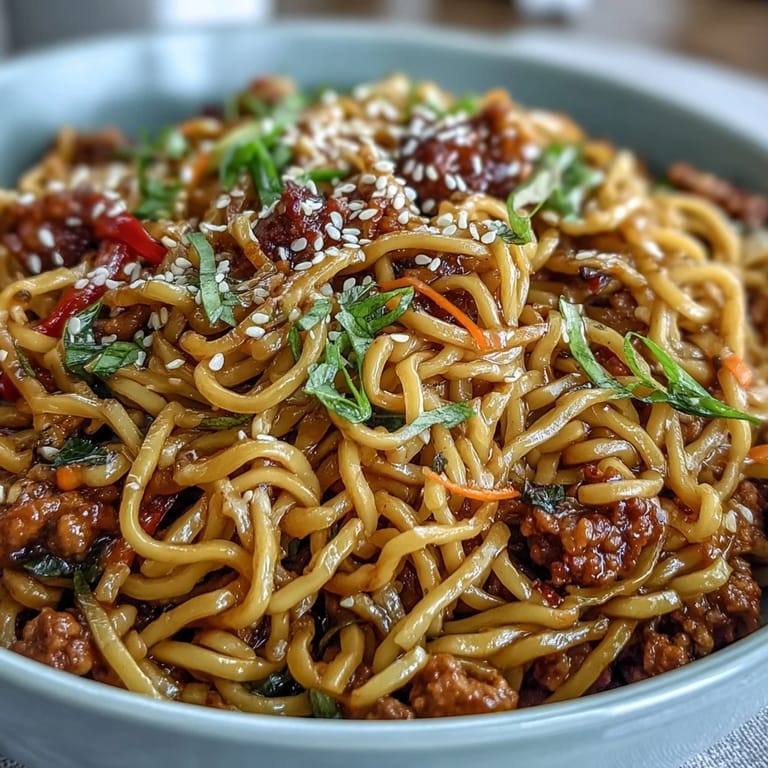
- Remove from heat, scatter sesame seeds and extra green onions over the top, and get it to the table while the noodles still have a slight chew to them. Serve hot, ideally in bowls rather than on plates, because there will be sauce and you'll want to get every drop.
 Save to Pinterest
 There's a moment when everything comes together in the pan—when the heat hits those noodles and they release their starchy aroma, when the sauce starts to cling to them, when you can smell the sesame oil and ginger mingling with the chili paste—and you realize you're about to make something people will actually enjoy eating. That moment happens in about 35 minutes, which feels like magic.
Why Ground Turkey Works Here
Turkey gets a bad reputation in most kitchens because people associate it with dry Thanksgiving disasters, but ground turkey is genuinely different—it's lean without being stringy, and it takes on flavors faster than beef because there's less fat insulating the meat. In this dish, it becomes almost a blank canvas for that gochujang sauce, soaking up the spice and umami without trying to compete.
The Gochujang Advantage
I've made this same dish with just sriracha before, thinking it was basically the same thing, and I was completely wrong—gochujang has a funky, fermented depth that sriracha doesn't touch, plus it contains garlic and soybeans already, so it layers flavor instead of just adding heat. Once you taste what gochujang actually does in this context, you'll understand why it's worth keeping a tube of it in your refrigerator permanently.
Customizing Your Version
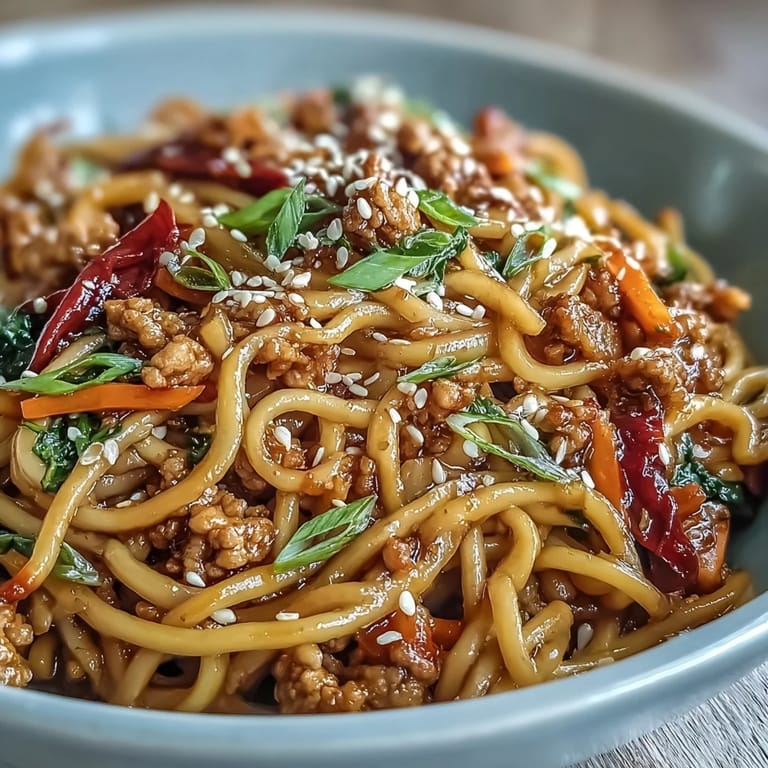
The beauty of this recipe is that it's flexible enough to work with whatever vegetables you happen to have on hand—zucchini, snap peas, mushrooms, broccoli, even frozen stir-fry mixes will work here. The sauce and noodles are non-negotiable, but everything else is honestly just a vehicle for that sauce, so feel free to adapt.
- Swap ground chicken or beef for the turkey depending on what's in your freezer and what you're craving.
- Add a splash of gochugaru or extra gochujang if you want this spicier, or dial it back with less gochujang if you're cooking for people who find heat genuinely offensive.
- For gluten-free versions, use tamari instead of soy sauce and reach for rice noodles or gluten-free ramen.
 Save to Pinterest
 This is the kind of recipe that becomes a weeknight staple almost by accident—you make it once because you're desperate for something fast, and then suddenly it's your go-to when you want something genuinely satisfying without the hours of prep work. That's the whole point.
Recipe FAQs
- → Can I use other meats instead of ground turkey?
Yes, ground chicken or beef work well as substitutes. Adjust cooking time slightly to ensure the meat is fully browned and cooked through.
- → What noodles work best for this dish?
Udon or ramen noodles are ideal due to their chewy texture and ability to hold the sauce. Fresh wheat noodles cook quickly, but dried varieties work perfectly with proper preparation.
- → How can I adjust the spice level?
Increase or decrease the gochujang amount to taste. For extra heat, add gochugaru (Korean chili flakes). To make it milder, reduce the chili paste and add more brown sugar.
- → Is this dish gluten-free?
The traditional version contains gluten from soy sauce and wheat noodles. Make it gluten-free by using tamari instead of soy sauce and swapping to rice noodles or other gluten-free pasta.
- → Can I prepare this ahead of time?
The sauce can be made up to 3 days in advance and stored refrigerated. Vegetables can be prepped ahead, but cook the noodles and assemble the dish just before serving for the best texture.
- → What garnishes enhance this dish?
Toasted sesame seeds add crunch, while extra green onions provide fresh contrast. Consider adding pickled vegetables or a soft fried egg on top for a complete meal experience.