 Save to Pinterest
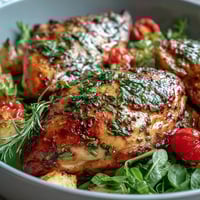
 My sister called me in a panic one Tuesday evening, asking what she could make for dinner that wouldn't feel like a chore. She had twenty minutes and a fridge full of spring vegetables she swore were about to wilt. I walked her through throwing chicken and veggies on a sheet pan with a quick lemon dressing, and twenty minutes later she texted me a photo of golden, steaming food with the caption: 'This is my new weeknight hero.' That conversation changed how I cook on busy nights.
I made this for my mom when she was tired of her usual rotation, and watching her second-guess the simplicity as the oven timer went off was everything. She kept saying, 'Is it really done already?' Yes. Yes, it is. That's kind of the whole point.
Ingredients
- Boneless, skinless chicken breasts (4, about 1.5 lbs / 680 g): Look for breasts that are relatively similar in thickness so they cook evenly; if one side is noticeably thicker, gently pound it down with the heel of your hand.
- Asparagus (1 bunch, trimmed and cut into 2-inch pieces): Snap off the woody ends by hand—they'll naturally break where the tender part begins, and you'll waste less than with a knife.
- Cherry tomatoes (1 cup, halved): These little guys burst slightly in the oven and create a light sauce; don't skip them for aesthetic reasons alone.
- Sugar snap peas (1 cup, trimmed): Leave them mostly whole so they keep their snap and don't turn into little green disappointments.
- Baby carrots (1 cup, halved lengthwise): Halving them lengthwise means they cook faster and have more surface area to caramelize.
- Red onion (1 small, sliced into wedges): The red onion sweetens as it roasts and adds both color and a gentle sharpness that balances the brightness of everything else.
- Yellow bell pepper (1, sliced): Bell peppers add sweetness and bulk without heaviness; if you can only find red or orange, they'll work beautifully too.
- Olive oil (3 tbsp): This is what keeps everything from drying out and helps the marinade coat everything evenly.
- Fresh lemon juice (2 tbsp): Fresh is non-negotiable here; bottled lemon juice tastes like regret, and your dinner deserves better.
- Garlic (2 cloves, minced): Mince it fine so the flavor disperses throughout the marinade rather than appearing in sad little chunks.
- Dijon mustard (1 tsp): This adds a subtle tang and helps the dressing emulsify slightly so it clings to everything.
- Honey (1 tsp): Just a touch to balance the acidity and add a whisper of sweetness that makes people ask what's in this.
- Dried oregano (1 tsp): Mediterranean herbs are the backbone of this dressing; dried works beautifully here since it gets time to bloom in the roasting pan.
- Dried thyme (½ tsp): A quieter herb that adds earthiness without announcing itself.
- Salt (½ tsp) and black pepper (¼ tsp): Season conservatively in the marinade since you'll taste it as everything concentrates during roasting.
- Fresh parsley (2 tbsp, chopped): This is your final flourish, adding freshness and a pop of green that makes the whole plate come alive.
- Lemon wedges (optional): Squeeze these over the finished dish for people who want an extra brightness boost.
Tired of Takeout? 🥡
Get 10 meals you can make faster than delivery arrives. Seriously.
One email. No spam. Unsubscribe anytime.
Instructions
- Heat your oven and prep the pan:
- Crank your oven to 425°F and line a large sheet pan with parchment paper—this isn't just about cleanup, though that's nice. The parchment helps everything roast evenly and prevents sticking.
- Build the magic dressing:
- Whisk together olive oil, lemon juice, garlic, mustard, honey, oregano, thyme, salt, and pepper in a small bowl. Taste it if you want—it should taste bright and a little herby, not overwhelming.
- Coat the chicken:
- Pat your chicken breasts dry with paper towels (this helps them brown), then arrange them on the sheet pan and brush both sides generously with half the dressing. Wet hands and slightly damp chicken is the enemy of browning.
- Dress the vegetables:
- Toss all your vegetables in a large bowl with the remaining marinade, making sure everything gets coated. This is where the vegetables will pick up all their seasoning.
- Arrange everything on the pan:
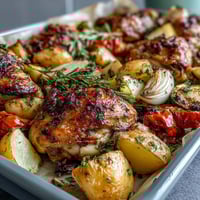
- Scatter the vegetables around and between the chicken in a single layer—avoid piling them on top of each other, which steams them instead of roasting them. Leave a little breathing room.
- Roast until golden:
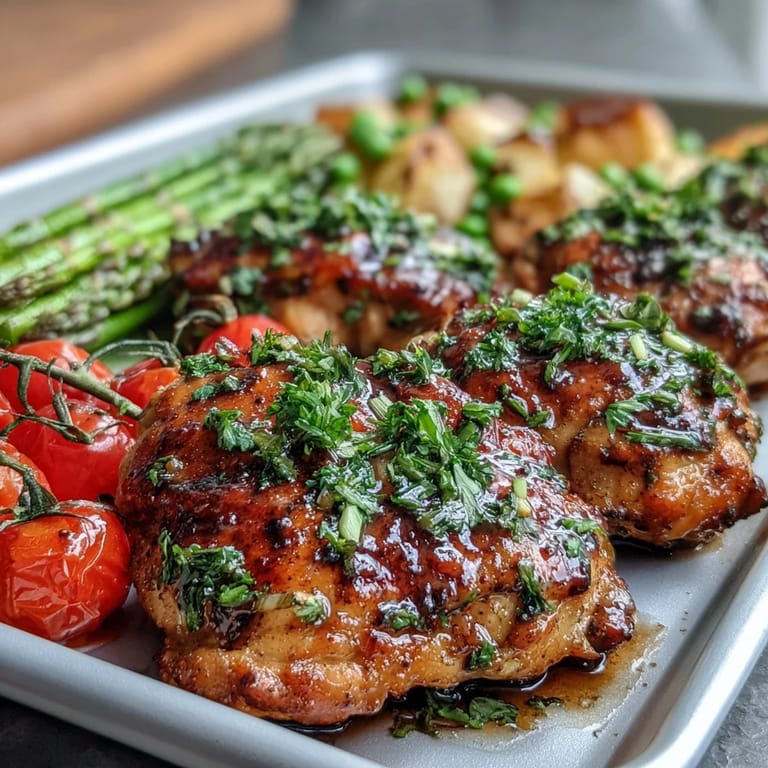
- Into the oven for 25 to 30 minutes, until the chicken reaches 165°F on a meat thermometer and the vegetables are tender with slightly crispy edges. Start checking at 25 minutes; ovens vary, and overcooked chicken is the enemy of the whole endeavor.
- Rest and finish:
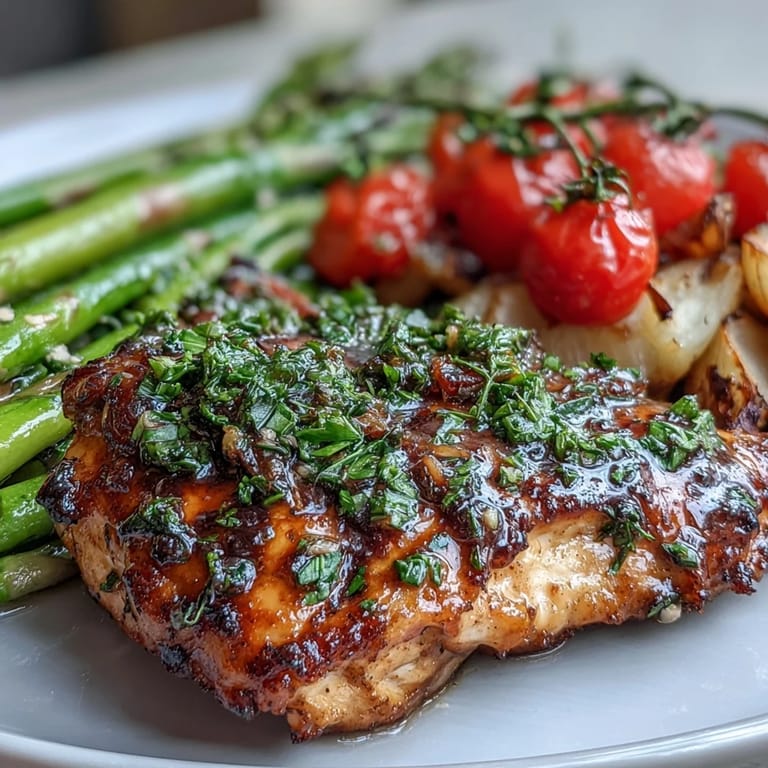
- Pull everything out and let it sit for 5 minutes before serving—this lets the chicken relax and stay juicy. Scatter fresh parsley over the top and serve with lemon wedges on the side.
 Save to Pinterest
 My neighbor brought over a version of this when I was overwhelmed with work deadlines, and I realized in that moment how a simple, beautiful meal can say more than words. Food that takes care of you without asking much in return is its own kind of love language.
The Case for Cooking Everything at Once
The genius of sheet pan cooking isn't just the minimal dishes—it's that your protein and vegetables share the same space, so the chicken seasons the pan and the vegetables benefit from those little fond bits and drippings. Everything tastes connected rather than like separate components that happen to be on the same plate. Plus, there's something satisfying about pulling one hot pan out of the oven and knowing dinner is completely finished.
Spring Vegetables and Timing
Spring vegetables are special because they're tender enough not to need a head start, which means you can throw everything on the pan at the same time without stress. If you're tempted to add heartier vegetables like root vegetables or potatoes, cut them smaller or cook them five to ten minutes before adding the chicken and other vegetables—otherwise they'll still be hard when the chicken is done. The vegetables listed here are forgiving, which is honestly why I come back to them over and over.
Making It Your Own
This recipe is more of a template than a strict rulebook, which is why it's lived so long in my regular rotation. The dressing works with almost any vegetable you have on hand, and the cooking method stays exactly the same. I've thrown in zucchini, radishes, baby potatoes (with adjusted timing), and even chunks of fennel, and every version tastes like someone who knows what they're doing made it.
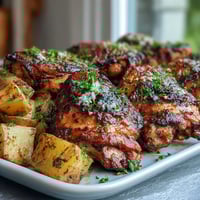
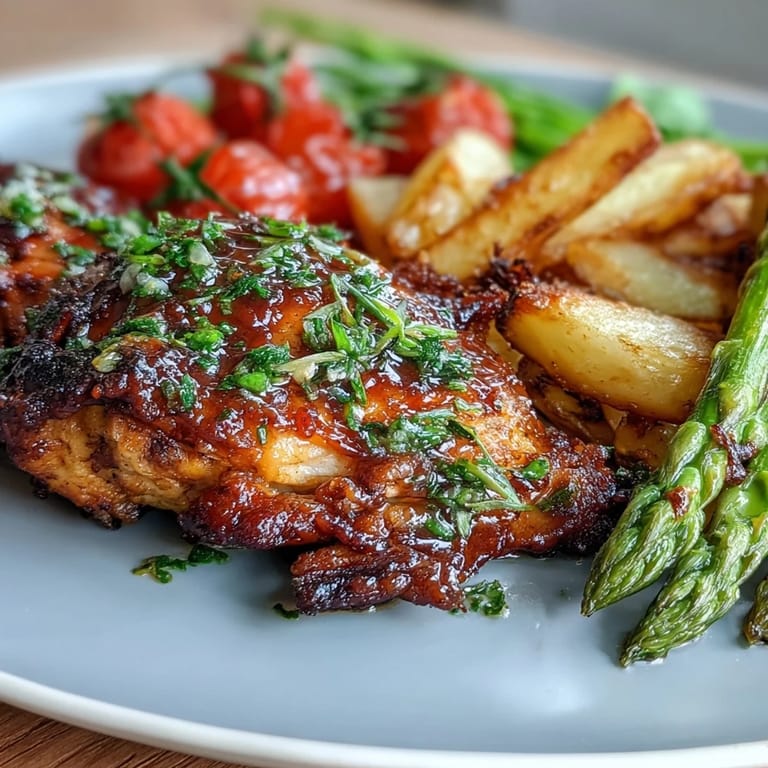
- Swap chicken breasts for thighs if you want something more forgiving and richly flavored—just check for doneness a few minutes earlier since thighs are smaller.
- A crumble of feta or goat cheese over the top adds creaminess and a salty tang that transforms it into something fancier.
- If you have fresh herbs like basil or dill, toss them in at the very end instead of the parsley for a completely different but equally delicious version.
 Save to Pinterest
 This dinner has fed tired people at my table more times than I can count, and it never once made me regret the choice. That's the real test of a recipe.
Recipe FAQs
- → What vegetables work best for this dish?
Asparagus, cherry tomatoes, sugar snap peas, baby carrots, red onion, and yellow bell pepper complement the chicken well and roast evenly.
- → Can I use different cuts of chicken?
Yes, boneless thighs can be swapped for breasts, adjusting cooking time slightly for even doneness.
- → How do I ensure the chicken stays juicy?
Brushing chicken with marinade before roasting and resting it after cooking helps retain moisture and enhances flavor.
- → Can I prepare this meal ahead of time?
Marinate the chicken and vegetables beforehand; then roast just before serving for fresh, vibrant results.
- → What sides pair well with this sheet pan dinner?
A crisp Sauvignon Blanc or light rosé wine complements the meal wonderfully, while simple grains or salad add variety.