 Save to Pinterest
 Last spring, I was standing at the farmers market with my reusable bag nearly empty, staring at a pile of just-picked zucchini and cherry tomatoes that seemed to glow in the afternoon sun. The vendor mentioned they'd taste incredible roasted together, and something about the simplicity stuck with me. That night, I threw chicken on a pan with those vegetables and a quick lemon-herb mixture, and what emerged forty-five minutes later was so effortlessly delicious that I've made it countless times since. This is the kind of dinner that feels special without demanding anything complicated from you.
I made this for my sister during her first week working from home, back when the whole world felt uncertain. She'd been stress-eating whatever was convenient, so I texted her a photo of this coming out of the oven and asked if she wanted dinner delivered. The look on her face when she opened that container—tired but grateful—reminded me that sometimes the most nourishing thing you can do is feed someone without making them think about it.
Ingredients
- Boneless, skinless chicken breasts (4, about 1.5 lbs): They cook quickly and evenly on a sheet pan, especially if you pound them to a consistent thickness so nobody gets an overcooked edge while waiting for the center to catch up.
- Medium zucchini (2, sliced into 1/2-inch rounds): Thinner slices get too soft and disappear; thicker rounds stay firm enough to have actual texture, and the cut surface caramelizes beautifully.
- Cherry tomatoes (2 cups, halved): Halving them helps them release their juice into the pan, creating a light sauce that pools around everything.
- Small red onion (1, cut into wedges): Red onion turns sweeter as it roasts, and the wedges stay intact instead of falling apart like thin slices might.
- Olive oil (3 tbsp): This is what creates the golden edges on your vegetables, so don't skip it or try to use less.
- Fresh lemon juice (2 tbsp): Bottled works in a pinch, but the real stuff makes you taste the brightness instantly, cutting through the richness of the chicken skin.
- Dried Italian herbs or herbes de Provence (2 tsp): Either blend works, though herbes de Provence has a subtle lavender note that makes people ask what that flavor is.
- Garlic cloves (3, minced): Mince them fine so they distribute throughout the marinade and become almost candy-like when roasted.
- Kosher salt (1 tsp) and freshly ground black pepper (1/2 tsp): Season generously here because the vegetables will absorb a lot, and underseasoning is the quickest way to make something taste flat.
- Fresh basil or parsley (2 tbsp, chopped, optional): It's optional until you taste it right before serving, then you'll wonder why you ever considered skipping it.
Tired of Takeout? 🥡
Get 10 meals you can make faster than delivery arrives. Seriously.
One email. No spam. Unsubscribe anytime.
Instructions
- Heat your oven and prep the pan:
- Crank the oven to 425°F and line a large rimmed baking sheet with parchment paper or foil. This high temperature is what gives you golden edges on everything, and the parchment saves you from soaking a pan later.
- Make your marinade:
- In a small bowl, whisk together the olive oil, lemon juice, dried herbs, minced garlic, salt, and pepper until it emulsifies slightly and smells like spring. This is the moment when you realize how much flavor lives in such a small amount of liquid.
- Arrange everything on the pan:
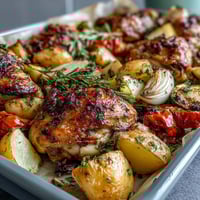
- Place the chicken breasts in the center of your sheet pan, then scatter the zucchini, cherry tomatoes, and red onion around them. Think of it less like precise plating and more like creating little pockets where vegetables can roast beside each other.
- Coat everything evenly:
- Drizzle the marinade over the chicken and vegetables, then gently toss the vegetables with your hands or a spoon so they're all touched by the oil and herbs. The chicken can stay put—it doesn't need aggressive tossing.
- Roast until everything is golden and cooked through:
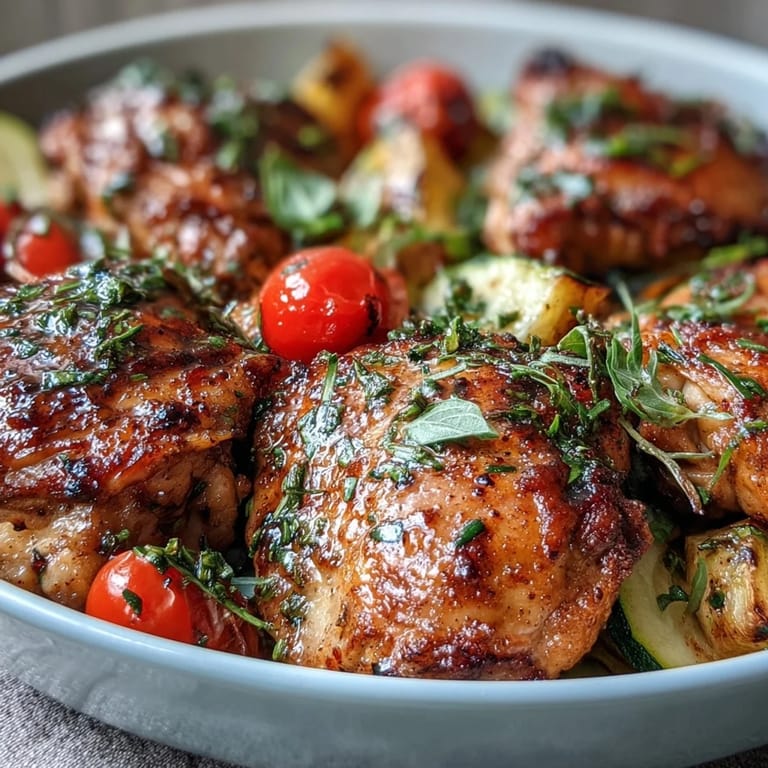
- Slide the pan into your preheated oven and roast for 25 to 30 minutes, checking around the 20-minute mark to see how things are progressing. The chicken is done when an instant-read thermometer inserted into the thickest part reads 165°F, and the vegetables should be tender with some browning at the edges.
- Optional browning step:
- If you want the vegetables even more caramelized, turn on the broiler for 2 to 3 minutes at the very end—just watch it carefully so nothing burns. This is optional but changes the texture from soft to soft-with-crispy-edges, which some nights feel worth the extra attention.
- Finish with fresh herbs:
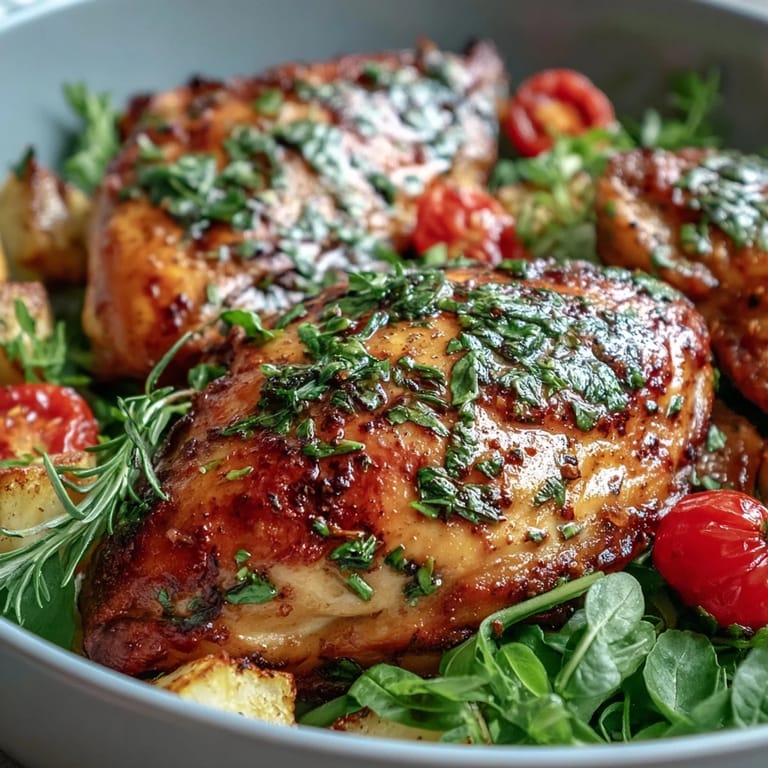
- Right before serving, scatter chopped fresh basil or parsley over everything. Fresh herbs on top of roasted food is the difference between a weeknight dinner and something you'd order at a nice restaurant.
 Save to Pinterest
 My neighbor came home to the smell of this baking and just appeared at my kitchen door asking what smelled like that. We ended up eating together on her porch at sunset, and she told me she'd been avoiding cooking because she felt like she'd lost the knack for it. Somehow a simple sheet pan of roasted chicken reminded her that good food doesn't require expertise, just intention.
Timing and Make-Ahead Magic
You can prep this entirely in the morning—wash and slice your vegetables, make your marinade in a container, and even arrange everything on the sheet pan. Just cover it with plastic wrap and refrigerate until you're ready to roast. The only downside is that cold ingredients take about 5 minutes longer to cook through, but that's a small price for not thinking about dinner until 6 p.m.
Variations That Work Beautifully
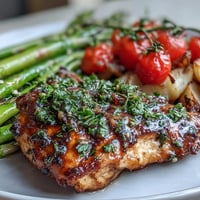
Swap chicken thighs for breasts if you want more forgiving meat that's harder to overcook, though you'll need to add about 5 minutes to the cooking time. Asparagus, bell peppers, and even thin-sliced fennel all roast alongside chicken without any changes to timing or temperature. You can also double the marinade and add a splash of white wine, which creates a more sauce-like consistency that pools at the bottom of the pan.
Serving Ideas and Pairings
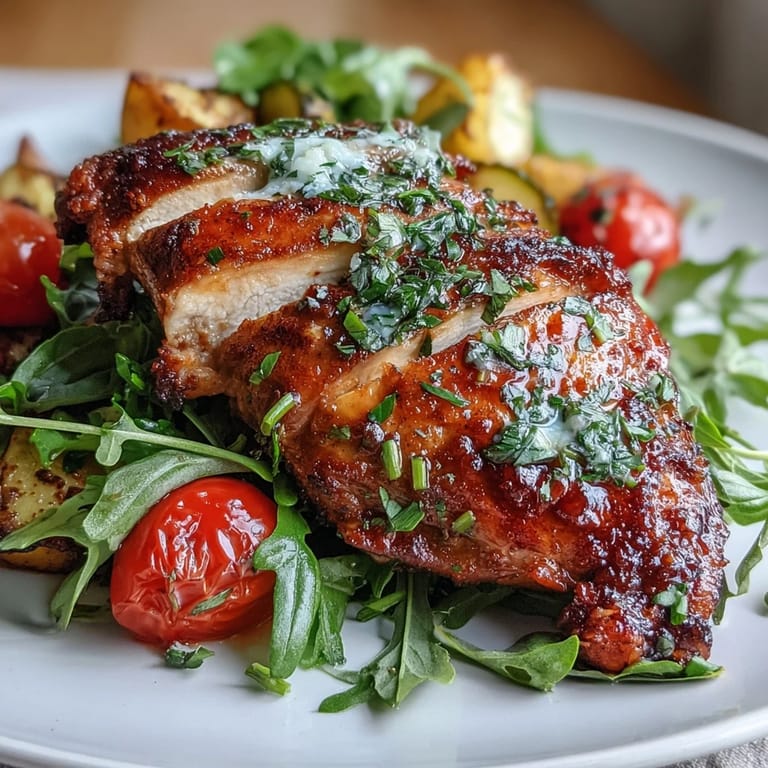
This works perfectly on its own as a light dinner, but if you're feeding hungry people or want something more filling, serve it with crusty bread to soak up the pan juices or over fluffy quinoa that absorbs all those herby flavors. A crisp Sauvignon Blanc or light Pinot Noir is the obvious wine choice, but honestly, this tastes just as good with sparkling water and lemon. Whatever you choose, remember that simple food often tastes better when you're not overthinking the accompaniments.
- Crusty bread transforms the pan juices into a meal that feels complete and less like diet food.
- Leftover roasted vegetables are incredible tossed into a grain bowl the next day with a dollop of plain yogurt.
- If you have extra chicken, shred it and use it in salads or grain bowls throughout the week.
 Save to Pinterest
 This dinner exists in that sweet spot where it tastes impressive but never feels complicated, and that's exactly why I keep coming back to it. It's the kind of meal that proves you don't need fancy techniques or long ingredient lists to feed yourself and the people you care about really well.
Recipe FAQs
- → Can I use chicken thighs instead of breasts?
Yes, chicken thighs can be substituted; just adjust the cooking time to ensure they reach an internal temperature of 165°F (74°C) for safe consumption.
- → What other vegetables work well with this dish?
Seasonal vegetables like asparagus, bell peppers, or green beans can be added for extra flavor and variety.
- → How can I ensure the chicken stays juicy?
Marinating the chicken in olive oil, lemon juice, garlic, and herbs helps lock in moisture and infuses flavor throughout the cooking process.
- → Is it necessary to broil at the end?
Broiling for 2–3 minutes at the end is optional but helps to lightly brown and caramelize the vegetables for added texture and taste.
- → What sides pair well with this meal?
Serve with crusty bread, cooked quinoa, or a simple green salad to complement the vibrant flavors.