 Save to Pinterest
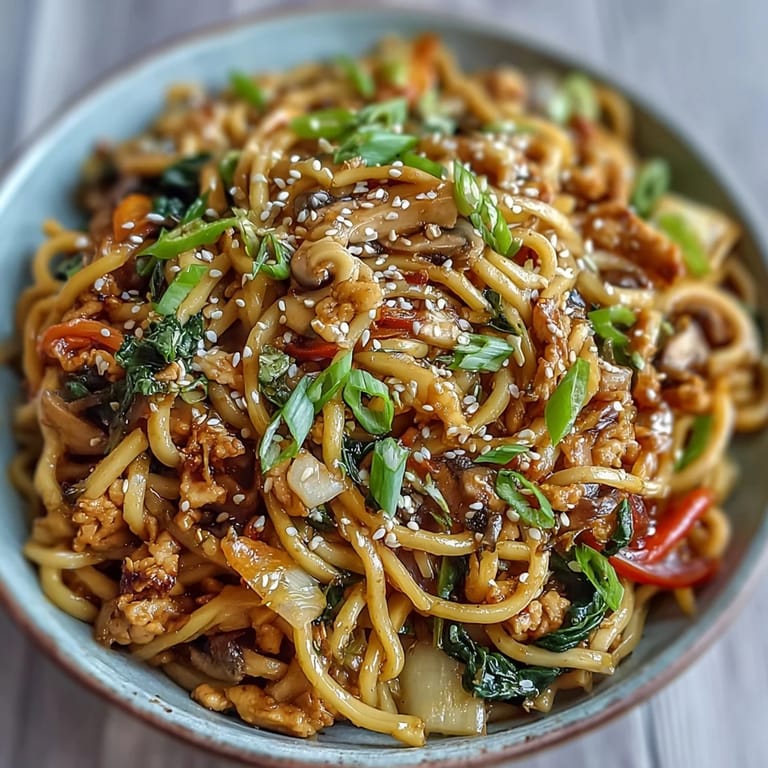
 My kitchen smelled like sesame oil and gochujang the night I first threw together Korean turkey fried noodles on a random Tuesday. I had ground turkey thawing on the counter, a jar of gochujang staring at me from the fridge, and exactly twenty minutes before I needed dinner on the table. What started as improvisation became the dish I now make when I want something that feels both comforting and alive, with that perfect balance of sweet heat that sneaks up on you.
I made this for my coworker James who mentioned he was tired of eating the same bland lunches, and watching his face light up when he tried it reminded me that the best meals are the ones that surprise people. He asked for the recipe before he'd even finished the bowl, which is when I knew this wasn't just dinner—it was the kind of dish that gets passed around and becomes part of someone's regular rotation.
Ingredients
- Fresh or dried wheat noodles (300g): Udon gives you a chewy bounce, ramen a thinner slurp; either works beautifully and both hold the sauce like they were made for it.
- Soy sauce (3 tbsp): The foundation of umami that ties everything together and makes you wonder why you don't taste this depth in your everyday cooking.
- Gochujang (2 tbsp): This fermented chili paste is the secret weapon—it brings spice, sweetness, and complexity all at once, so use a brand you trust.
- Brown sugar (1 tbsp): Just enough to round out the heat and create that addictive sweet-spicy balance that keeps you reaching for another bite.
- Rice vinegar (1 tbsp): A small splash that brightens everything and prevents the sauce from feeling heavy or one-dimensional.
- Sesame oil (1 tbsp): The finishing touch that makes you realize why this ingredient gets its own shelf space in every serious kitchen.
- Ground turkey (400g): Lean, quick to cook, and neutral enough to let the sauce shine; chicken or beef work just as well if that's what you have.
- Vegetable oil (2 tbsp): Split between cooking the turkey and sautéing the aromatics, keeping everything from sticking.
- Garlic and ginger (3 cloves and 1 tbsp): Thirty seconds in the hot oil releases their fragrance in a way that makes you pause and breathe in before moving forward.
- Yellow onion (1 medium): Sliced thin so it softens into the dish rather than remaining stubbornly crunchy.
- Carrot (1 medium): Julienned means thin matchsticks that cook in moments and add subtle sweetness and color.
- Red bell pepper (1 medium): Cut into thin slices for visual pop and a slight sweetness that balances the spice.
- Shiitake mushrooms (100g): These umami-packed fungi add an earthy depth that makes the dish feel more restaurant-quality than weeknight.
- Spring onions (4 total): Two go into the stir-fry for gentle onion flavor, two finish the dish for a bright fresh bite and visual appeal.
- Toasted sesame seeds (1 tbsp): The garnish that feels small but tastes like intentionality, adding crunch and nuttiness to every spoonful.
Tired of Takeout? 🥡
Get 10 meals you can make faster than delivery arrives. Seriously.
One email. No spam. Unsubscribe anytime.
Instructions
- Start the noodles:
- Fill a pot with water and bring it to a rolling boil while you prep everything else, then add your noodles and cook exactly to package instructions. The moment they're done, drain them in a colander and rinse with cold water to stop the cooking and prevent them from clumping into one sticky mass.
- Build your sauce foundation:
- Whisk soy sauce, gochujang, brown sugar, rice vinegar, and sesame oil in a small bowl until the paste breaks down and everything melds together into a glossy, rust-colored sauce. Taste it right now—it should make you think this is going to be something special.
- Brown the turkey:
- Heat 1 tablespoon of vegetable oil in your wok or largest skillet over medium-high heat until it shimmers, then add the ground turkey and cook for about five minutes, using your spoon or spatula to break it into small pieces as it browns. You'll hear it sizzle and smell the savory aroma that means it's almost there, then it'll turn from pink to golden and you're done—transfer it to a clean plate.
- Sauté the fragrant layer:
- Add your remaining tablespoon of oil to the pan, then immediately add minced garlic and ginger and let them sit in the heat for just thirty seconds until your kitchen fills with that unmistakable aroma. This is the moment that makes everything taste like it came from a restaurant kitchen instead of your weeknight stove.
- Cook the vegetables:
- Toss in your sliced onion, julienned carrot, bell pepper slices, and sliced mushrooms all at once and keep everything moving with constant stirring for three to four minutes until the vegetables soften but still have a slight firmness to them. You want them tender enough to taste cooked but not so soft they disappear into mush.
- Bring everything home:
- Return the cooked turkey to the pan, add your cooked noodles and the sauce you made earlier, then turn the heat to high and toss everything together for two to three minutes until the sauce coats every noodle and the whole dish is steaming and unified. This is where the transformation happens and it all starts to make sense.
- Finish and serve:
- Stir in your spring onions so they're warm but still bright, then divide everything among bowls and scatter toasted sesame seeds and extra spring onion slices on top. Serve immediately while the heat is still rising from the bowl.
 Save to Pinterest
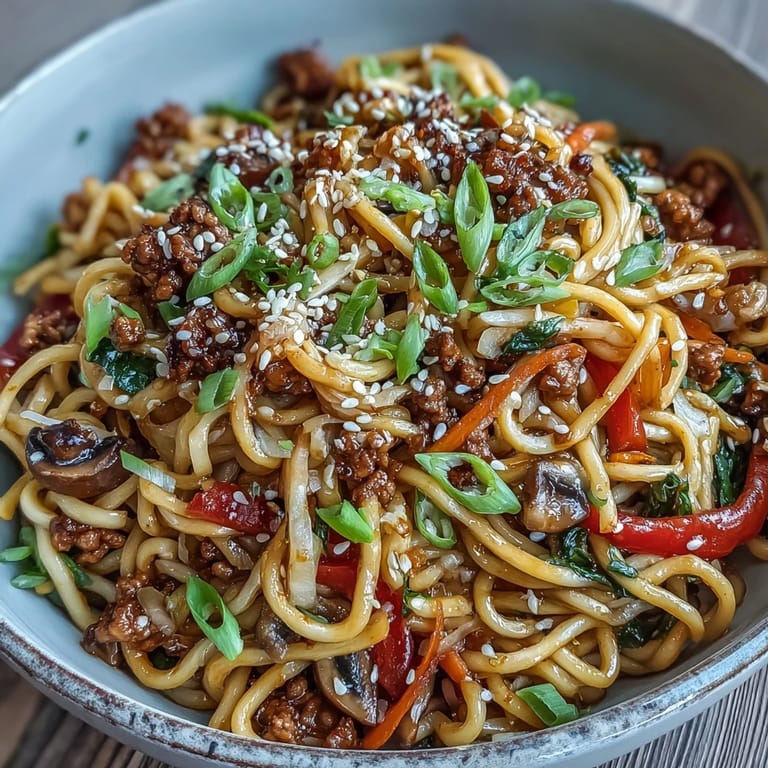
 My partner came home one evening to find me plating this dish with the kind of focus usually reserved for something far more complicated, and she asked why I was making such a fuss over weeknight noodles. After one bite she understood—this is the kind of food that makes you feel like someone cared about your dinner, even when that someone is just yourself on a Tuesday night.
Why This Tastes Like Restaurant Food
The secret isn't complicated ingredients or mysterious techniques; it's the layering of flavor and the commitment to high heat. When you cook the turkey first, you build a foundation of caramelized protein that grounds the whole dish. When you sauté the garlic and ginger separately, you wake them up rather than drowning them. When you finish on high heat with everything together, you create a moment where the sauce doesn't just coat the noodles but slightly caramelizes against them, creating texture and depth that makes your brain think this came from someone who went to culinary school.
The Sauce Is Everything
This sauce deserves its own paragraph because it's genuinely the reason this dish works. The gochujang brings fermented funk and gentle heat, the soy sauce brings salt and umami, the brown sugar brings balance and body, the rice vinegar brings brightness, and the sesame oil brings that toasty richness that makes you close your eyes and appreciate what you're eating. You could theoretically put this sauce on plain rice and be satisfied, which tells you how much work it's doing in the background of this dish.
Variations and Swaps That Actually Work
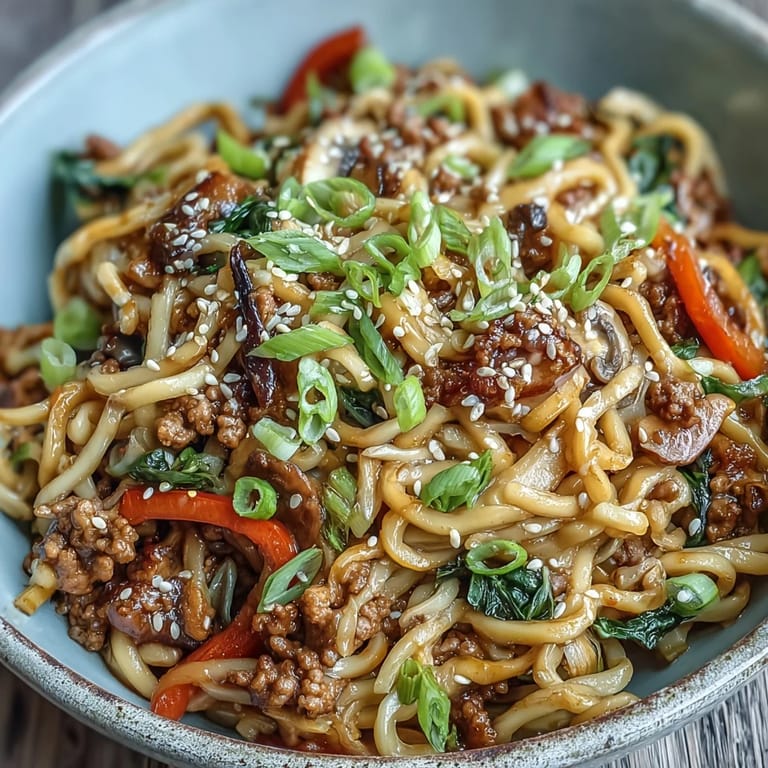
I've made this dish with chicken thighs instead of ground turkey and loved the slightly richer flavor, with beef for something more robust, even with firm tofu when I wanted to eat lighter. The vegetables list is truly just a starting point—zucchini, snap peas, broccoli, spinach, baby bok choy, literally any vegetable you have in your fridge will work here because the sauce is confident enough to carry it all. Heat is adjustable by adding sliced fresh chilies or chili flakes, and if you want to push it toward more authentic Korean flavors, serving it alongside kimchi or a simple cucumber banchan elevates the whole experience without adding any real work to your cooking.
- Protein flexibility: Ground chicken, beef, or even crumbled firm tofu work beautifully in place of turkey.
- Vegetable creativity: Snap peas, zucchini, broccoli, spinach, or baby bok choy can all swap in for what the recipe calls for.
- Heat adjustment: Add fresh sliced chilies or chili flakes if you want to push the spice level higher than the recipe naturally provides.
 Save to Pinterest
 This dish has become my answer to that 5 p.m. question of what's for dinner, the one where you're tired and hungry and have limited time but still want something that tastes deliberate and delicious. Make it once and you'll understand why it keeps showing up on my weeknight rotation.
Recipe FAQs
- → What type of noodles work best?
Fresh udon or ramen noodles are ideal for their bouncy texture and ability to hold the thick gochujang-based sauce. Dried wheat noodles work perfectly too—just cook until al dente and rinse thoroughly to stop cooking and remove excess starch.
- → Can I make it less spicy?
Absolutely. Reduce the gochujang to 1 tablespoon for mild heat, or substitute with a milder Korean bean paste called doenjang. You can also add a touch more brown sugar to balance any remaining spice.
- → How do I prevent noodles from sticking?
Rinse cooked noodles under cold water to remove surface starch and halt cooking. Toss them with a teaspoon of sesame oil before setting aside. When adding to the wok, work quickly over high heat so the sauce coats evenly without becoming sticky.
- → What vegetables can I substitute?
Feel free to use what's in your kitchen. Zucchini, snap peas, spinach, bean sprouts, or baby corn all work well. Aim for about 300-400g total vegetables, cutting them into similar sizes so they cook evenly.
- → Can I prep this ahead?
Yes. Slice vegetables and mix the sauce up to 24 hours in advance, storing them separately in the refrigerator. Cook noodles fresh for best texture, though you can cook them a few hours ahead—just toss with oil to prevent sticking and reheat quickly in the wok.
- → What protein alternatives work?
Ground chicken, beef, or pork all substitute beautifully. For a vegetarian version, use crumbled firm tofu or tempeh, adding it in step 4 with the vegetables so it absorbs the sauce flavors.