 Save to Pinterest
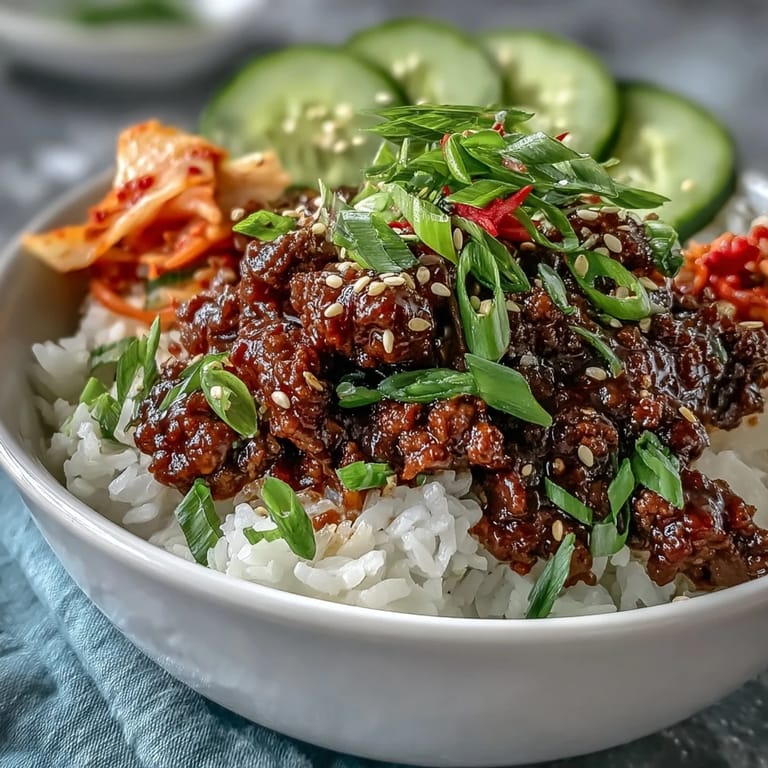
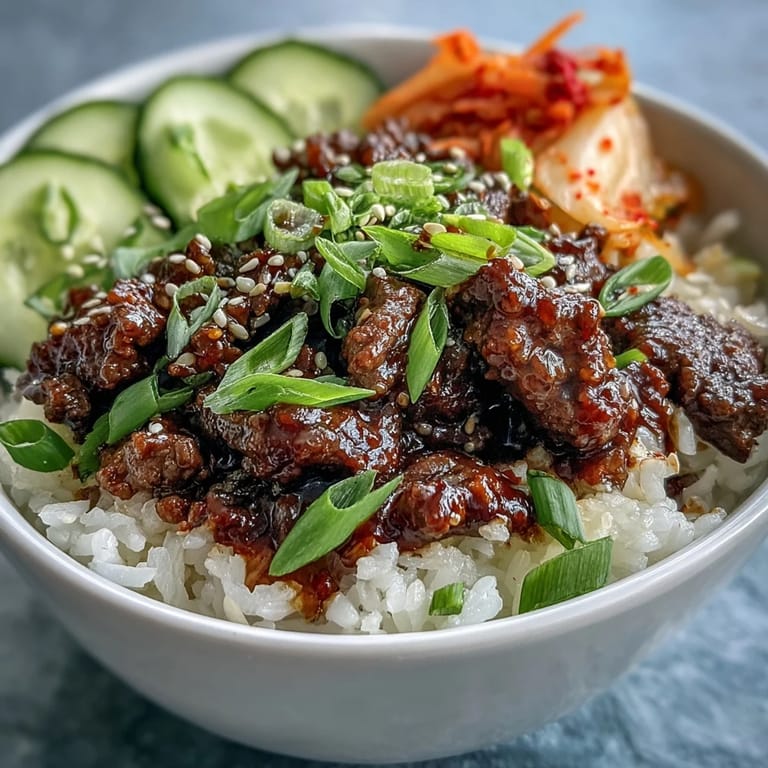
 Experience a burst of bold, savory, and spicy flavors with this Korean Beef Bowl. This vibrant dish combines tender ground beef glazed in a rich gochujang sauce with the crunch of fresh vegetables and the tangy kick of quick-pickled carrots and daikon. It's a complete, nutritious meal that brings the essence of Korean street food right to your dinner table in just 35 minutes.
Save to Pinterest Whether you're looking for a healthy weeknight dinner or a colorful dish to impress guests, these bowls offer a satisfying balance of protein, grains, and fermented vegetables. The combination of warm, saucy beef and chilled, crisp toppings creates a delightful contrast in every bite.
Ingredients
Tired of Takeout? 🥡
Get 10 meals you can make faster than delivery arrives. Seriously.
One email. No spam. Unsubscribe anytime.
- For the Beef: 1 lb (450 g) lean ground beef, 2 tbsp vegetable oil, 3 cloves garlic, minced, 1 tbsp fresh ginger, grated, 3 tbsp gochujang (Korean chili paste), 2 tbsp soy sauce, 1 tbsp brown sugar, 1 tbsp rice vinegar, 1 tsp toasted sesame oil, 2 green onions, thinly sliced
- For the Pickled Vegetables: 1/2 cup (60 g) carrot, julienned, 1/2 cup (60 g) daikon radish, julienned, 1/2 cup (120 ml) rice vinegar, 1 tbsp sugar, 1/2 tsp salt
- For Serving: 4 cups cooked white rice (or brown rice), 1 cup cucumber, thinly sliced, 1/2 cup radish, thinly sliced, 1 cup kimchi, chopped, 1 tbsp toasted sesame seeds
Instructions
- 1. Prepare the Pickled Vegetables
- In a small bowl, combine the rice vinegar, sugar, and salt. Stir until dissolved. Add the carrot and daikon radish. Mix well and set aside to pickle while you prepare the rest of the dish.
- 2. Cook the Beef
- Heat vegetable oil in a large skillet over medium-high heat. Add garlic and ginger, sauté for 1 minute until fragrant. Add ground beef and cook, breaking it up with a spoon, until browned and cooked through (about 5–6 minutes). Drain excess fat if needed.
- 3. Season the Beef
- Stir in the gochujang, soy sauce, brown sugar, rice vinegar, and sesame oil. Cook for another 2–3 minutes, allowing the sauce to thicken and coat the beef. Remove from heat and stir in half the green onions.
- 4. Assemble the Bowls
- Divide the cooked rice among 4 bowls. Top each with a generous portion of the beef mixture. Arrange pickled vegetables, cucumber, radish, and kimchi around the beef. Garnish with remaining green onions and toasted sesame seeds.
- 5. Serve
- Serve immediately.
Zusatztipps für die Zubereitung
To achieve the best texture, ensure your skillet is preheated before adding the ground beef so it sears properly rather than steaming. If you want the beef extra saucy, you can double the gochujang and soy sauce quantities.
Varianten und Anpassungen
This recipe is highly versatile; you can substitute the ground beef with ground chicken, turkey, or even plant-based crumbles. For a gluten-free version, use tamari in place of soy sauce and verify that your gochujang is gluten-free.
Serviervorschläge
For an extra kick, add a drizzle of sriracha or an extra dollop of gochujang on top. These bowls pair beautifully with a light, crisp lager or a refreshing glass of chilled green tea to cut through the spice.
 Save to Pinterest
 Enjoy this flavorful journey to Korea from the comfort of your home. With its vibrant colors and balanced nutrition, this Korean Beef Bowl is sure to become a staple in your weekly meal rotation.
Recipe FAQs
- → Can I make this dish less spicy?
Reduce the gochujang to 1-2 tablespoons and add extra brown sugar to balance the flavors. You can also serve with extra plain rice to temper the heat.
- → What can I substitute for gochujang?
Sriracha mixed with a teaspoon of miso paste works well, or use Korean red pepper flakes (gochugaru) with a bit of tomato paste for texture and sweetness.
- → How long do the pickled vegetables last?
They keep well in the refrigerator for up to one week in an airtight container. The flavors continue to develop over time, making them even more tangy.
- → Can I prepare components in advance?
The pickled vegetables can be made up to a week ahead. The cooked beef mixture stores well for 3-4 days and reheats easily. Fresh toppings should be added just before serving.
- → Is this suitable for meal prep?
Yes, portion the beef, rice, and pickled vegetables into separate containers. Store for up to 4 days and reheat the beef and rice before assembling with fresh toppings.