 Save to Pinterest
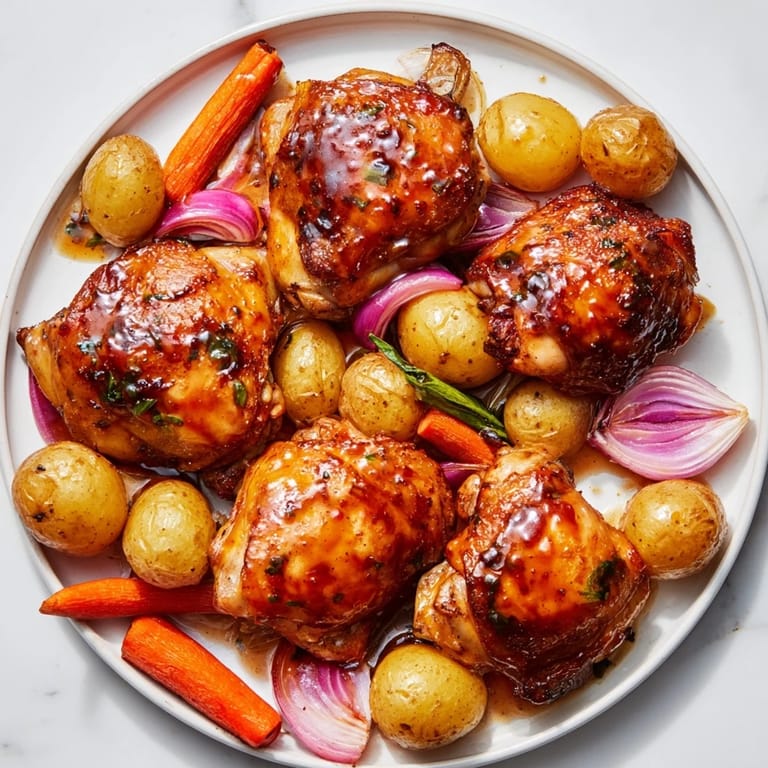
 There's something about the smell of maple hitting hot pan that makes you feel like you've got dinner figured out. I was standing in my kitchen on a random Tuesday, honestly just trying to avoid the usual chicken routine, when I grabbed a bottle of maple syrup and some Dijon mustard without much of a plan. Twenty minutes later, I had golden, glossy chicken thighs roasting with vegetables, and my partner wandered in asking what smelled so good. That maple-Dijon glaze became the thing I now make when I want something that looks like I tried way harder than I actually did.
I made this for my sister's family last fall when everyone was exhausted from moving, and I remember her youngest asking for seconds—which basically never happens. There was something about setting down a pan that looked fancy but required zero stress that felt like the right move in that moment. She's made it three times since then, and apparently it's become their Thursday night staple.
Ingredients
- Bone-in, skin-on chicken thighs: These are the non-negotiable part—dark meat stays moist where breasts dry out, and the skin renders down into crispy gold if you don't move them around too much.
- Pure maple syrup: Not pancake syrup, which is basically corn and sadness; real maple syrup gives you the flavor and glaze you actually want.
- Dijon mustard: This is your secret ingredient that keeps the glaze from being one-note sweet—it adds punch and helps the whole thing caramelize.
- Apple cider vinegar: A splash cuts through the richness and keeps everything tasting bright instead of cloying.
- Smoked paprika: Sounds fancy but it's just paprika that's been kissed by smoke; it adds a whisper of depth that nobody can quite put their finger on.
- Fresh garlic and thyme: These make the glaze taste like you actually care, which apparently matters.
- Seasonal vegetables: Baby potatoes and carrots are the standard, but honestly swap in whatever is actually in your crisper drawer.
Tired of Takeout? 🥡
Get 10 meals you can make faster than delivery arrives. Seriously.
One email. No spam. Unsubscribe anytime.
Instructions
- Get everything ready:
- Line your pan with parchment or foil—this matters because caramelized maple sticks like it has a personal vendetta against you. Pat your chicken completely dry; wet skin will never crisp, and that's the whole point.
- Make the glaze:
- Whisk maple syrup, Dijon mustard, olive oil, vinegar, minced garlic, thyme, and smoked paprika until it looks like thin caramel. This takes about thirty seconds and your life will be measurably better for those thirty seconds of effort.
- Prep the vegetables:
- Toss potatoes, carrots, and onion with a little olive oil and salt; spread them out in one layer on your sheet pan. They need room or they'll steam instead of roast, and that's a texture crime.
- Arrange and glaze:
- Nestle chicken thighs skin-side up among the vegetables—this way the fat renders down and flavors everything. Brush each thigh generously with glaze, saving about two tablespoons for later.
- First roast:
- Into a 425°F oven for thirty minutes; your kitchen will start smelling like something from a restaurant you can't afford.
- Final glaze and finish:
- Pull the pan out, brush on that reserved glaze, and roast another five to ten minutes until the skin is properly caramelized and the internal temperature hits 165°F. You're looking for deep golden brown, not pale.
- Rest and serve:
- Let everything sit for five minutes so the meat can relax and hold onto its juices. Sprinkle extra thyme on top if you want people to think you're fancy.
 Save to Pinterest
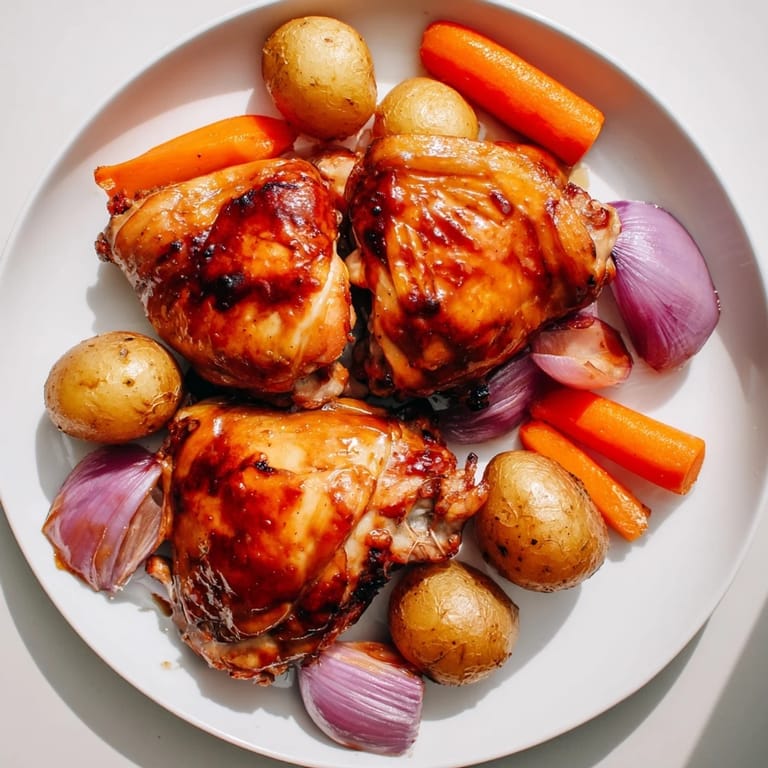
 My friend texted me a photo of this on her dinner table with the caption "I'm a competent human," and I realized that's really what this recipe does—it makes you feel capable. There's something about pulling a beautifully caramelized sheet pan out of the oven that rewires how you think about weeknight cooking.
Why the Maple-Dijon Combination Works
Sweet and savory seems simple until you realize most home cooks defaulting to one or the other. Maple brings sweetness and that dark, complex depth that comes from boiled tree sap, while Dijon mustard throws in tangy sharpness and helps everything caramelize instead of just sitting there glazed like a tired donut. The apple cider vinegar is the quiet player that keeps your palate from getting numb to all that richness—it's what makes you want another bite instead of feeling full three bites in.
Vegetable Timing and Texture
Potatoes and carrots take about as long as chicken thighs to roast, which is why they're the vegetables of choice here—nothing cooks separate, nothing burns while you wait for something else. The red onion caramelizes into something sweet and almost jammy by the time everything is done. If you swap in something that cooks faster like broccoli, you'll need to add it partway through or you'll end up with sad overcooked broccoli and nobody wants that.
Timing and Temperature
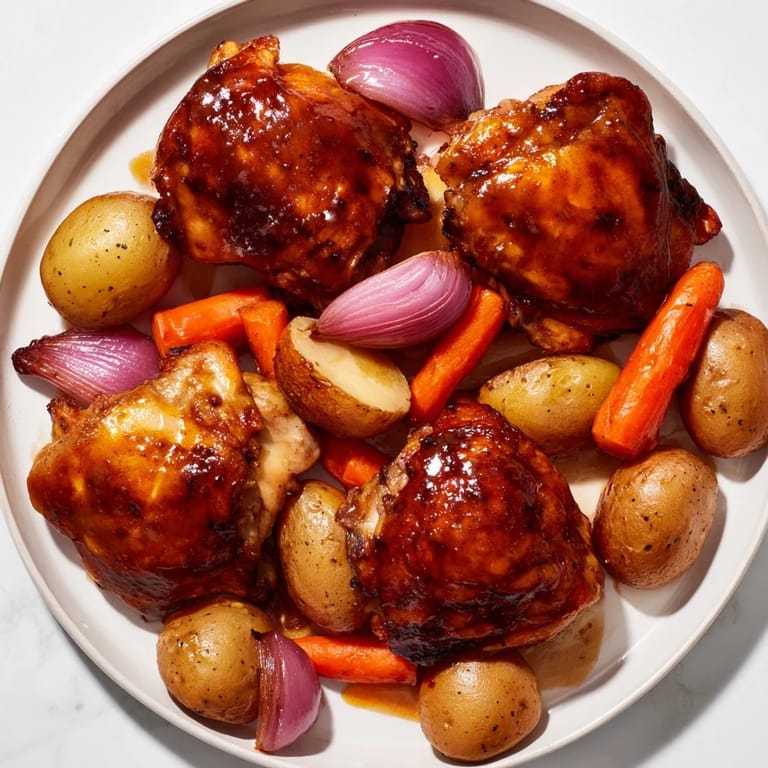
Thirty minutes at 425°F is enough time for chicken thighs to cook through and skin to start crisping. The final brush of glaze and five to ten additional minutes is where the magic happens—you're basically caramelizing sugar on hot chicken skin, which is how you get that restaurant-quality color and crunch. Internal temperature should hit 165°F to be food-safe, but dark meat stays juicy and forgiving up to a few degrees past that.
- Use a meat thermometer in the thickest part of the thigh but not touching bone for an accurate reading.
- If your oven runs hot, start checking at twenty-eight minutes to avoid overdrying anything.
- The resting period matters more than you think—five minutes lets the juices redistribute so each bite stays moist.
 Save to Pinterest
 This is the kind of recipe that proves you don't need complicated technique to make something that tastes like you know what you're doing. It's become my answer to the "what's for dinner" question when I want something that feels a little special without any actual stress.
Recipe FAQs
- → What cut of chicken works best?
Bone-in, skin-on chicken thighs provide the juiciest texture and crispy skin when roasted.
- → Can I substitute the vegetables?
Yes, sweet potatoes, parsnips, or Brussels sprouts make excellent alternatives for a seasonal twist.
- → How do I know when the chicken is cooked?
The internal temperature should reach 74°C (165°F) and the skin should be nicely caramelized.
- → What does the maple Dijon glaze consist of?
A blend of pure maple syrup, Dijon mustard, olive oil, apple cider vinegar, garlic, thyme, and smoked paprika.
- → Is this dish gluten-free?
Yes, but it’s important to verify that the Dijon mustard and other ingredients are free from gluten or cross-contact.