 Save to Pinterest
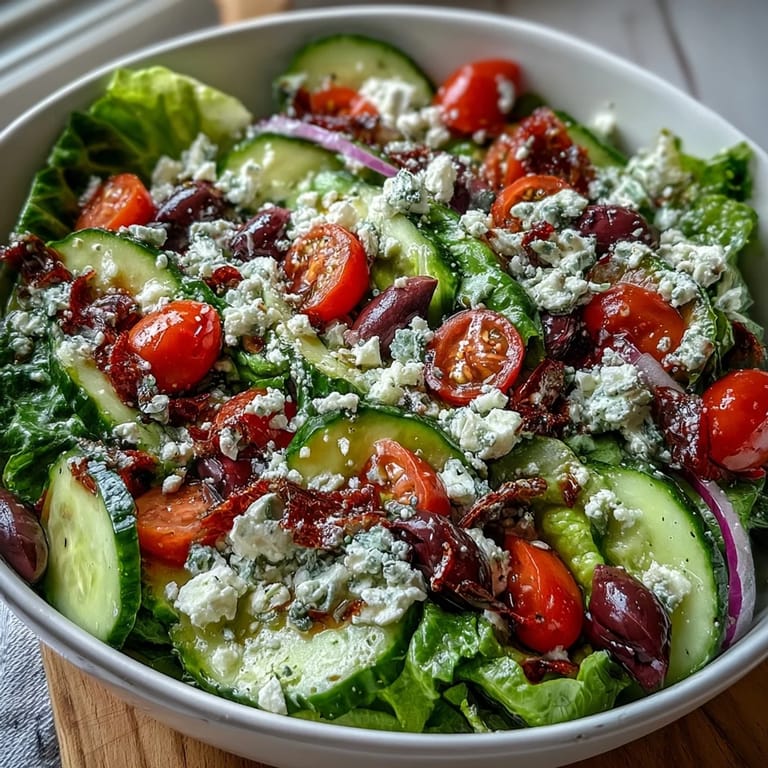
 There's something about the Aegean sun hitting your face while biting into a crisp, cold salad that makes you understand why Greeks have been perfecting this bowl for centuries. My first real encounter with this salad wasn't in a restaurant but at my neighbor's kitchen table one sweltering July afternoon, where she casually assembled one while telling me stories about her family's trips to Santorini. The lettuce crackled between my teeth, the feta crumbled on my tongue, and suddenly I realized this wasn't just food—it was simplicity elevated to an art form. What struck me most was how she didn't measure anything, just let her hands know when the ratios felt right. Now I make it constantly, especially when I want something that tastes like a vacation in fifteen minutes.
I served this to my book club one spring evening, and what I remember most isn't the compliments but the quiet contentment that settled over the table. Everyone slowed down, actually tasted their food instead of talking through it, and we ended up having one of those rare conversations where nobody checked their phone. That's when I realized this salad has a superpower: it makes people present. Now whenever I need to create that kind of calm gathering space, I know exactly what to make.
Ingredients
- Romaine lettuce: Choose heads that feel firm and crisp—the darker outer leaves are more flavorful than the pale center, so don't discard them.
- Cherry tomatoes: Halving them instead of quartering prevents them from becoming watery swimmers in your bowl; they'll hold their shape better.
- Cucumber: English cucumbers have fewer seeds and thinner skin, so they're less watery, but regular cucumbers work just fine if you scoop out some of the seedy center.
- Red onion: Slice it thin enough that you can almost see through it; this prevents the bite from overpowering everything else and makes it feel more integrated.
- Feta cheese: Buy it from a block if possible and crumble it by hand rather than using pre-crumbled—it tastes tangier and feels more substantial in your mouth.
- Kalamata olives: These briny little gems are non-negotiable; they provide the backbone of Mediterranean flavor that makes people ask what your secret ingredient is.
- Extra-virgin olive oil: This isn't the time to economize; the quality of your oil matters because it's not being heated, just sitting on your tongue.
- Red wine vinegar: The acidity cuts through the richness of the feta and oil, but you need enough that the dressing tastes alive, not timid.
- Dried oregano: Don't skip this—it's what makes a salad taste unmistakably Greek rather than generically Mediterranean.
- Garlic and Dijon mustard: The mustard acts as an emulsifier, helping the oil and vinegar stay friends instead of separating into two sad layers.
Tired of Takeout? 🥡
Get 10 meals you can make faster than delivery arrives. Seriously.
One email. No spam. Unsubscribe anytime.
Instructions
- Gather your lettuce and vegetables:
- Chop your romaine into bite-sized pieces—not so small they feel like confetti, just substantial enough that each piece feels intentional. Halve your tomatoes and slice your cucumber so everything feels cohesive on the fork.
- Build your bowl:
- Pile the lettuce into your largest salad bowl, then scatter the tomatoes and cucumbers across the top like you're creating a landscape. This isn't random; when vegetables are visible, people get excited about eating them.
- Crown it with cheese and olives:
- Sprinkle your crumbled feta and halved olives generously over everything—these are your flavor anchors, so don't be shy. Let some settle into the lettuce layers and some rest on top where they'll catch the light.
- Emulsify your vinaigrette:
- In a jar or small bowl, combine your olive oil, red wine vinegar, oregano, minced garlic, mustard, salt, and pepper. Whisk or shake vigorously for about a minute until the mixture looks slightly thickened and creamy; this means the mustard is doing its job.
- Dress just before serving:
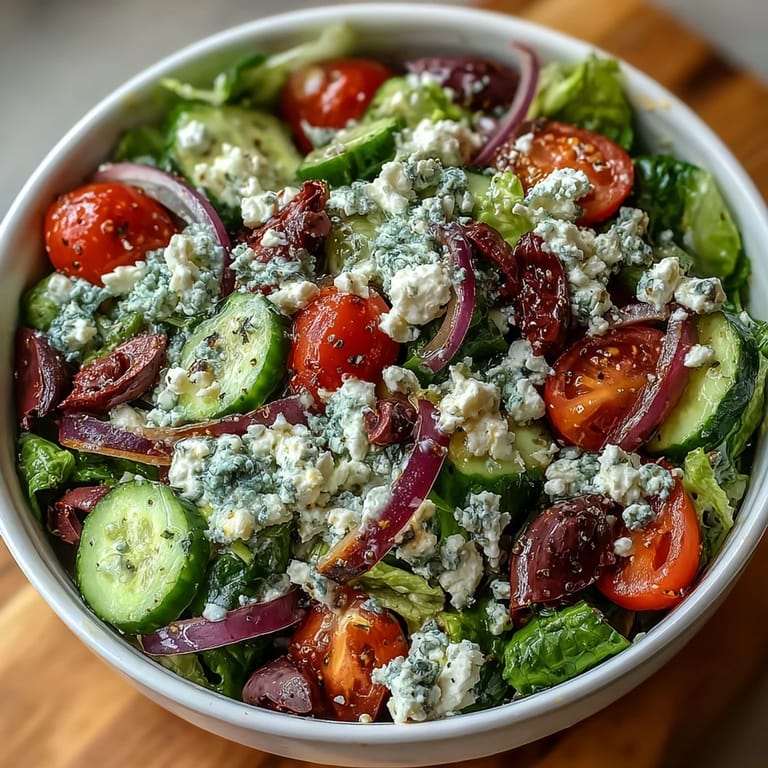
- Drizzle the vinaigrette over the salad sparingly at first—you can always add more, but you can't take it back. Toss gently with your hands or two forks, tilting the bowl so every piece gets touched by the dressing without crushing the lettuce into submission.
 Save to Pinterest
 What I didn't expect when I started making Greek salad regularly was how it would become my comfort food on difficult days. There's something about the ritual of slicing, the bright colors filling your bowl, the way the vinaigrette smells like possibility—it grounds me. This simple salad has taught me that sometimes the best meals aren't complicated; they're just honest.
Variations Worth Exploring
Once you have the foundation down, this salad becomes your canvas. I've added thinly shaved radishes for extra crunch, roasted red peppers for sweetness, fresh dill when I'm feeling herbaceous, and even crumbled chickpeas when I want something more substantial. My cousin adds a handful of fresh mint, which shouldn't work with Greek flavors but somehow absolutely does. The beauty is that you can season it differently every season—lighter herbs in spring, heartier additions in fall—without losing what makes it unmistakably itself.
Making It a Complete Meal
This salad sings as a standalone lunch, but it's also the perfect companion to grilled chicken, seasoned fish, or even warm pita bread torn apart and used as a vehicle for the vinaigrette. I've served it alongside marinated lamb, crumbled falafel, and grilled shrimp, and every combination felt natural. The salad's brightness never competes with other dishes; instead, it resets your palate between bites, making everything taste more vivid.
Storage and Make-Ahead Wisdom
You can prep all your vegetables in advance and keep them in separate containers in your refrigerator for up to two days, which means you're minutes away from dinner whenever you need it. Store your vinaigrette in a jar in the pantry—it actually improves as it sits because the flavors get to know each other. The only component that can't wait is the assembly; do that right before you eat to preserve the salad's textural integrity and keep everything crisp.
- Pre-chop lettuce loses its crispness quickly, so wait to cut it until a few hours before serving.
- If you must make the salad ahead, keep the dressing separate and toss gently just before eating.
- Any leftover dressed salad makes excellent sandwich filling the next day, though the lettuce won't have its original crunch.
 Save to Pinterest
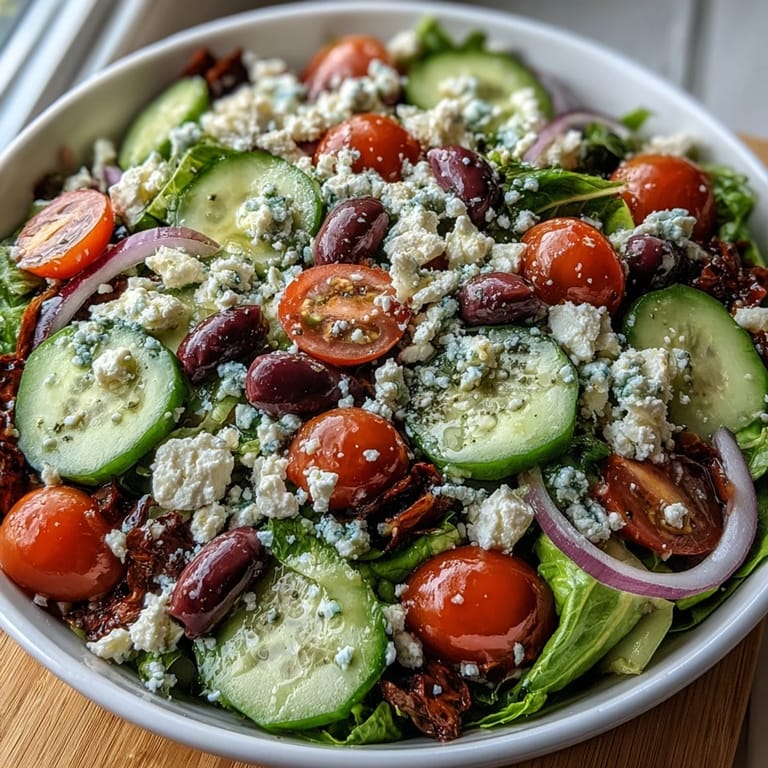
 This Greek salad has become my go-to answer for what to make when I want something that tastes like care without feeling like work. It's proof that the simplest meals, made with attention and decent ingredients, are often the ones people remember.
Recipe FAQs
- → What makes this Mediterranean bowl authentic?
The traditional combination of Kalamata olives, creamy feta cheese, extra-virgin olive oil, red wine vinegar, and dried oregano creates the classic Greek flavor profile that defines this dish.
- → Can I prepare this ahead of time?
Yes, you can chop the vegetables and make the vinaigrette up to 24 hours in advance. Store them separately in the refrigerator and toss with dressing just before serving to maintain optimal crunch and freshness.
- → What proteins pair well with this bowl?
Grilled chicken, lamb, or shrimp work beautifully with these Mediterranean flavors. You can also add chickpeas or white beans for a plant-based protein boost while keeping it vegetarian.
- → How do I store leftovers?
Store undressed leftovers in an airtight container in the refrigerator for up to 2 days. Keep the vinaigrette separate and add fresh before eating to prevent sogginess.
- → Can I make this dairy-free?
Simply substitute the feta with vegan feta alternatives or increase the olives and add extra vegetables. The dressing is naturally dairy-free aside from the cheese topping.
- → What vegetables can I add or substitute?
Bell peppers, radishes, or avocado make excellent additions. You can substitute romaine with mixed greens, arugula for a peppery kick, or spinach for extra nutrients.