 Save to Pinterest
 My coworker Sarah brought this to a potluck on a random Tuesday, and I couldn't stop thinking about it for days. The way the gochujang wrapped around each grain of rice, spicy and sweet at once, felt like discovering something I didn't know I'd been craving. When she finally texted me the recipe, I made it that weekend and realized how quickly something this bold could come together in your own kitchen. Now it's become my go-to when I need dinner that tastes like I've been cooking all day, even though I haven't.
I made this for my sister's family last month, and her kids actually asked for seconds without being prompted, which never happens. My brother-in-law kept sneaking bites while I was plating everything, and I caught him nodding appreciatively at the balance of flavors. That moment felt like a small victory in the kitchen, honestly.
Ingredients
- Lean ground beef: One pound gives you enough for four generous servings, and the leaner cut means less grease pooling in your pan.
- Gochujang: This Korean chili paste is the backbone here, bringing umami and heat that ordinary hot sauce can't touch, so don't skip it.
- Low-sodium soy sauce or tamari: Salty enough to amplify flavors without overpowering, and tamari keeps it gluten-free if that matters to you.
- Brown sugar: Just enough to cut the spice and create a sauce that glazes instead of sticking, giving you that restaurant feel.
- Sesame oil: A little goes a long way, adding nuttiness that transforms the whole dish.
- Garlic and ginger: Minced fresh is non-negotiable here; the aroma filling your kitchen tells you you're on the right track.
- Rice vinegar: Brightness that keeps the sauce from feeling heavy, especially important with the richness of the beef.
- Cooked rice or cauliflower rice: Your canvas, and honestly either works depending on what you're in the mood for that day.
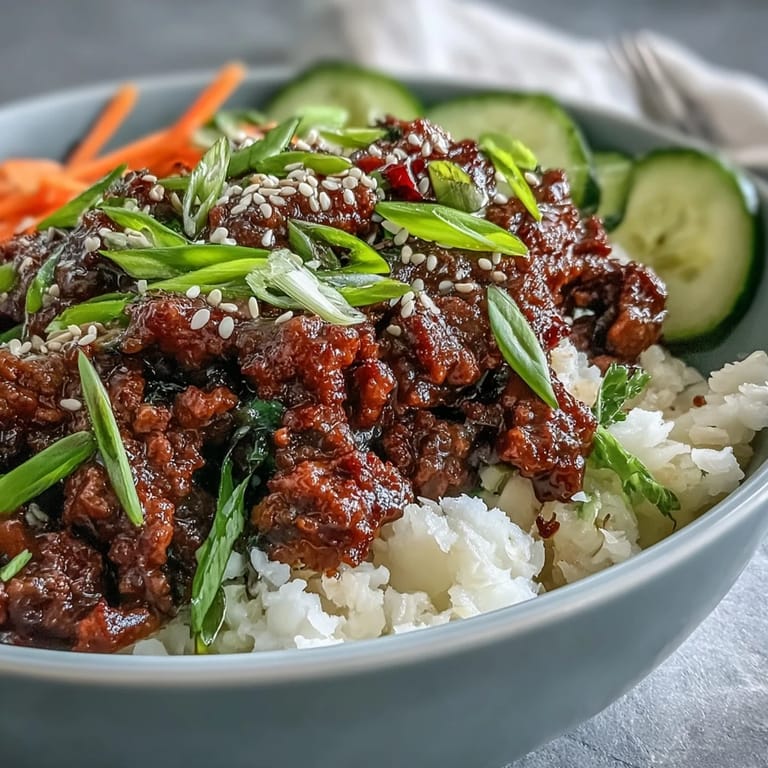
- Fresh toppings: Cucumber, carrot, and green onions aren't just pretty, they add cool crunch that balances the warm, spicy beef perfectly.
- Toasted sesame seeds: They add a subtle crunch and finish the bowl like you know what you're doing.
Tired of Takeout? 🥡
Get 10 meals you can make faster than delivery arrives. Seriously.
One email. No spam. Unsubscribe anytime.
Instructions
- Get your skillet ready:
- Heat sesame oil over medium-high until it shimmers slightly, almost like it's barely contained. When you add the beef, it should sizzle immediately.
- Brown the beef:
- Break up the meat as it cooks so you get those little browned bits everywhere, not a solid clump. Four to five minutes is perfect, when there's no pink left.
- Add the fragrant layer:
- Minced garlic and ginger go in now, and within seconds your kitchen will smell incredible. Let them sit for about a minute so the rawness softens and the aroma deepens.
- Build the sauce:
- Stir in gochujang, soy sauce, brown sugar, rice vinegar, and black pepper all at once. The mixture will look thick and layered at first, then as you stir it becomes this gorgeous glossy coating.
- Let it simmer:
- Two to three minutes is all you need, just enough time for the sauce to thicken and for the flavors to stop being separate ingredients and become one thing. Taste it here and adjust if it needs more heat or salt.
- Prepare your bowls:
- Divide your rice or cauliflower rice evenly among four bowls, making a bed for the beef. The warm rice helps soften and release the flavors of everything on top.
- Top with purpose:
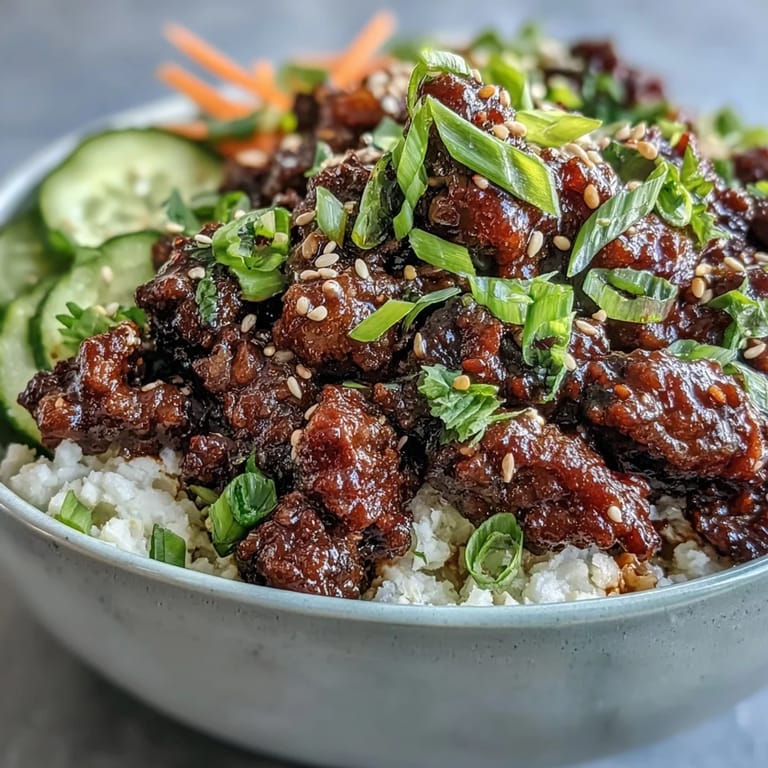
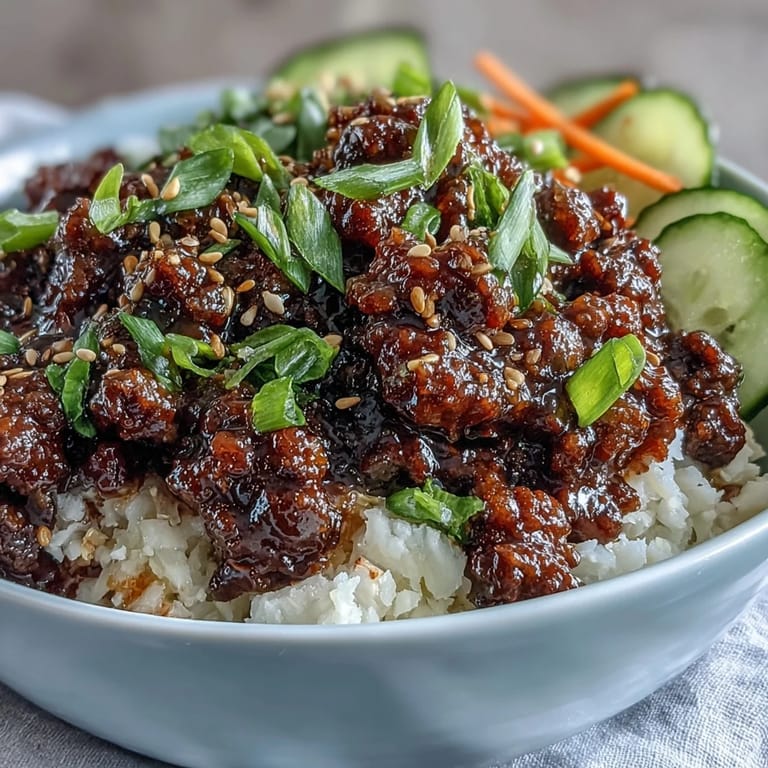
- Spoon the beef and all its sauce over the rice, then layer your cucumber, carrot, and green onions like you're building something beautiful. Finish with sesame seeds and optional chili or kimchi if you want extra personality.
 Save to Pinterest
 My neighbor came over unannounced while I was making this, and the smell alone convinced her to stay for dinner. Watching her face light up when she tried it, then immediately asking if I'd teach her, made me realize how powerful a good quick meal can be. It's not complicated, but it feels like generosity on a plate.
The Heat Question
Gochujang is spicy, but it's a deep, rounded spice that builds slowly instead of hitting you all at once. If you're sensitive to heat, start with just a tablespoon and taste before adding more. If you love fire, drizzle some sriracha over the finished bowl or add thin slices of fresh red chili, which gives you heat plus a little brightness that gochujang alone can't provide.
Making It Your Own
Ground turkey or chicken works beautifully here if you want something lighter, though you might lose a tiny bit of depth in the sauce since beef has that natural richness. I've also added mushrooms, snap peas, or even roasted broccoli when I had vegetables hanging around. The beauty of a rice bowl is that you can build it around what you have and it always feels intentional.
Beyond the Bowl
This beef is good for more than just rice bowls. I've put it in lettuce wraps, nestled it into corn tortillas with some avocado, and even piled it over roasted sweet potatoes when I wanted something different. The sauce is forgiving and adaptable, so once you make it a couple times, you'll trust it enough to experiment.
- Make extra beef without the rice and freeze it for nights when you need dinner in five minutes.
- Serve it at room temperature as a topping for salads or grain bowls if you're meal prepping.
- Leftovers stay delicious in the fridge for three days, and reheating in a skillet brings back all the glossy sauce magic.
 Save to Pinterest
 This bowl has become my answer to that 6 PM panic when you haven't thought about dinner yet. It's proof that simple, honest cooking doesn't need hours or fancy ingredients to feel special.
Recipe FAQs
- → What is gochujang and where can I find it?
Gochujang is a Korean fermented chili paste with a sweet, savory, and spicy flavor profile. Look for it in the international aisle of most grocery stores, Asian markets, or online. It comes in jars or tubs and adds authentic Korean depth to the beef.
- → Can I make this dish less spicy?
Absolutely. Start with 1 tablespoon of gochujang instead of 2, or choose a mild variety. You can always add more heat later with sriracha, red pepper flakes, or fresh chili slices. The sauce will still be flavorful even with reduced chili paste.
- → What other proteins work well in this bowl?
Ground turkey or chicken makes a lighter alternative while still absorbing all the bold flavors. For a vegetarian version, use crumbled tofu or plant-based ground meat. Just adjust cooking time accordingly—turkey and chicken may need an extra minute or two to brown properly.
- → Is cauliflower rice as good as regular rice here?
Cauliflower rice works beautifully and keeps the dish low-carb and lighter. It soaks up the spicy sauce just like regular rice. If you're watching carbs, prefer grain-free options, or want to boost your vegetable intake, it's an excellent substitute that doesn't sacrifice flavor.
- → How long do leftovers keep?
Store the beef and rice separately in airtight containers in the refrigerator for up to 4 days. Reheat the beef gently in a skillet with a splash of water to refresh the sauce. Fresh toppings are best added just before serving, but pre-sliced vegetables keep for 2-3 days if stored properly.
- → Can I meal prep this Korean beef bowl?
Yes, this is perfect for meal prep. Cook a batch of beef and rice at the start of the week. Portion into containers, keeping fresh toppings separate. When ready to eat, reheat the beef and rice, then add crisp cucumber, carrots, and garnishes for a fresh-tasting meal.