 Save to Pinterest
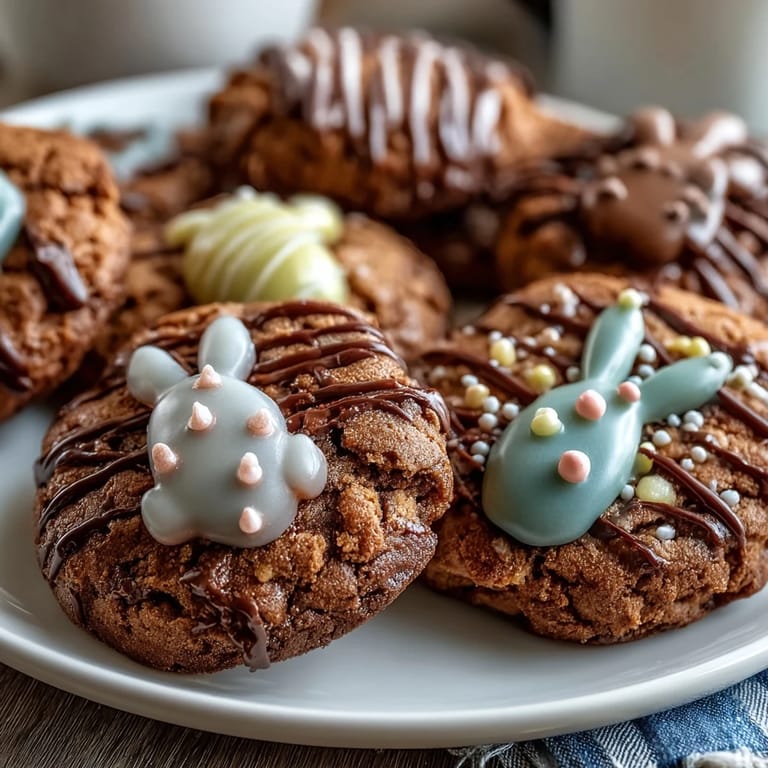
 My sister called me three days before Easter in a mild panic—she'd promised her kids homemade cookies shaped like bunnies and chicks, but had no idea where to start. I found myself standing in her kitchen at dusk, flour dust catching the golden light through the window, showing her how butter and sugar transform into something worth decorating. These cookies became our tradition that year, and now whenever spring arrives, I think of her daughter's serious concentration as she piped tiny pastel details onto a sugar cookie bunny.
One Easter morning, I delivered three dozen of these cookies to my neighbor's house as a thank-you for watching our garden while we traveled. She texted me a photo of her grandkids sitting on the porch, each one holding a different pastel bunny, their fingers sticky with icing and smiles too big for their faces. That image lives rent-free in my head—proof that the simplest gifts sometimes mean the most.
Ingredients
- All-purpose flour (2 1/2 cups): This is your structure; it keeps the cookies tender rather than cakey, so don't sift it unless your brand is famously packed.
- Unsalted butter (3/4 cup): Room temperature is non-negotiable here—cold butter won't cream properly and you'll end up with dense cookies instead of delicate ones.
- Granulated sugar (1 cup): The sugar does the heavy lifting in making these cookies light and slightly crispy at the edges; this amount is what creates that perfect tender-meets-slight-crunch texture.
- Egg (1 large): This binds everything and adds lift; make sure it's fresh and at room temperature so it incorporates smoothly.
- Pure vanilla extract (2 teaspoons): The real stuff makes a noticeable difference in how the cookies taste—not just sweetness, but a warm, rounded flavor.
- Milk (1 tablespoon): A small amount loosens the dough just enough to roll it without cracking; skip it and you'll struggle with a stiff, uncooperative mass.
- Baking powder (1/2 teaspoon): Just enough to give the cookies a gentle lift without making them cakey or dense.
- Salt (1/4 teaspoon): This enhances every flavor in the dough, making the butter and vanilla sing louder.
- Powdered sugar for icing (3 cups): Must be sifted to avoid lumps that ruin the smooth, glossy finish you're after.
- Meringue powder (2 tablespoons): This stabilizes the icing so it sets properly and doesn't crack as it dries; it's what separates homemade royal icing from a gloppy mess.
- Warm water (5–6 tablespoons): Start with less and add gradually—thick icing is easier to fix than runny icing, and you want it to hold peaks like clouds.
- Pastel gel food coloring: Gel holds its color better than liquid coloring and doesn't thin out your icing; a tiny dab goes a long way and the pastels stay soft and spring-like, never garish.
Tired of Takeout? 🥡
Get 10 meals you can make faster than delivery arrives. Seriously.
One email. No spam. Unsubscribe anytime.
Instructions
- Whisk your dry ingredients:
- In a medium bowl, whisk together flour, baking powder, and salt—this distributes the leavening evenly so your cookies bake predictably.
- Cream butter and sugar until fluffy:
- Beat them together for a full 2–3 minutes; you're looking for a pale, slightly mousse-like texture that traps air, which is what makes cookies tender instead of dense. Stop when it looks almost cloud-like.
- Add egg and vanilla:
- Pour them in and mix until the dough looks smooth and unified; if you see streaks of egg, keep going until it all comes together.
- Fold in the dry ingredients gently:
- Add them gradually on low speed and watch carefully—overmixing at this stage develops gluten and toughens the cookies. Mix just until you don't see streaks of flour anymore, then add the milk and stir one more time.
- Chill the dough properly:
- Divide it in half, flatten into discs, wrap them, and refrigerate for at least an hour; this prevents excessive spreading during baking and gives you crisp, defined edges. You can also chill overnight if you want to bake tomorrow.
- Preheat and prepare:
- Heat your oven to 350°F (175°C) and line baking sheets with parchment paper so the bottoms stay tender and don't brown too dark.
- Roll and cut thoughtfully:
- Work with one disc at a time, keeping the other in the fridge; roll the dough to a quarter-inch thickness on a lightly floured surface. If it gets warm and sticky, pop it back in the fridge for five minutes.
- Space cookies with intention:
- Place them an inch apart on your prepared sheets; they'll puff slightly and you want room for that.
- Bake until barely golden:
- 8–10 minutes is usually right, but every oven is different—look for the tiniest hint of golden color at the edges, not browning. Underbaked cookies stay softer; overbaked ones become crisp and dull.
- Cool with patience:
- Let cookies sit on the sheet for five minutes to firm up enough to move, then transfer to wire racks to cool all the way. Decorating warm cookies is a recipe for melted icing disasters.
- Make the royal icing:
- Combine sifted powdered sugar and meringue powder, then add water gradually while beating on low until smooth. Switch to high speed and beat for 3–4 minutes until stiff peaks form—this creates the icing's structure and shine.
- Tint with pastel colors:
- Divide the icing among bowls and add gel coloring drop by drop; remember that pastel shades need restraint, or they'll look neon. A toothpick dipped in color and stirred in works better than pouring.
- Decorate with confidence:
- Transfer icing to piping bags and pipe designs onto completely cooled cookies; if your icing is too thick, thin it with a drop or two of water. Let everything set for at least an hour before stacking or storing.
 Save to Pinterest
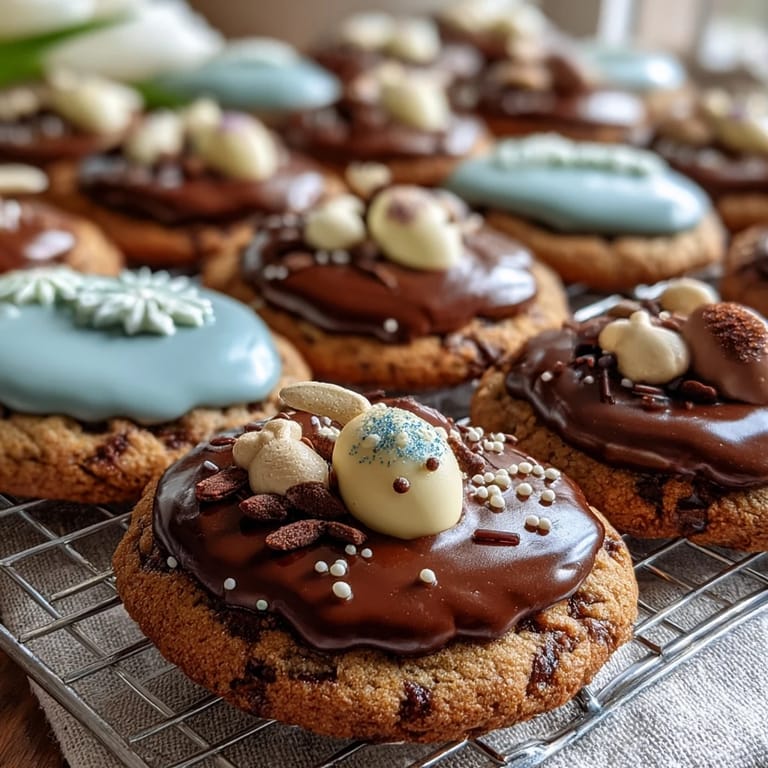
 I watched my five-year-old niece decorate her first Easter cookie last spring, tongue poking out in concentration as she carefully applied pale pink icing to a bunny's ears. Halfway through, she looked up and asked, 'Aunt, do you think the bunny is happy?' In that moment, I realized these cookies were never really about being perfectly decorated or Instagram-worthy—they were about the memory of hands sticky with icing, choices about colors, and the quiet joy of making something yourself.
The Secret to Tender Cookies
The most common mistake I see is overbaking—people pull cookies out when they're lightly golden, thinking they're underdone, but they keep cooking on the hot sheet. The moment the edges show even the faintest hint of color is when you transfer them to a wire rack; they'll firm up as they cool and stay tender in the center. I learned this the hard way after a batch turned out practically crunchy, and my sister said they tasted like communion wafers. Now I set a timer for eight minutes, check early, and trust my instincts over guessing.
Playing with Flavor
While vanilla is the classic, I've had success swapping in almond extract for half the vanilla or adding a quarter-teaspoon of lemon zest to the dough before chilling. Lemon feels particularly spring-like and pairs beautifully with the soft pastels. One year I made a batch with cardamom instead of plain vanilla, and it became the cookie people asked about for months afterward—subtle enough that you don't know what's different, but somehow more interesting.
Royal Icing Consistency and Decorating Techniques
Royal icing is forgiving once you understand its personality—thick icing holds detailed piping, while thinner icing (called flooding consistency) fills in larger areas smoothly. Start with stiff peaks and thin it bit by bit with water until it flows like honey but still holds lines. If you get too thin, it pools and looks sloppy; if you keep it thick, every detail shows. I also learned that letting it sit five minutes between colors prevents them from bleeding into each other—a trick that makes the cookies look noticeably more polished.
- Keep paper towels nearby because icing gets everywhere, especially if you're working with young helpers.
- If your piping bag clogs, a toothpick carefully pushed through the tip usually fixes it without wasting icing.
- These cookies keep beautifully for a week in an airtight container, making them perfect for painting a few days before Easter if you're busy.
 Save to Pinterest
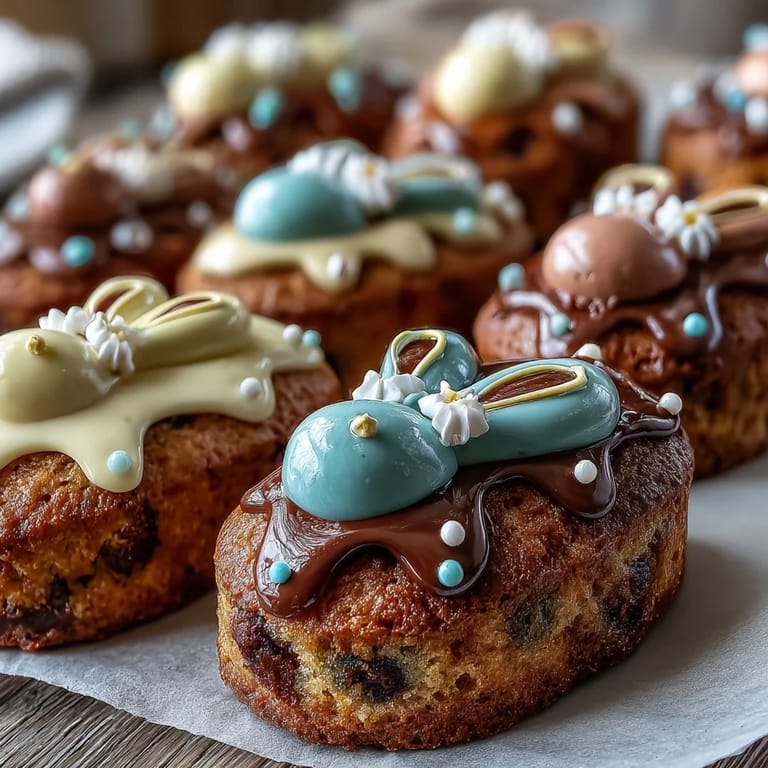
 Easter cookies have become my marker for spring arriving, a moment when the kitchen fills with butter and vanilla and the promise of something gentle and pastel-colored. They're never going to be complicated, but that's exactly their magic.
Recipe FAQs
- → How do I ensure cookies stay soft?
To keep cookies tender, avoid overbaking and chill dough before baking to maintain moisture.
- → What is the best way to tint royal icing pastel shades?
Use gel food coloring sparingly, mixing thoroughly to achieve soft pastel hues without thinning the icing.
- → Can I prepare the icing ahead of time?
Yes, royal icing can be made in advance and stored covered to prevent drying before decorating.
- → How do I prevent cookies from spreading too much?
Chilling the dough before rolling and cutting helps maintain shape and reduces spreading during baking.
- → What tools are helpful for decorating festive shapes?
Easter-shaped cutters, piping bags, and toothpicks for detail work make decorating easier and precise.