 Save to Pinterest
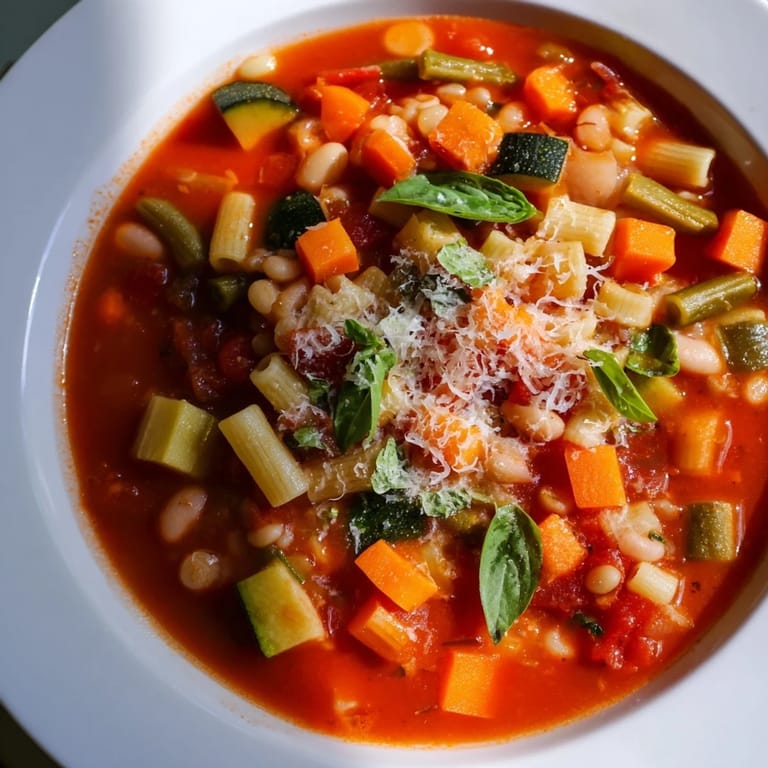
 There's something about the smell of tomatoes and basil simmering together that stops me in my tracks every single time. I discovered this minestrone on a chilly October afternoon when I had a fridge full of vegetables and nothing felt quite right for dinner. One taste of that first bowlful, warm and deeply satisfying, and I understood why Italian grandmothers have been making versions of this forever. It's the kind of soup that tastes like someone cares about you while you eat it.
I made this for my dad on a rainy November evening when he needed something honest and uncomplicated. He sat at the kitchen counter watching the vegetables soften in the pot, occasionally offering running commentary about how proper cooking sounds like this—the soft sizzle of oil, the gentle bubbling of broth. By the time I ladled it into bowls, he was already hunting for the bread.
Ingredients
- Olive oil: Use good quality if you can; it's only two tablespoons but it carries the flavor of everything that follows.
- Onion, carrots, and celery: The holy trinity that makes any soup taste like it came from someone's home kitchen, not a can.
- Garlic: Fresh and minced, not the powder—you want those little pieces to soften into the broth.
- Zucchini and green beans: They keep their slight firmness even as they cook, giving the soup texture and brightness.
- Diced and crushed tomatoes: Both kinds matter; diced gives you bites of tomato, crushed builds the body of the broth.
- Vegetable broth: The foundation—taste it first, because if it's bland, your soup will be too.
- Oregano and thyme: Dried herbs work beautifully here; they meld into the broth rather than tasting sharp.
- Tomato paste: A small amount but crucial; it deepens everything and makes the soup taste like it's been simmering for hours.
- Small pasta: Ditalini is traditional and holds up perfectly, but elbow pasta works just as well.
- Cannellini beans: Rinsing them first matters—it keeps the broth clear and clean-tasting instead of starchy.
- Fresh basil and parsley: Added at the very end so they taste green and alive, not cooked into submission.
Tired of Takeout? 🥡
Get 10 meals you can make faster than delivery arrives. Seriously.
One email. No spam. Unsubscribe anytime.
Instructions
- Start with the base:
- Heat your oil over medium heat, then add onion, carrots, and celery. Let them soften for about five minutes, stirring occasionally—you're listening for that gentle sizzle and watching the onions turn translucent at the edges.
- Build the layers:
- Add garlic, zucchini, and green beans, stirring constantly for a few minutes so the garlic becomes fragrant without browning. This is when the soup starts smelling like something real.
- Pour in the broth:
- Add both cans of tomatoes, the vegetable broth, all your seasonings, and the tomato paste. Stir until everything is combined, then bring it to a boil—you'll see the surface start to move in gentle waves.
- Let it simmer:
- Turn the heat down and simmer uncovered for fifteen minutes so the flavors can actually get to know each other. This is when you can step back and just breathe in what you've made.
- Finish with pasta and beans:
- Stir in the pasta and beans, then simmer for another ten to twelve minutes until the pasta is tender. Taste a piece of pasta—when it bends without resistance, you're done.
- Final flourish:
- Stir in the fresh basil and parsley, taste it, and adjust the salt and pepper. This is your moment to make it exactly right for your palate.
 Save to Pinterest
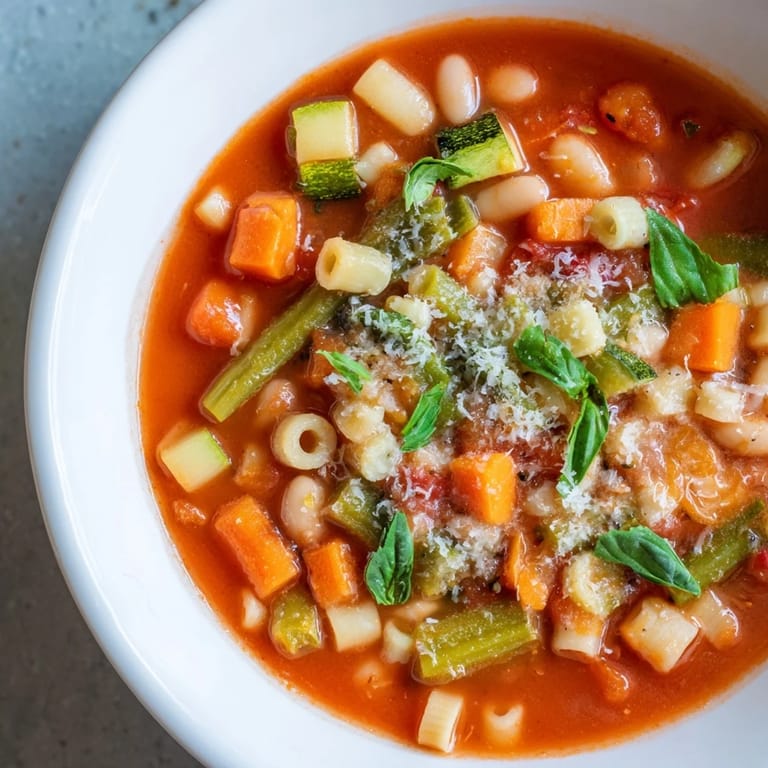
 The moment this soup becomes more than just dinner is when someone leans over their bowl, steam rising up to their face, and takes that first spoonful without saying anything. That quiet moment of appreciation, when comfort food does exactly what it's supposed to do—that's when you know you've made something that matters.
The Beauty of Flexible Cooking
This soup is an invitation to cook with what you have rather than what the recipe demands. If you have spinach but no green beans, spinach goes in. Missing zucchini? Add mushrooms instead. The structure stays the same, but the soup becomes yours, built from whatever your kitchen offers up on any given day. That flexibility is what keeps me coming back to make minestrone again and again.
Timing and Temperature
The whole process takes less than an hour from stovetop to spoon, which is remarkable considering how deep the flavors taste. The key is respecting the simmer—not a rolling boil, which toughens vegetables and makes everything taste chaotic, but a gentle, steady bubble that lets everything relax into the broth. If you're short on time, you can prep all your vegetables while the base simmers, turning what feels like a long recipe into something genuinely quick.
Serving and Keeping It Alive
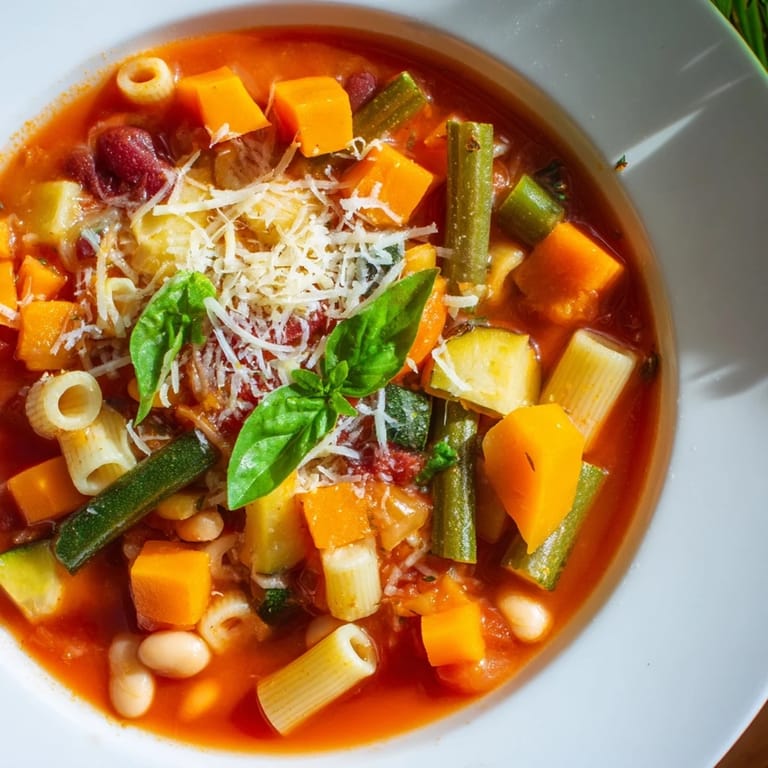
This soup is best served hot in deep bowls, with a drift of grated Parmesan if that's your thing and a chunk of crusty bread nearby for soaking up the broth. It also keeps beautifully for several days in the refrigerator, though the pasta will continue absorbing broth and soften even more—so if you're planning leftovers, you might cook the pasta slightly less than you normally would. It freezes well too, though I've never managed to save any because somehow there's always someone wanting another bowl while it's still warm.
- Serve with crusty bread for proper broth soaking.
- A drizzle of your best olive oil over the top adds richness and elegance.
- Fresh grated Parmesan is worth the small effort, but it's completely optional.
 Save to Pinterest
 This minestrone has become my default answer to the question 'what should I cook tonight?' because it requires almost nothing special but delivers everything you're actually looking for. Make it once and it becomes yours.
Recipe FAQs
- → What vegetables are used in this minestrone?
Key vegetables include onion, carrots, celery, zucchini, green beans, and diced tomatoes, creating a colorful and nutritious base.
- → Can I use gluten-free pasta in this dish?
Yes, substituting with gluten-free pasta works well and keeps the texture tender without affecting the flavors.
- → How long should the soup be simmered?
The soup simmers uncovered for 15 minutes after adding the broth and tomatoes, then another 10-12 minutes after adding pasta and beans.
- → What herbs enhance the flavor of this minestrone?
Dried oregano, thyme, fresh basil, and parsley combine to create a fragrant and balanced flavor profile.
- → Is Parmesan cheese required?
Parmesan is optional; it adds richness when sprinkled on top but can be omitted for a dairy-free version.
- → Can additional greens be added?
Spinach or kale can be added near the end of cooking for extra nutrients and color.