 Save to Pinterest
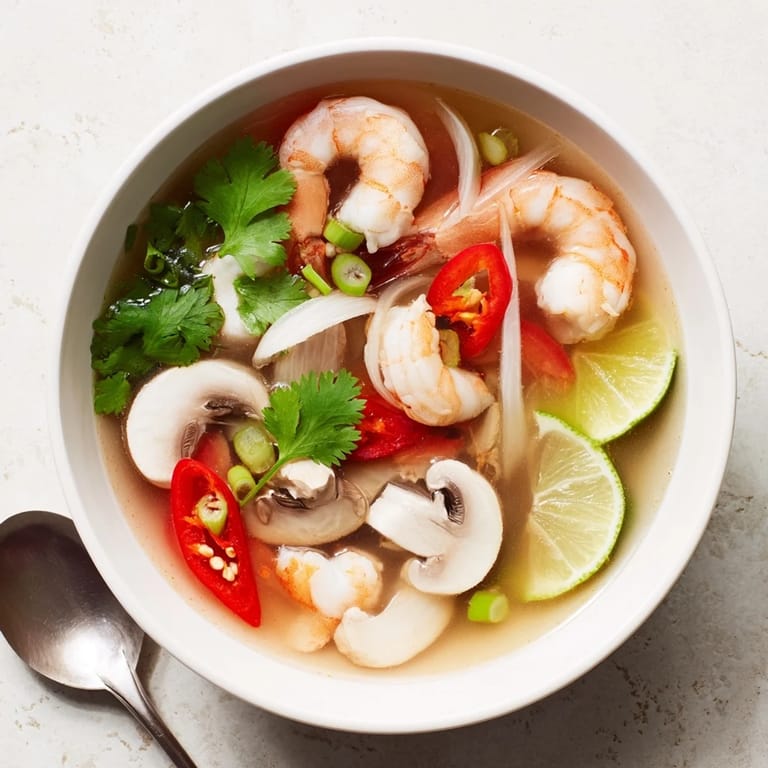
 I stumbled onto tom yum during a sweltering Bangkok afternoon when a street vendor's cart filled my taxi with an intoxicating cloud of lemongrass and lime smoke. That first spoonful—the way the heat bloomed on my tongue, followed by a cool citrus wave—made everything click. I've been chasing that balance ever since, learning that the magic isn't in following rules perfectly, but in tasting as you go and trusting your instincts.
The first time I made this for friends, I panicked halfway through because I'd grabbed regular ginger instead of galangal at the market. One friend tasted it anyway and said it was the best soup they'd had all year, which taught me something important: tom yum is forgiving if you understand what you're building. The aromatics matter more than perfection, and your palate is the best guide.
Ingredients
- Chicken or vegetable stock (4 cups): The foundation that carries all these bright flavors—use something you'd drink on its own, not something from a cube.
- Fresh lemongrass (2 stalks): Smash it hard to release those citrusy oils; they're doing the real work here.
- Kaffir lime leaves (4): These give you the authentic floral kick that bottled lime juice can never match—tear them to wake them up.
- Fresh galangal (3 slices): If you can't find it, ginger works, but galangal has a subtle pepper note that's worth seeking out.
- Thai bird's eye chilies (2): These are genuinely hot, so start with one and add the second if you like heat.
- Large shrimp (250 g): Buy them the day you cook or frozen and thawed; they cook so fast that quality matters.
- White mushrooms (150 g): Slice them thick enough to hold their shape but thin enough to absorb the broth.
- Tomatoes (2 medium): Cut into wedges so they soften into the soup without disappearing.
- Onion (1 small): Slice thin; it should become almost invisible, adding sweetness beneath the other notes.
- Fish sauce (2 tablespoons): Yes, it smells intense in the bottle, but it's the secret backbone that makes everything taste more like itself.
- Lime juice (1 tablespoon plus more): Fresh lime only—the acidity is part of your seasoning strategy.
- Sugar (1 teaspoon): A tiny amount balances heat and acid without making the soup sweet.
- Chili paste (optional): This deepens the heat and adds a savory undertone if you want more complexity.
Tired of Takeout? 🥡
Get 10 meals you can make faster than delivery arrives. Seriously.
One email. No spam. Unsubscribe anytime.
Instructions
- Build your aromatics:
- Bring stock to a gentle simmer and add lemongrass, lime leaves, galangal, and chilies. Let them infuse for 5–7 minutes until the broth smells alive and citrusy, like walking into a Thai market.
- Add vegetables:
- Slide in mushrooms, tomatoes, and onion. They'll soften in 3–4 minutes—you want them tender but not collapsed into nothing.
- Cook the shrimp:
- Add shrimp and watch them like a hawk; 2–3 minutes and they'll go from gray to pink and opaque. Overcook them even slightly and they turn rubbery.
- Season to taste:
- Stir in fish sauce, lime juice, sugar, and chili paste if you're using it. Taste a spoonful of broth and adjust—this is where your judgment takes over from the recipe.
- Rest and serve:
- Turn off the heat and let everything settle for a minute. Remove obvious chunks of lemongrass and galangal if they bother you, or leave them for extra flavor.
- Finish with fresh garnish:
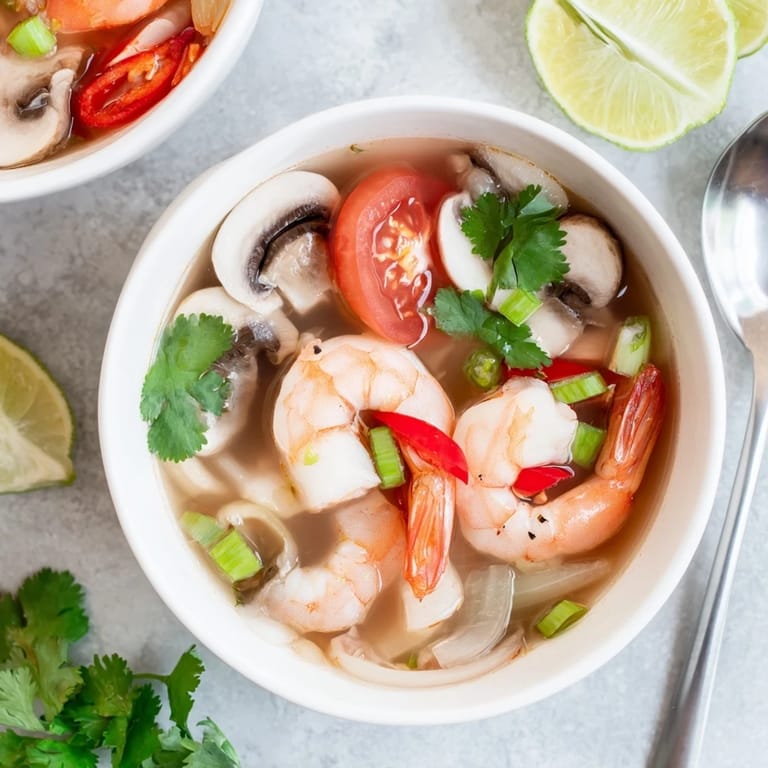
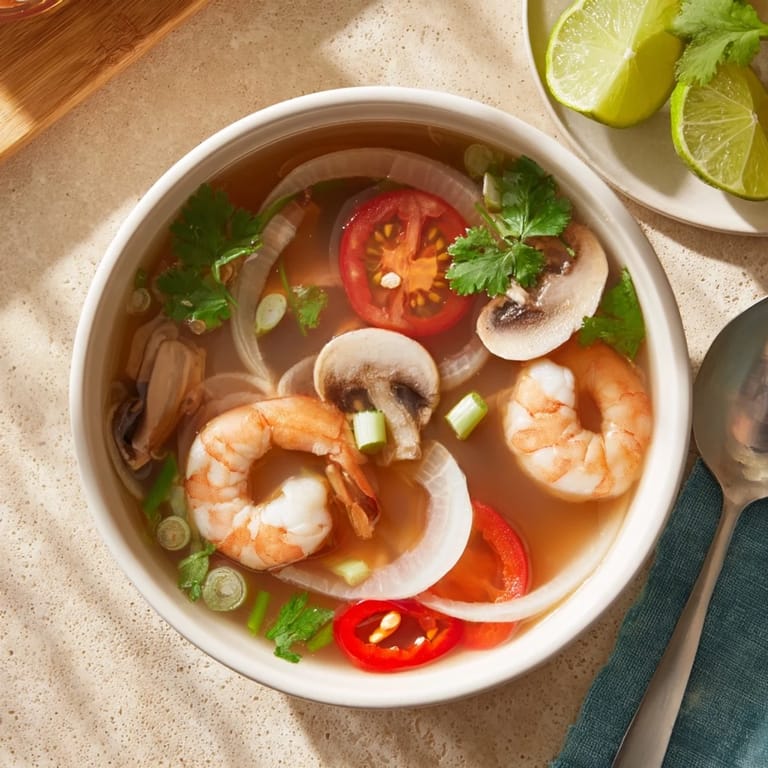
- Ladle into bowls and crown each one with cilantro, green onions, and a lime wedge so people can squeeze more brightness in if they want.
 Save to Pinterest
 I remember serving this to my neighbor when her grandfather visited from Thailand, and I was genuinely nervous. He took one quiet sip, nodded, and said something in Thai that made his granddaughter laugh—apparently I'd gotten the balance right. That moment made me realize this soup isn't just food; it's a conversation between you and centuries of cooking tradition.
Why This Soup Tastes Like Complexity but Isn't
The secret is layering: the broth infuses with aromatics while you prep, vegetables add body, seafood adds richness, and the final seasoning brings everything into focus. Nothing is rushed, nothing is complicated. It's the kind of recipe where a home cook can genuinely outpace a shortcut.
Playing with Heat and Flavor
Thai cuisine doesn't hide its spice—it showcases it. If you're sensitive to heat, start with half a chili and add as you go. Conversely, if you love fire, don't be shy. The fish sauce and lime juice are your friends here; a squeeze of fresh lime actually cools the palate down while keeping the flavor bright, which is why tom yum feels refreshing rather than overwhelming.
Beyond the Base Recipe
This recipe is a template more than a rigid formula. I've made it with shrimp, tofu, chicken, and even just vegetables on nights when I was cooking for myself. The aromatics stay the same, and the character stays unmistakable.
- For vegetarian versions, swap fish sauce for a quality soy sauce and shrimp for silky pressed tofu or extra mushrooms.
- Serve alongside jasmine rice or with a side of sticky rice to soften the heat if you want a heartier meal.
- A crisp Riesling or cold lager pairs beautifully because the carbonation and slight sweetness balance the heat and acid.
 Save to Pinterest
 This soup taught me that balance is more important than perfection, and that your own taste buds are more reliable than any recipe. Make it, taste it, adjust it, and make it yours.
Recipe FAQs
- → What makes the broth flavorful?
The broth is infused with lemongrass, kaffir lime leaves, galangal, and chilies, creating a complex aromatic base.
- → Can I adjust the spiciness?
Yes, you can increase or reduce Thai birds eye chilies and chili paste to control heat levels.
- → What protein alternatives work well?
Tofu can replace shrimp for a vegetarian option, and soy sauce can substitute fish sauce.
- → How to serve this dish for a fuller meal?
Pair it with steamed jasmine rice to add heartiness and balance the broth’s intensity.
- → What garnishes enhance the flavors?
Fresh cilantro leaves, sliced green onions, and extra lime wedges brighten and complement the dish.