 Save to Pinterest
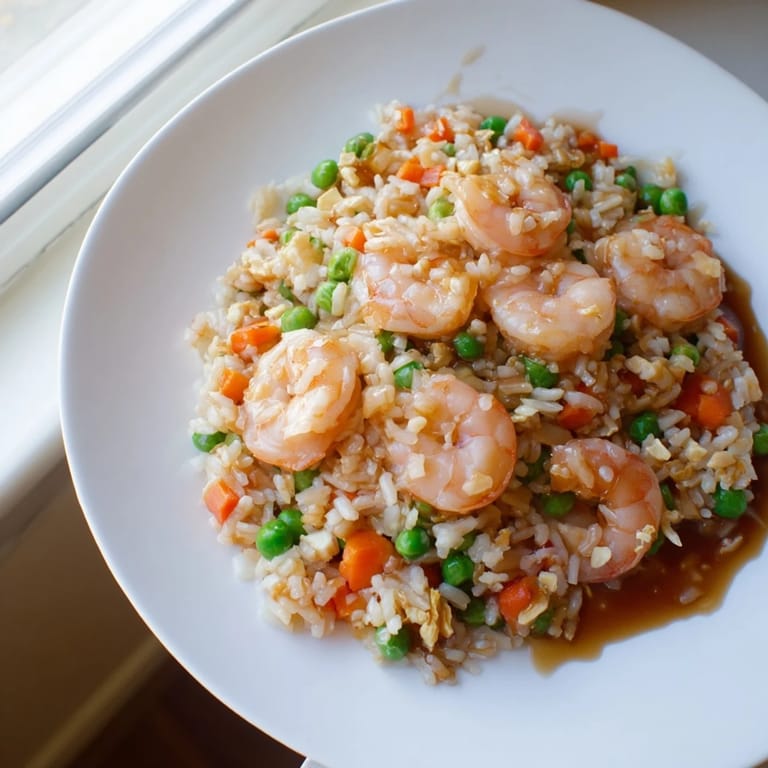
 One Tuesday evening, my neighbor knocked on my door with a container of leftover jasmine rice and a grin, asking if I could turn it into something spectacular for her dinner guests arriving in an hour. I'd never made fried rice before, but something about the challenge felt right. Twenty minutes later, as I watched the shrimp turn pink and the kitchen filled with the smell of garlic hitting hot oil, I realized I'd stumbled onto something that would become my go-to weeknight salvation. It turns out the secret wasn't technique or fancy ingredients—it was understanding that fried rice is really just about knowing when to add what, and letting the heat do the talking.
I made this for my daughter's lunch the next day, and she actually paused her phone to ask for seconds—which never happens. That moment taught me that simple food done right speaks louder than complicated recipes that demand your entire weekend.
Ingredients
- Raw shrimp, 300 g (10 oz), peeled and deveined: The shrimp cooks in minutes, so make sure they're truly dry before hitting the pan or they'll steam instead of sear.
- Jasmine rice, 4 cups cooked (day-old and chilled): Day-old rice is non-negotiable—fresh rice clumps and turns mushy, but chilled rice grains stay separate and get that light, restaurant-quality texture.
- Carrot, 1 medium, diced: Cut small so it softens quickly and releases its natural sweetness into the rice.
- Onion, 1 small, finely chopped: Finely chopped onion dissolves almost completely, adding depth without texture interruption.
- Spring onions, 3, sliced: Use most in the cooking and save some for garnish to keep that fresh, sharp onion bite alive.
- Frozen peas, 1/2 cup, thawed: Thaw them first so they warm through rather than cool down your rice.
- Garlic, 4 cloves, minced: This is where the magic lives—don't skip it, and mince it fine so it infuses into the oil rather than sitting in chunks.
- Soy sauce, 2 tbsp: Use regular soy sauce; the salt content is crucial for seasoning the entire dish.
- Oyster sauce, 1 tbsp: This adds umami depth that makes people ask what the secret ingredient is.
- Sesame oil, 1 tsp: A little goes a long way—use it sparingly or it overpowers everything else.
- White pepper, 1/2 tsp: White pepper disappears into the rice while adding warmth and complexity that black pepper can't deliver.
- Vegetable oil, 2 tbsp: Split between cooking the shrimp and sautéing vegetables so neither step lacks heat.
Tired of Takeout? 🥡
Get 10 meals you can make faster than delivery arrives. Seriously.
One email. No spam. Unsubscribe anytime.
Instructions
- Dry and season the shrimp:
- Pat each shrimp with paper towels until they're bone dry—moisture is the enemy of a good sear. Dust them lightly with salt and let them sit while you prep everything else.
- Sear the shrimp:
- Heat 1 tablespoon oil in your wok or large skillet over medium-high heat until it shimmers. The shrimp should hit the pan and immediately sizzle. Cook for 2–3 minutes, just until they turn opaque pink, then remove them to a plate—overcooking turns them rubbery.
- Build the flavor base:
- Add the remaining oil to the wok and let it heat for 30 seconds. Toss in the onion, carrot, and garlic all at once, stirring constantly for 2–3 minutes until the garlic stops being raw and the vegetables start to soften. Your nose will tell you when it's ready—the smell goes from sharp to mellow.
- Wake up the rice:
- Add the cold rice and use your spatula to break up any clumps, pressing gently against the wok to separate the grains. Stir constantly for about 2 minutes until every grain is hot and coated in the aromatics. You'll feel the rice loosen up under your spatula as it warms.
- Season and bring it together:
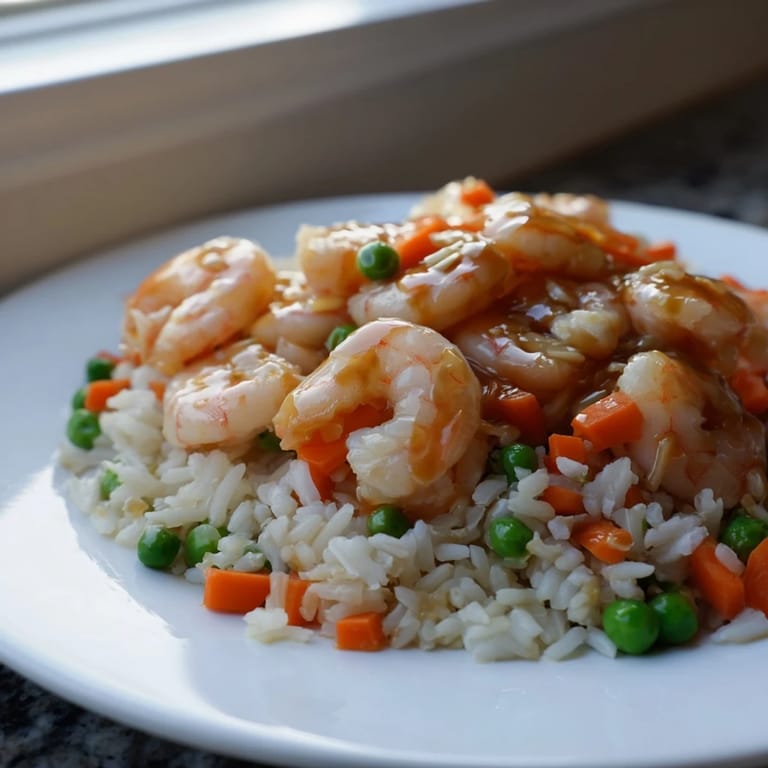
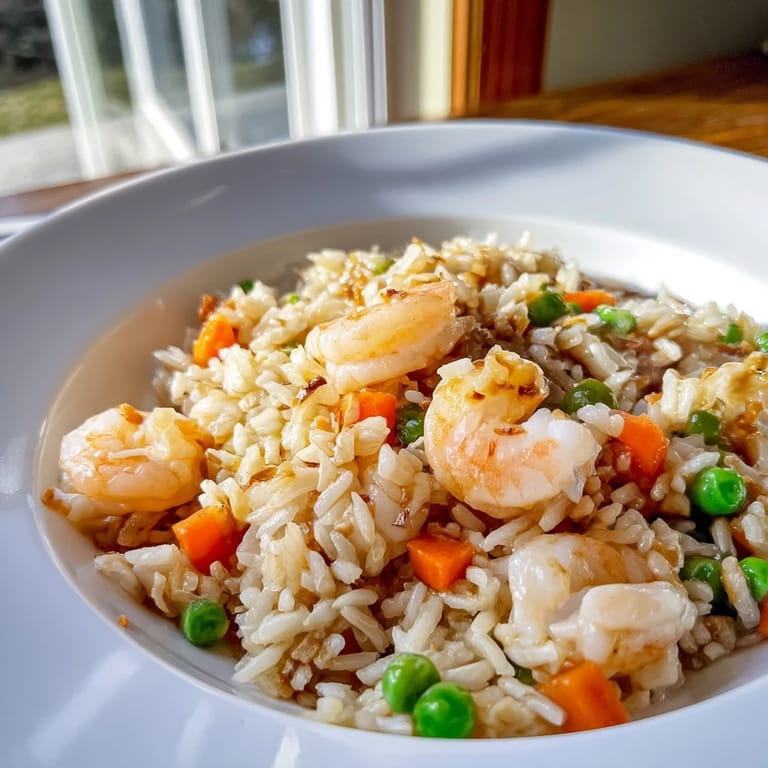
- Pour in the soy sauce, oyster sauce, and sesame oil, then scatter the white pepper over everything. Toss vigorously for about 1 minute until the color is even throughout and smells incredible. Fold in the peas and most of the spring onions, then gently return the shrimp and toss everything together for 1–2 minutes until it's all hot.
- Taste and adjust:
- Take a spoonful, let it cool slightly, and taste. Needs more salt? Add a bit more soy sauce. Feeling flat? A squeeze of lime or another 1/4 teaspoon sesame oil might wake it up. Serve immediately in bowls, topped with extra spring onions and lime wedges if you have them.
 Save to Pinterest
 Last month, a friend told me that this fried rice made her feel capable in the kitchen for the first time in years. She'd been intimidated by cooking, but something about the simplicity and the immediate feedback—watching colors change, smelling when things are ready, tasting and adjusting—gave her permission to trust her instincts. That's when I understood: this dish isn't just weeknight dinner, it's a gateway to feeling confident around food.
Why Day-Old Rice Changes Everything
I learned this the hard way during an ambitious Saturday when I tried using warm, freshly cooked rice. Within seconds, it broke down into a sticky paste that clung to my spatula like glue. Day-old rice has had time to dry out slightly in the fridge, so when it hits the hot wok, each grain fries individually instead of bonding with its neighbors. It's the difference between fried rice and rice porridge, and it's entirely about patience.
The Garlic-Oil Marriage
There's a moment in this recipe where everything changes: when minced garlic meets hot oil. The moment it hits, stand close and watch—the garlic should go from white to barely golden in about 10 seconds, and that's when you add your vegetables. If you let it go too long, it burns and tastes bitter, ruining the entire dish. This isn't a minor detail; it's the entire foundation of why this tastes like a professional made it.
Making It Your Own
Once you understand the basic rhythm, this becomes a canvas for whatever you have on hand. I've made it with leftover rotisserie chicken, scrambled egg stirred in at the end, mushrooms that add earthiness, even canned pineapple for sweetness. The technique stays the same; only the supporting players change. Here are three things that always work:
- Add a fried egg on top for richness and extra protein—the runny yolk mixes into the rice like a sauce.
- Swap the shrimp for the same weight in diced chicken, tofu, or even leave it out entirely for a vegetarian version that's just as satisfying.
- Finish with a tiny squeeze of fresh lime juice and extra sesame oil if you want to punch up the flavor at the last second.
 Save to Pinterest
 This recipe isn't about impressing anyone—it's about feeding yourself and the people you care about with something warm, flavorful, and made by your own hands. That matters more than you might think.
Recipe FAQs
- → Why should I use day-old rice?
Day-old, chilled rice has dried out slightly, allowing each grain to remain separate and fluffy during stir-frying. Fresh, warm rice tends to clump together and become mushy. Store cooked rice in the refrigerator for best results.
- → How do I know when the shrimp is cooked through?
Shrimp cook quickly, turning from translucent gray to opaque pink in just 2-3 minutes. Remove them as soon as they're pink throughout, as overcooking makes them tough and rubbery. A properly cooked shrimp should feel firm but still tender.
- → Can I prepare ingredients ahead of time?
Yes, this dish is perfect for prep-ahead cooking. Peel and devein shrimp up to a day in advance, and chop all vegetables 2-3 hours ahead. Store prepped ingredients in separate containers in the refrigerator for a truly quick assembly at mealtime.
- → What proteins work as substitutes for shrimp?
Diced chicken breast, tofu cubes, or cashews all work beautifully in this dish. Adjust cooking times accordingly—chicken takes slightly longer than shrimp, while tofu and cashews need just enough time to warm through. Vegetarian versions are equally satisfying.
- → How do I prevent the rice from sticking?
Use high heat and a well-oiled wok or skillet to create gentle friction that separates grains. Break up any clumps with a spatula as you stir-fry. Tossing rather than stirring continuously helps maintain the fluffy texture and prevents compacting.
- → What makes this an Asian Fusion dish?
The combination of jasmine rice, soy and oyster sauces, sesame oil, and wok cooking are rooted in Asian technique, while the preparation style and ingredient ratios create an approachable, modern interpretation. Fresh lime and spring onion garnishes add contemporary brightness to traditional foundations.