 Save to Pinterest
 There's something about the smell of sesame oil hitting a hot pan that instantly transports me back to a weeknight when I decided to stop ordering takeout and actually recreate those bowls I'd been craving. I'd just come home, exhausted, and found some chicken in the freezer and half-wilted vegetables in the crisper drawer. What started as a desperate attempt to make dinner became this warm, deeply satisfying rice bowl that now gets made at least twice a month in my kitchen. The ginger-sesame sauce was my light bulb moment—simple ingredients that somehow taste like they took hours. My partner walked in halfway through cooking and asked if I'd secretly become a restaurant chef.
I made this for a friend who'd just moved into her first apartment with barely any cooking experience. She was nervous about the wok, so we cooked side by side, and I watched her face light up when she tasted it—not because it was fancy, but because she'd made something that actually tasted like real food. Now she texts me photos of her versions, each one slightly different based on what she finds at the market. That bowl became proof to her that cooking wasn't some mysterious skill reserved for other people.
Ingredients
- Chicken breast or thighs (500 g): Thighs are more forgiving if you're nervous about overcooking, but breasts stay lean and cook beautifully if you slice them into bite-sized pieces first.
- Soy sauce (3 tbsp): Low sodium gives you control over saltiness, and I learned the hard way that cheap soy sauce can overpower everything else.
- Toasted sesame oil (2 tbsp): Never skip this—it's the entire reason the sauce tastes like a restaurant made it, not your kitchen.
- Rice vinegar (1 tbsp): Adds a subtle brightness without the aggressive tang of regular vinegar.
- Honey or maple syrup (1 tbsp): Balances the salt and ginger with just enough sweetness to make you wonder why restaurant versions taste so good.
- Fresh ginger (2 tbsp grated): Grate it yourself from fresh root—pre-ground loses its heat and soul within weeks.
- Garlic cloves (2 minced): Mince finely so it dissolves into the sauce rather than creating little sharp bursts.
- Sriracha or chili garlic sauce (1 tbsp optional): Add this if you like a whisper of heat, skip it if you prefer your bowls gentle.
- Jasmine or short-grain rice (250 g): Jasmine stays fluffy and fragrant, absorbing the sauce without getting mushy.
- Water (500 ml): Always rinse your rice first—this removes excess starch and gives you fluffier results every time.
- Carrot (1 medium julienned): The thin strips cook in seconds and stay with a satisfying crunch.
- Red bell pepper (thinly sliced): The sweetness plays beautifully against the savory sauce, and the color makes the bowl look alive.
- Sugar snap peas or snow peas (100 g): These stay crisp in a way that feels like a small rebellion against mushy stir-fries.
- Spring onions (2 sliced): Add these at the very end so they keep their mild onion bite and fresh green color.
- Toasted sesame seeds (2 tbsp): Toast them yourself in a dry pan for thirty seconds if you have time—the difference is subtle but real.
- Fresh coriander or cilantro: If you're one of those people who thinks it tastes like soap, honestly just skip it and don't feel bad about it.
- Lime wedges: A squeeze of lime at the end wakes everything up and reminds you why citrus exists.
Tired of Takeout? 🥡
Get 10 meals you can make faster than delivery arrives. Seriously.
One email. No spam. Unsubscribe anytime.
Instructions
- Make your flavor base:
- In a bowl, whisk together the soy sauce, sesame oil, rice vinegar, honey, ginger, and garlic until the honey dissolves completely. This is your secret weapon—half goes on the chicken to marinate, and you save the rest to drizzle at the end for that restaurant-quality finish.
- Marinate the chicken:
- Pour half the sauce over your bite-sized chicken pieces and let them sit for fifteen minutes while you handle everything else. Don't stress if you only have ten minutes—the quick soak still matters.
- Cook the rice:
- Rinse your rice under cold water, swirling it around until the water runs clear, then combine it with fresh water in a saucepan. Bring it to a boil, then lower the heat, cover it, and let it simmer for twelve to fifteen minutes until each grain is tender and the water is absorbed.
- Sear the chicken:
- Heat your skillet or wok over medium-high heat until it's hot enough that a drop of water sizzles immediately. Add the marinated chicken (discard the used marinade) and don't move it around for the first minute—let it get golden and a little crispy before you stir and cook until it's no longer pink inside, about five to seven minutes total.
- Quick stir-fry the vegetables:
- In the same pan, toss in your carrot, bell pepper, and snap peas and let them cook for just two to three minutes, stirring constantly. They should still have resistance when you bite them—that's the magic.
- Assemble and finish:
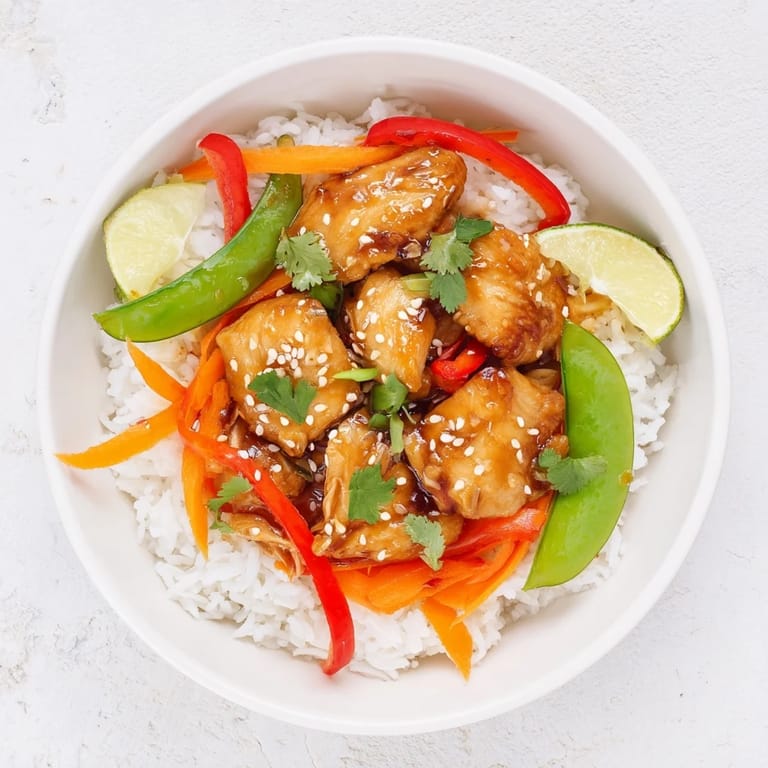
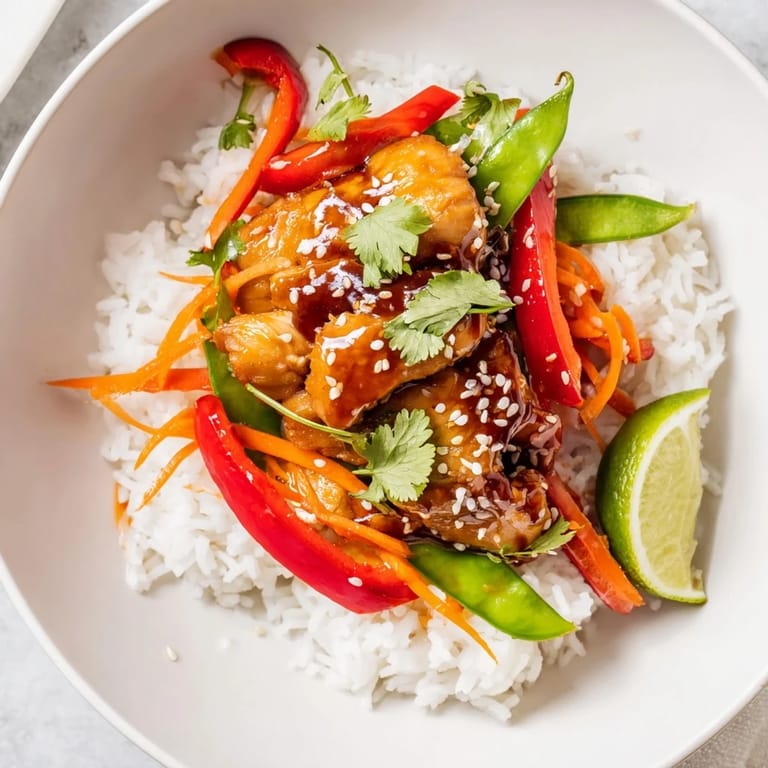
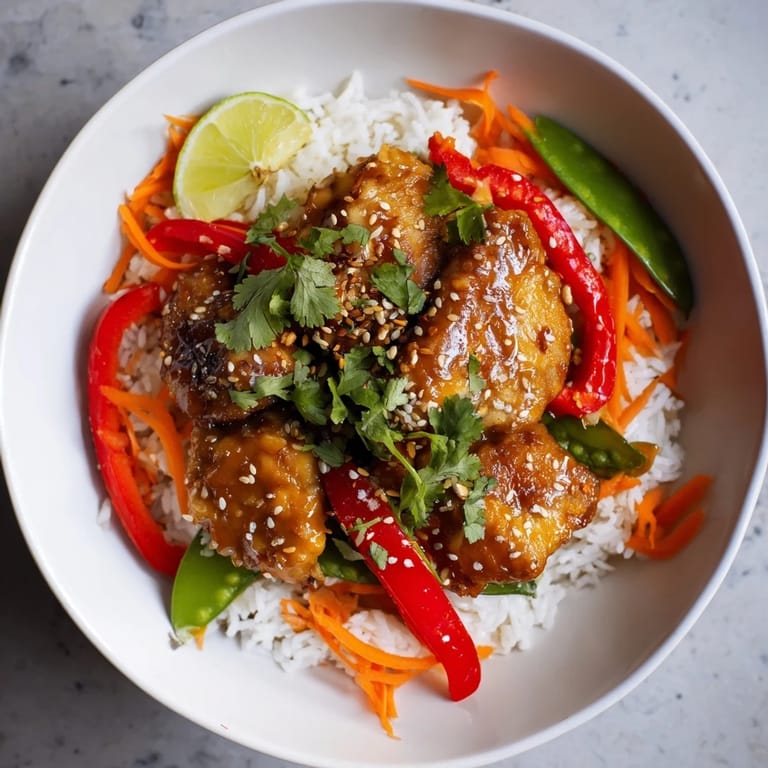
- Divide your fluffy rice among bowls, top it with the golden chicken and crisp vegetables, then drizzle with your reserved sauce. Scatter the spring onions, sesame seeds, cilantro, and a lime wedge over everything, and serve immediately while the rice is still warm.
 Save to Pinterest
 My favorite moment with this bowl happened on a rainy Sunday when I made it for my family, and my usually picky teenager asked for seconds without any prompting. That's when I realized this wasn't just an easy dinner—it was something that brought people together without feeling like a compromise. The combination of textures and flavors somehow made everyone at the table a little happier, and I've made it dozens of times since.
Why This Sauce Changes Everything
The genius of this sauce isn't that it's complicated—it's that four basic ingredients create something that tastes like you spent two hours cooking. Sesame oil carries the richness, ginger provides the warmth, and soy sauce anchors everything with depth. The honey sneaks in last, rounding out the sharp edges and making you wonder why your kitchen doesn't always smell like this. Once you understand how these four players work together, you'll start adding this sauce to roasted vegetables, grilled fish, and cold noodles without even thinking about it.
Rice Matters More Than You'd Think
I used to think rice was rice, until I started rinsing it and realized how dramatically that single step changes the final texture. The difference between fluffy individual grains and a sticky paste comes down to removing that excess starch before cooking. I also discovered that jasmine rice actually smells faintly floral, and if you've only ever had standard white rice, you're missing out on a small luxury. The moment the steam rises when you uncover the pot after cooking is when you know you've done it right—each grain should be separate and glossy.
Building Flavor Through Vegetables
The vegetables aren't just filler—they're the texture story of this bowl. The crunch of sugar snap peas, the slight sweetness of red bell pepper, and the delicate bite of julienned carrot all happen because they barely kissed the hot pan. I learned this after a phase of overcooking everything, and now I time my vegetable cooking so they finish right when the chicken comes out of the pan. When you eat this bowl, you should hear yourself crunch—that's how you know it's built right. Add your spring onions and cilantro only at the very end so they stay bright and fresh.
- Cut vegetables into similar sizes so they cook evenly and look intentional.
- If snap peas are pricey, snow peas work beautifully and cost less.
- Season the vegetables lightly with salt as they cook—they'll taste more like themselves.
 Save to Pinterest
 This bowl exists in that perfect space where it's easy enough for a Tuesday night but tasty enough that you never feel like you're settling. Once you've made it a few times, you'll start trusting your instincts and adjusting it based on what's in your kitchen and what your mood demands.
Recipe FAQs
- → What kind of chicken works best for this dish?
Boneless, skinless chicken breast or thighs cut into bite-sized pieces provide tender and flavorful results.
- → Can I use a different type of rice?
Yes, jasmine or short-grain white rice works well; rinsing the rice before cooking helps achieve a fluffier texture.
- → How do I make the sesame-ginger sauce?
Whisk together soy sauce, toasted sesame oil, rice vinegar, honey, grated ginger, minced garlic, and optional sriracha for heat.
- → Are there vegetarian alternatives for the proteins?
Firm tofu or tempeh can replace chicken for a tasty vegetarian version of this bowl.
- → What garnishes enhance the flavors?
Toasted sesame seeds, fresh coriander leaves, and lime wedges add texture, brightness, and aroma to the bowl.
- → How do I keep vegetables crisp when cooking?
Stir-fry the vegetables quickly over medium-high heat for 2–3 minutes to retain their crunch and color.