 Save to Pinterest
 The first time I tasted harira, I was standing in a Marrakech kitchen at dusk, watching my host's mother stir a pot with the kind of ease that comes from decades of practice. The smell hit me first—cinnamon and tomato mingling with something warm and indefinably comforting—and I realized this wasn't just soup, it was a ritual. Years later, I recreate that moment every time I make it, chasing that same golden hour feeling in my own kitchen.
I made this for my skeptical roommate who claimed he didn't like lentil soup, and by the second bowl he was asking for the recipe. That's when I knew it had crossed from just being food to becoming something that brings people together, even when they don't expect it.
Ingredients
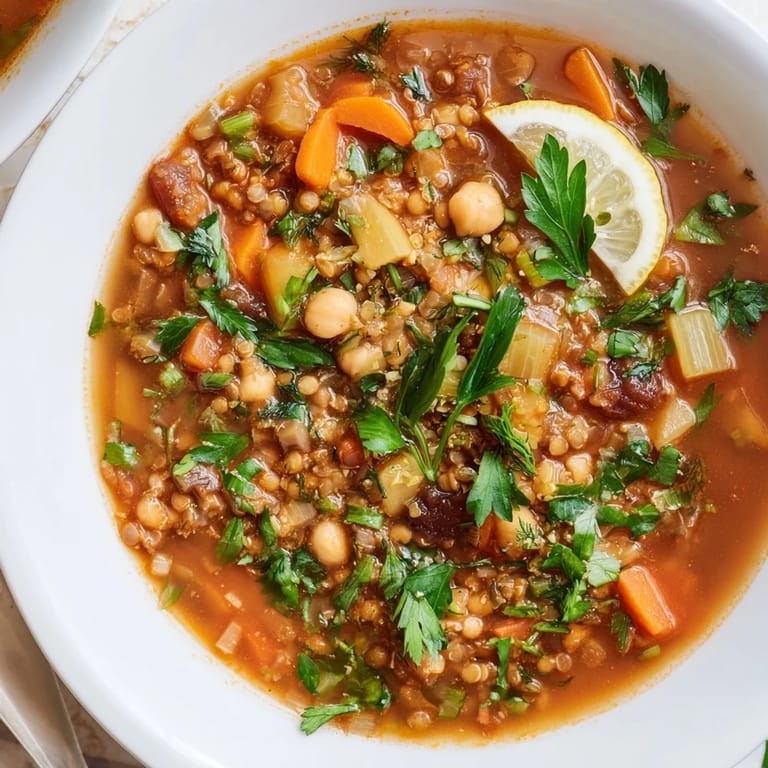
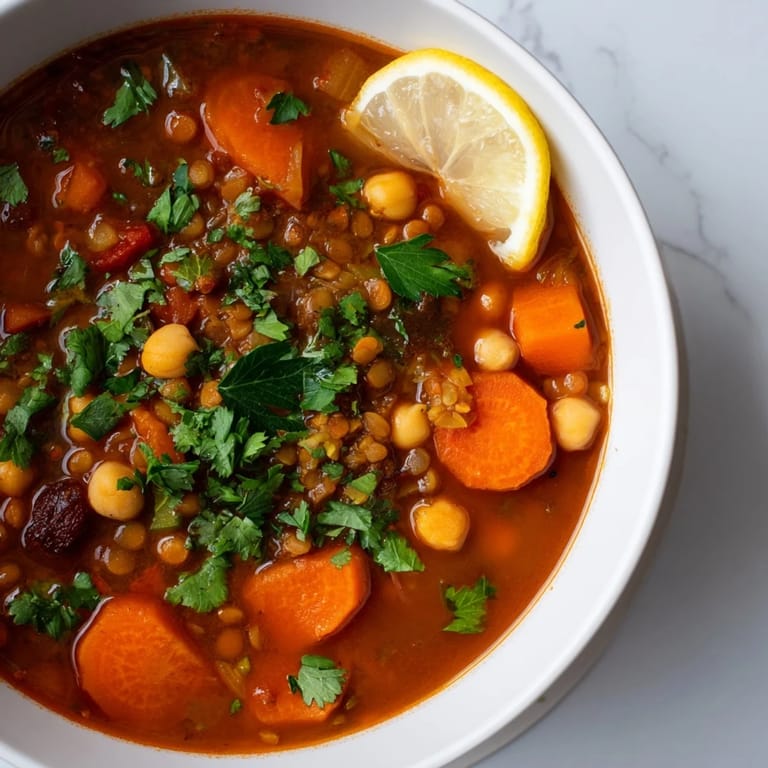
- Chickpeas (1 cup dried, soaked overnight, or 2 cups canned): These are the backbone—they soften into creamy bites that make the soup substantial and filling, though canned works just fine if you're short on time.
- Lentils (1/2 cup dried): They cook faster than chickpeas and add earthiness that rounds out the spices perfectly.
- Onion, celery, and carrots (1 large onion, 2 stalks celery, 2 medium carrots): This aromatic base is where the flavor foundation lives—don't rush the sauté.
- Garlic (3 cloves, minced): Added after the softer vegetables so it doesn't burn and turn bitter on you.
- Tomatoes (1 can chopped, plus 2 tbsp tomato paste): The bright acidity keeps everything balanced and prevents the soup from feeling heavy.
- Ground cumin, cinnamon, ginger, turmeric, paprika (1 tsp, 1 tsp, 1/2 tsp, 1/2 tsp, 1/2 tsp): These spices are non-negotiable—they're what make harira taste like harira, not just another tomato soup.
- Vegetable broth (6 cups): Use something with decent seasoning; bland broth means a bland soup.
- Dried apricots (1/2 cup chopped): This is the secret weapon—they add subtle sweetness and a hint of complexity that makes people wonder what they're tasting.
- Lemon juice (1 lemon): Freshly squeezed, added at the end to wake everything up without overpowering.
- Fresh cilantro and parsley (1/4 cup each, chopped): Stir these in at the very end so their brightness doesn't cook away.
- Olive oil (2 tbsp): Good quality matters here—this isn't the place to use the cheap stuff.
Tired of Takeout? 🥡
Get 10 meals you can make faster than delivery arrives. Seriously.
One email. No spam. Unsubscribe anytime.
Instructions
- Build Your Flavor Base:
- Heat olive oil in a large pot over medium heat and add your chopped onion, celery, and carrots. Let them sauté for 6 to 8 minutes, stirring occasionally, until the onion turns translucent and the kitchen smells sweet—this is when you know they're ready for the next step.
- Bloom the Spices:
- Add your minced garlic and all the spices at once, stirring constantly for about a minute. You'll smell the transformation immediately—that's when you know the spices are releasing their oils and your soup is about to get serious.
- Deepen the Base:
- Stir in the tomato paste and let it cook for another minute, then add your canned tomatoes, drained chickpeas, lentils, and chopped apricots. Mix everything together so the spices coat the legumes evenly.
- Simmer and Soften:
- Pour in the vegetable broth, bring it all to a boil, then reduce the heat and let it simmer uncovered for 45 to 50 minutes. Stir occasionally and taste as you go—the chickpeas and lentils should be completely tender, never chalky.
- Finish with Brightness:
- Turn off the heat and stir in your fresh cilantro, parsley, and freshly squeezed lemon juice. Taste and adjust the salt and pepper—this is your last chance to make it sing.
- Optional Texture Addition:
- If you want a heartier soup, cook some vermicelli or rice separately and add it to individual bowls, or stir it directly into the pot if you prefer.
 Save to Pinterest
 My grandmother told me that harira is what Moroccan families make during Ramadan to break the fast, and that tradition taught me something important: this soup isn't just about feeding hunger, it's about nourishing something deeper. Every time I make it, I'm honoring that.
The Magic of Spice Layering
What makes harira different from every other tomato-based soup isn't the tomatoes—it's how the spices work together. Cinnamon and ginger create warmth without heat, while cumin grounds everything in earthiness, and turmeric adds both color and a subtle mineral note that makes you taste something you can't quite name. The cayenne is optional, but I always use it because that gentle warmth reminds me why I love this soup in the first place.
Why Apricots Belong Here
Harira sits in that perfect space between sweet and savory, and dried apricots are what keep it balanced. They soften into the broth without disappearing, adding complexity without announcing themselves loudly. I've made this soup without them once out of stubbornness, and I've never made that mistake again.
Serving and Storage Wisdom
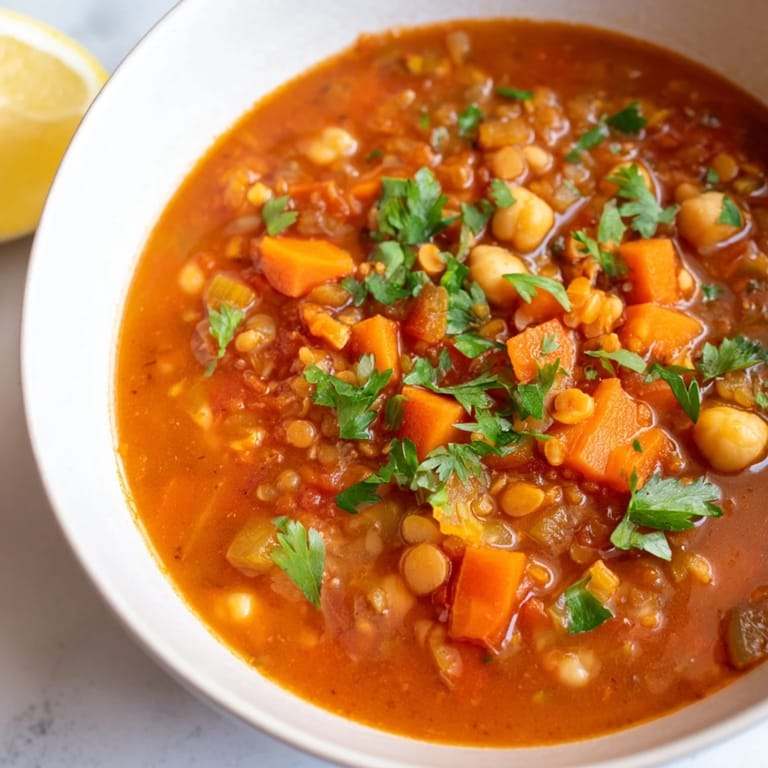
Harira tastes even better the second day—the flavors deepen and meld in ways they don't on day one. Serve it hot in deep bowls with crusty bread on the side and lemon wedges for squeezing. This soup freezes beautifully for up to three months, making it perfect for batch cooking on a Sunday afternoon.
- Stir in the fresh herbs and lemon juice just before serving so they maintain their bright flavor and color.
- If you're adding vermicelli or rice, cook it separately so it doesn't get mushy by day two.
- A sprinkle of extra cilantro and a wedge of lemon transform a simple bowl into something that feels special and intentional.
 Save to Pinterest
 There's something about harira that makes you slow down and appreciate the small moment of warmth, whether you're sharing it with someone you love or simply sitting with yourself on a cold evening. That's when you know it's more than just a recipe.
Recipe FAQs
- → Can I use canned chickpeas instead of dried?
Yes, canned chickpeas can be used for convenience. Just rinse and drain them before adding to the pot, reducing overall cooking time.
- → How do the spices influence the flavor?
Spices like cumin, cinnamon, turmeric, and paprika create a warm, aromatic profile that defines the dish's North African character.
- → Is it suitable for a vegan diet?
Absolutely, just ensure the vegetable broth is plant-based and omit any optional non-vegan garnishes.
- → What is the purpose of dried apricots in the dish?
Dried apricots add a subtle sweetness that balances the savory and spicy elements, enhancing the overall complexity.
- → Can I prepare it in advance?
Yes, flavors deepen when rested overnight, making it ideal for meal prep and reheating.
- → What are suitable garnishes?
Fresh cilantro or parsley and lemon wedges add brightness, while cooked vermicelli or rice can add texture and substance.