 Save to Pinterest
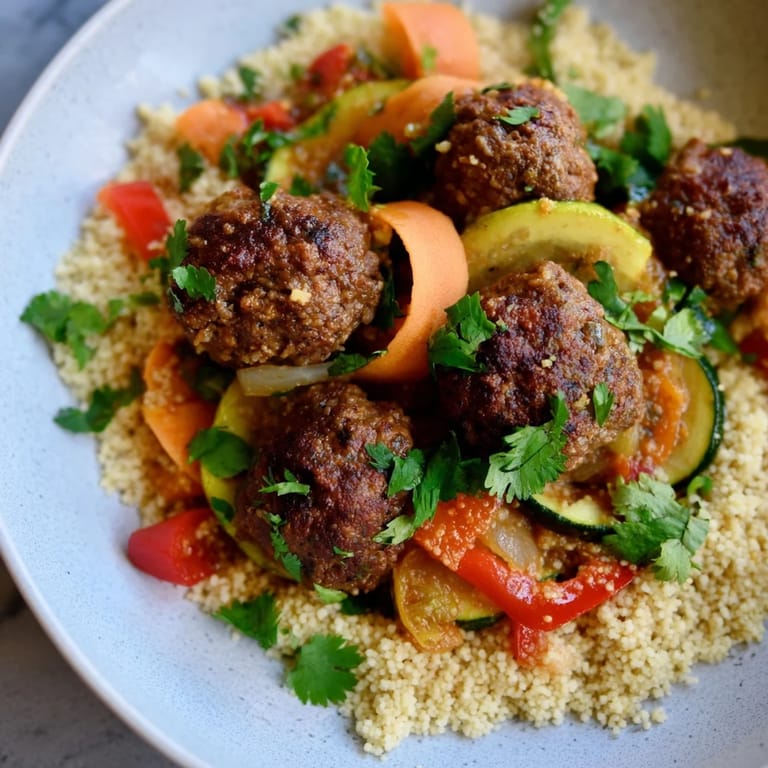
 The first time I made North African couscous kefta, I was standing in a cramped spice market in Marrakech, watching a vendor's hands move with practiced precision as he shaped dozens of meatballs without measuring a thing. Years later, back in my own kitchen, I realized that what made those kefta so unforgettable wasn't just the spices—it was the way they'd been handled with care, seasoned boldly, and cooked slowly in a fragrant vegetable sauce. Now when I make this dish, I chase that same feeling: the smell of cumin and cinnamon filling the kitchen, the gentle simmer of tender meatballs nestled among carrots and zucchini, and that moment when everything comes together over fluffy couscous.
I remember bringing this to a dinner party on a cold November evening, and watching my friend take that first bite, close her eyes, and just smile—the kind of smile that meant comfort and curiosity all at once. She'd never had kefta before, and suddenly she was asking for the recipe, already planning to make it for her family. That's when I knew this dish had that quiet power: it travels well, it impresses without trying too hard, and it makes people feel like you've taken them somewhere warm and welcoming.
Ingredients
- Ground beef or lamb: Lamb gives a deeper, more authentic flavor, but beef works beautifully if that's what you have—the spices do the heavy lifting either way.
- Onion and garlic: The grated onion dissolves into the meat, keeping it moist; don't skip this step.
- Fresh parsley and cilantro: These aren't just garnish—they're essential to the authentic flavor and keep the meatballs from tasting one-dimensional.
- Cumin, coriander, paprika, cinnamon: This warm spice quartet is non-negotiable; measure them carefully because they're what make this North African.
- Couscous: The fluffy canvas that soaks up all that incredible sauce—use good quality if you can.
- Vegetables: Carrots, zucchini, bell pepper, and tomatoes create sweetness and depth; they soften into the broth, becoming part of the whole.
- Vegetable or beef broth: This is your liquid foundation—taste it first, because if it's already salty, you'll adjust seasoning at the end.
Tired of Takeout? 🥡
Get 10 meals you can make faster than delivery arrives. Seriously.
One email. No spam. Unsubscribe anytime.
Instructions
- Mix the kefta base:
- Combine ground meat, grated onion, garlic, parsley, cilantro, cumin, coriander, paprika, cinnamon, cayenne, salt, and pepper in a large bowl. Use your hands to mix until everything is evenly distributed—don't overwork it, just enough that you can't see any raw meat streaks. Shape into walnut-sized balls; you'll get about 20 to 24, and uniform size helps them cook evenly.
- Build the aromatic base:
- Heat olive oil in a large pot over medium heat and sauté sliced onion until it's soft and just turning golden, about 5 minutes. Add carrots, bell pepper, and zucchini, cooking for another 4 to 5 minutes, stirring occasionally so everything starts to soften and release its fragrance.
- Bloom the spices:
- Stir in tomatoes and minced garlic, cooking for 2 minutes until the tomatoes start to break down. Add cumin, coriander, turmeric, cinnamon, paprika, and cayenne, stirring well so the spices coat the vegetables and their flavors wake up in the heat.
- Simmer the sauce:
- Pour in the broth, bring everything to a gentle simmer, and season with salt and pepper. The liquid should smell warm and inviting; taste it now and adjust as needed.
- Cook the kefta:
- Gently add the meatballs to the simmering sauce, cover the pot, and let everything simmer for 25 minutes, stirring gently halfway through. The meatballs will firm up as they cook, and the sauce will reduce slightly, becoming richer.
- Prepare the couscous:
- While the kefta cooks, place couscous in a large bowl with salt and olive oil. Pour boiling water over it, cover tightly with a plate or lid, and let it sit undisturbed for 5 minutes—the steam does the work. Fluff gently with a fork, separating the grains so they're light and airy.
- Bring it to the table:
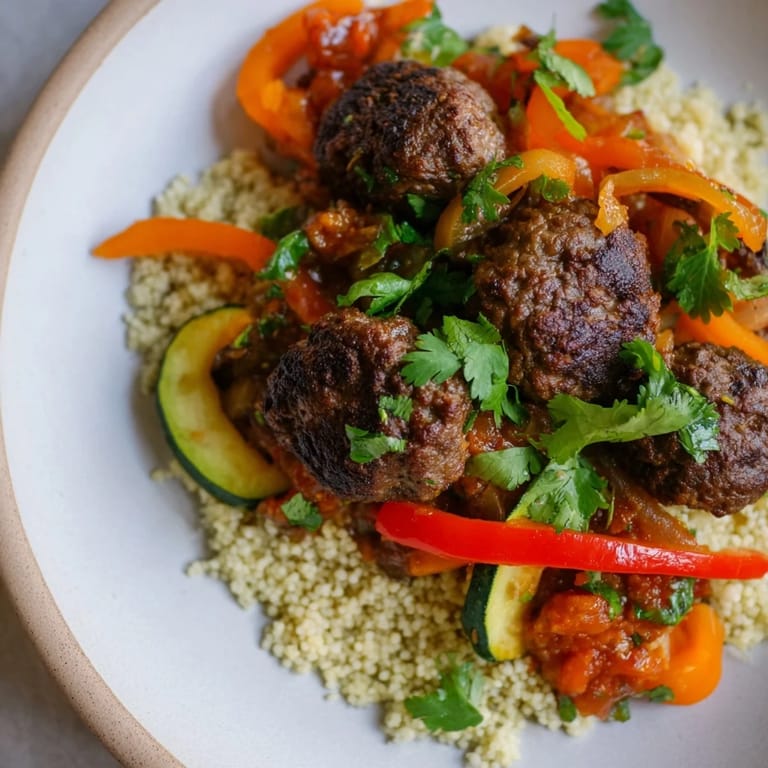
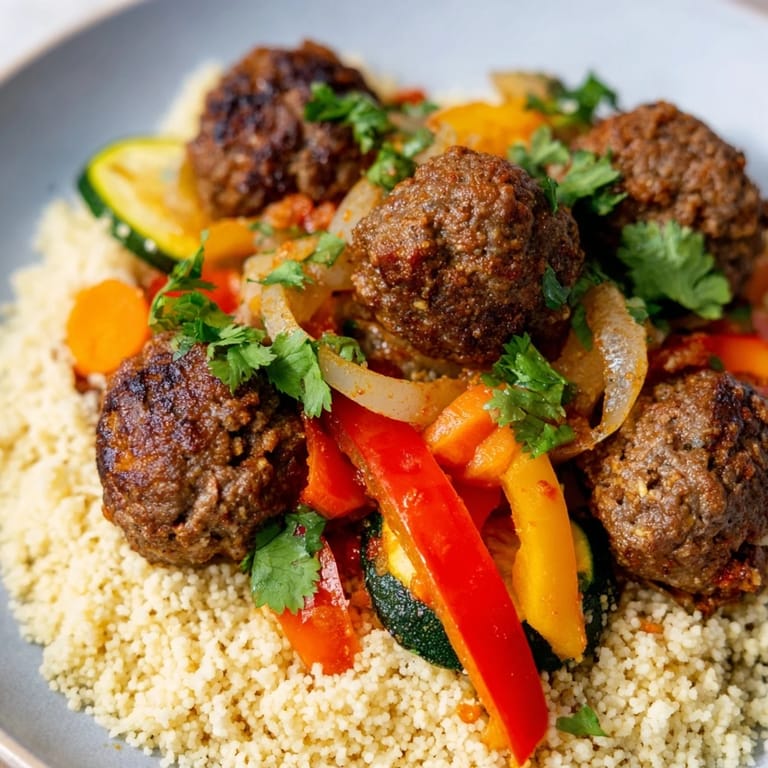
- Mound couscous on a large platter or individual plates, then spoon the kefta and vegetables with all their sauce over the top. Finish with fresh cilantro or parsley so every bite feels bright.
 Save to Pinterest
 There's a moment, about 20 minutes into cooking, when the kitchen fills with this warm, spiced steam and you realize you've created something that smells like comfort. That's when you know it's going to be good. Everything from that point on—the gentle simmer, the aroma reaching every corner of your home, the way people gather without being asked—feels inevitable and right.
The Story of Kefta
Kefta is the everyday magic of North African cooking—humble ground meat transformed by bold spices and careful technique. It appears in homes from Morocco to Tunisia, each family guarding their own version, each cook knowing that the secret is partly in the spice blend and partly in the love you put into shaping each ball. I love that this dish isn't precious or fussy; it's practical food made with intention.
Building Layers of Flavor
What struck me most as I learned to cook this properly was how North African cooking works in layers: first you build an aromatic base with onions, then you add and toast the spices so they bloom and deepen, then you introduce moisture and let everything marry together. It's the opposite of dumping everything in at once. Patience and order create complexity. When you follow this rhythm, you're not just cooking a meal—you're executing a technique that's been refined over centuries.
Variations and Confidence
Once you master the core technique, this dish becomes a canvas for your own preferences. I've made it with ground chicken and fresh mint when that's what I had, and it was equally delicious. Some people swear by adding chickpeas for extra heartiness, or a pinch of saffron for luxury. Others keep it exactly as written and make it weekly. The beauty is that the balance of spices and the cooking method remain the same—you're just adjusting the protein or adding depth where you like.
- Ground lamb creates the most authentic, complex flavor; ground beef is milder and equally valid.
- Chickpeas add protein and a satisfying texture, needing only 5 extra minutes to warm through.
- A small pinch of saffron stirred into the broth just before the kefta goes in creates an almost luxurious depth.
 Save to Pinterest
 This is the kind of meal that makes people feel cared for without requiring you to spend all day in the kitchen. Serve it warm, watch the faces light up, and know that you've brought something genuinely good to the table.