 Save to Pinterest
 The first time I made New England clam chowder, I was standing in my kitchen on a gray October afternoon, phone propped against a cookbook, listening to my grandmother describe how she used to make it for my grandfather after he'd come back from the docks. She said the secret was patience—not rushing the clams, letting them steam just until they cracked open like they were ready to tell you something. I've made it dozens of times since, and that patience she talked about is still the thing that matters most.
I remember making this for my partner on a Sunday when we were both exhausted from moving into a new apartment. The chowder was simmering on the stove while boxes were still stacked in the hallway, and suddenly the whole place smelled like something real and anchored. We sat on unopened boxes eating bowls of it, and somehow that soup made the empty apartment feel like home immediately.
Ingredients
- Fresh littleneck clams (2 lbs): The backbone of everything—scrub them well under cold water because sand hides in the quietest places.
- Clam juice (1 cup): This is your safety net, especially if your clams give up less liquid than expected.
- Russet potatoes (2 medium): They'll break down slightly while cooking, making the broth naturally thicker without feeling heavy.
- Onion, celery, carrot (one of each): This trio is the foundation everything else builds on—don't skip the fine chopping.
- Garlic (2 cloves): Minced small so it melts into the background and adds depth rather than announcing itself.
- Heavy cream and whole milk (1½ cups and 1 cup): The combination gives you richness without being overwhelming.
- Butter and bacon (2 tbsp and 2 slices): Butter builds the roux, bacon adds a whisper of smoke that everyone tastes but nobody quite names.
- All-purpose flour (2 tbsp): Just enough to thicken without making it feel gummy or starchy.
- Bay leaf and dried thyme: Quiet herbs that tie everything together.
Tired of Takeout? 🥡
Get 10 meals you can make faster than delivery arrives. Seriously.
One email. No spam. Unsubscribe anytime.
Instructions
- Steam the clams until they surrender:
- Scrub them under cold water, then add them to a pot with 2 cups of water. Bring it to a boil, cover, and listen for the gentle hiss of steam. After 5 to 7 minutes, they'll start opening—this is the signal you're waiting for. Discard any stubborn ones that refuse to open.
- Remove and chop the clam meat:
- Once they're cool enough to handle, extract the meat from each shell and chop it into rough, bite-sized pieces. Don't overthink the size—they'll soften more in the pot anyway.
- Crisp the bacon:
- In a large Dutch oven, cook the diced bacon over medium heat until it's golden and crisp. Pull it out with a slotted spoon and set it aside, but leave that rendered fat in the pot—it's liquid gold for flavor.
- Build the soffritto base:
- Melt the butter into that bacon fat, then add the onion, celery, carrot, and garlic. Let them soften and start to turn golden, stirring occasionally, for about 5 minutes. You want them tender but not brown.
- Make your roux:
- Sprinkle the flour over the vegetables and stir for a minute or so, letting it coat everything evenly. This paste is what will thicken your broth, so don't skip this moment.
- Add the liquids and scrape the bottom:
- Pour in your reserved clam cooking liquid and the bottled clam juice slowly, stirring the whole time. Scrape the bottom of the pot with your spoon to release all those browned, flavorful bits.
- Simmer the potatoes until tender:
- Add the diced potatoes, bay leaf, and thyme. Bring everything to a gentle simmer and let the potatoes cook until they're fork-tender, usually 10 to 12 minutes. They should break apart easily when you press them.
- Finish gently with the clams and cream:
- Reduce the heat to low—this is crucial, because boiling will curdle your cream. Add the chopped clams back in, along with the bacon, cream, and milk. Let it all warm through and meld together for 5 to 10 minutes, stirring now and then.
- Season and serve:
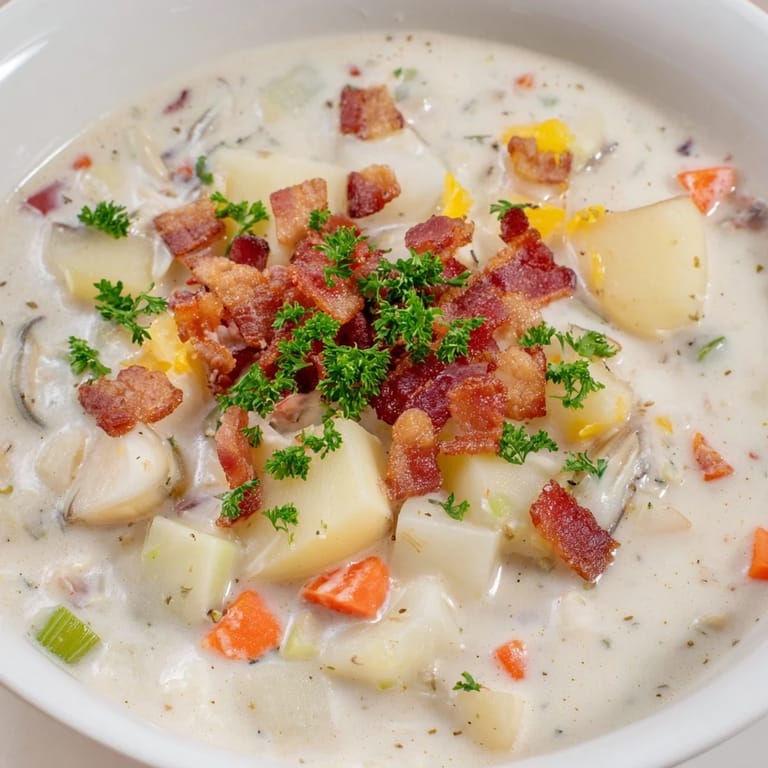
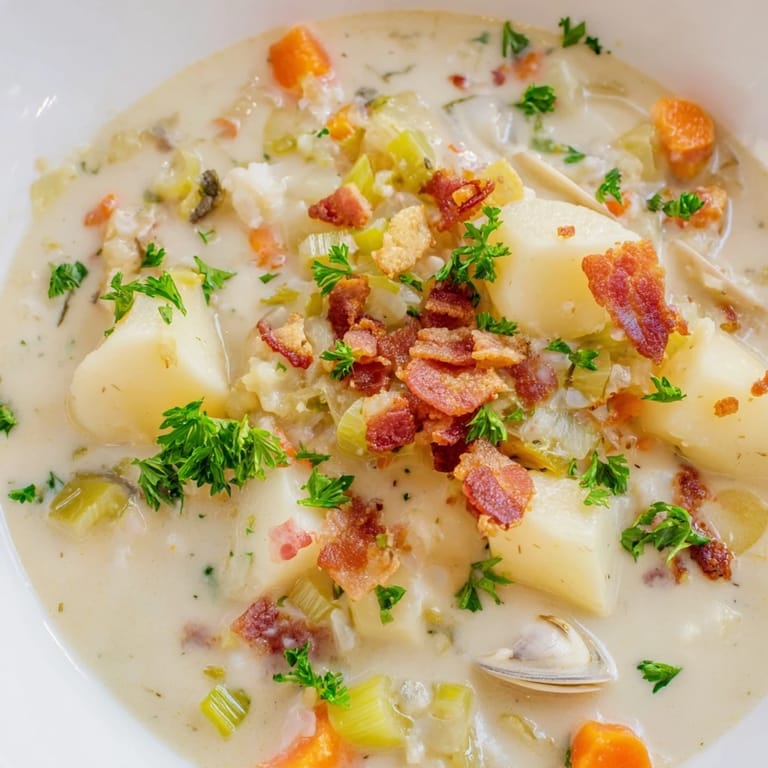
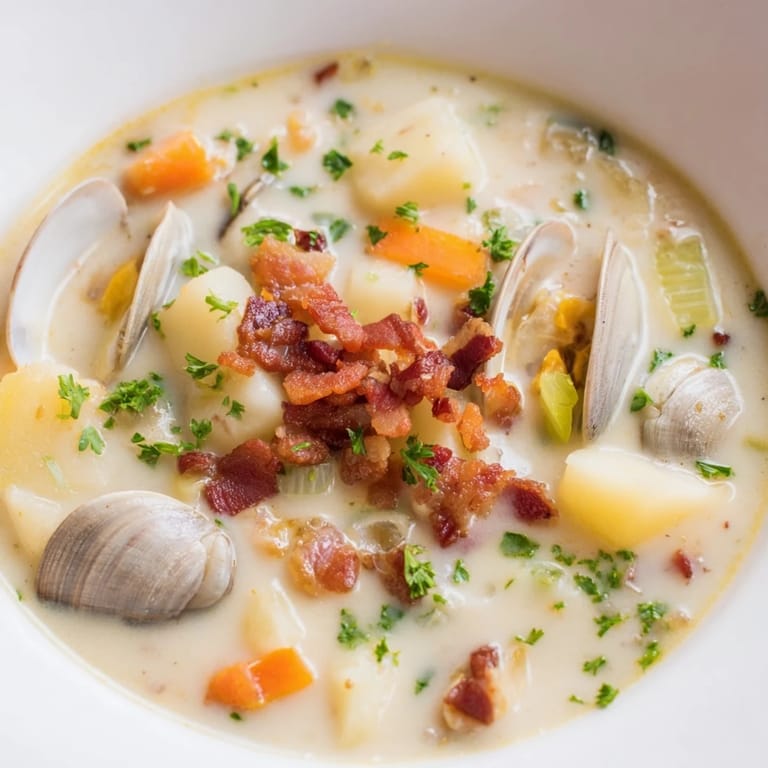
- Taste it and adjust the salt and pepper to your preference. Remove the bay leaf. Ladle into bowls, scatter fresh parsley over the top, and serve with oyster crackers on the side if you like something to break the surface of the bowl.
 Save to Pinterest
 There's a moment in the kitchen where you stop stirring and just listen to the chowder bubbling gently on the stove, and you know it's exactly right. That's when you understand why people have been making this soup for centuries in little coastal towns—not because it's fancy, but because it's honest and it works.
The Roux Matters More Than You Think
The roux—that flour-and-fat paste—is the invisible hand that holds this whole soup together. If you rush it or cook it too long, you'll either have a thin, watery chowder or a grainy one that feels off on your tongue. I learned this by making it wrong three times before I finally paid attention. Now I spend that minute or so stirring the flour into the butter and vegetables, watching it thicken into something silky, and it makes all the difference.
Why Fresh Clams Are Worth the Effort
Canned clams will work in a pinch, but fresh ones bring something alive to the pot—a briny sweetness and a tender texture that bottled versions just can't match. The ritual of steaming them, listening for them to open, cleaning the meat out of the shells—it makes you feel connected to the soup in a way that opening a can never does. If you can find them at a good fishmonger or farmers market, your patience will reward you.
Variations and Personal Touches
The beauty of this soup is that it bends to your preferences without losing its soul. Some people swear by mashing a few of the cooked potatoes right in the pot to make it thicker and more velvety. Others cut the cream with half-and-half or even swap it entirely for a lighter broth-based version. I've added a tiny pinch of smoked paprika on occasion, and it adds a subtle warmth that nobody quite puts their finger on. You might want to experiment until you find your version.
- Mash a few potatoes in the pot before adding the cream if you prefer a thicker, chowder-like texture.
- Substitute half-and-half for the cream and milk if you want something a little lighter.
- A small sprinkle of smoked paprika or a dash of hot sauce can add layers of flavor without changing the character of the soup.
 Save to Pinterest
 This chowder is the kind of soup that brings people together without any fuss, a bowl that says I was thinking of you without needing to say much at all. Make it often, adjust it to taste, and don't be afraid to make mistakes—that's how you'll find out what version of this soup is truly yours.
Recipe FAQs
- → What type of clams are ideal for this chowder?
Fresh littleneck clams are preferred for their tender texture and sweet flavor, enhancing the chowder’s authenticity.
- → How can I thicken the chowder if needed?
Mash some of the cooked potatoes in the pot before adding cream to achieve a thicker consistency naturally.
- → Can I substitute any ingredients to lighten the dish?
Yes, replacing heavy cream and milk with half-and-half reduces richness while maintaining flavor balance.
- → What is the best way to prepare the clams?
Steam the clams until they open, discard any unopened ones, then remove the meat and chop coarsely for use in the chowder.
- → Which herbs enhance the chowder’s flavor?
Bay leaf and dried thyme are simmered with the potatoes to impart subtle earthy and floral notes in the chowder.