 Save to Pinterest
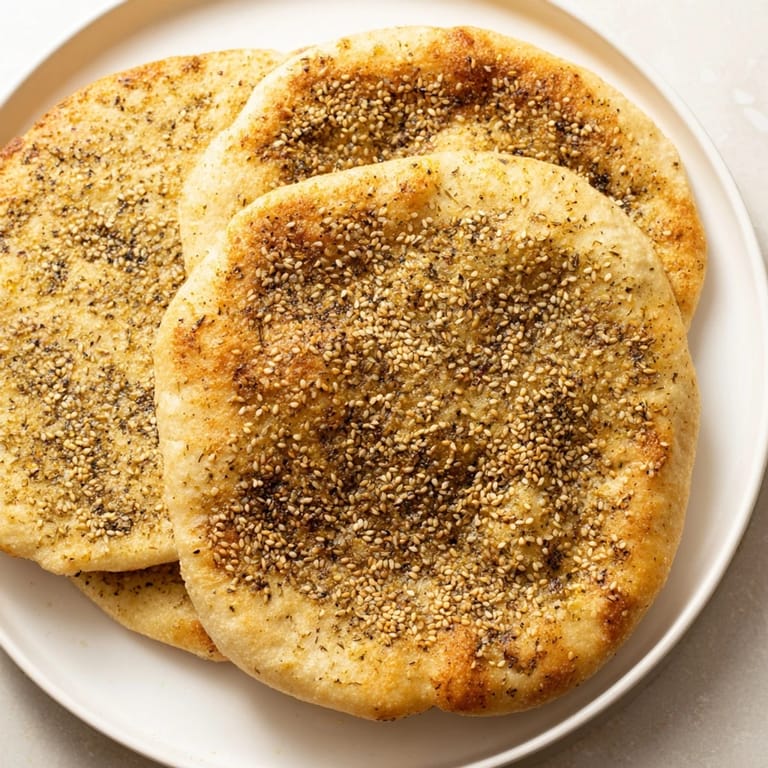
 The first time I made zaatar bread was in a cramped kitchen during a chaotic dinner party, when a friend casually mentioned their grandmother made it without any fuss. I had no zaatar spice blend, so I borrowed from a neighbor who appeared at just the right moment with a container of the real deal from a Middle Eastern market. Twenty minutes later, the smell of toasted sesame and herbs filled the apartment, and suddenly everyone stopped talking—that golden, oil-glistening flatbread had a way of doing that.
I've made this bread countless times since, and it never fails to impress. One afternoon, while testing a batch with too-warm water, the dough rose almost explosively, which taught me that temperature matters more than I thought. When I got it right the next time, the texture was silky, the crust crisp, and everyone at the table reached for another piece before the first was finished.
Ingredients
- All-purpose flour (2 cups / 250 g): The foundation of your dough—use fresh flour for the best rise, and don't pack it down when measuring.
- Instant dry yeast (1 teaspoon): This is your leavening agent, so make sure it hasn't expired or your bread will stay flat.
- Sugar (1 teaspoon): A small amount feeds the yeast and helps activate it during rising.
- Salt (3/4 teaspoon): Essential for flavor and to control how fast the dough rises.
- Olive oil (2 tablespoons for dough, plus 1/3 cup for topping): Use good quality oil, especially for the topping where you'll taste it directly.
- Warm water (2/3 cup / 160 ml): Think bathwater temperature—too hot kills the yeast, too cold and it won't activate.
- Zaatar spice blend (1/4 cup / 30 g): This is the soul of the bread; buy it from a good spice supplier or Middle Eastern market where it's actually fresh.
- Toasted sesame seeds (2 tablespoons): Toast them yourself if you can, or use pre-toasted for a deeper, nuttier flavor.
Tired of Takeout? 🥡
Get 10 meals you can make faster than delivery arrives. Seriously.
One email. No spam. Unsubscribe anytime.
Instructions
- Mix your base:
- In a large bowl, whisk together flour, yeast, sugar, and salt so the yeast is evenly distributed. Drizzle in the olive oil and stir, then slowly add the warm water while mixing until shaggy, sticky dough comes together.
- Knead until silky:
- Transfer to a lightly floured surface and knead for 5-7 minutes with steady, rhythmic motions until the dough becomes smooth, elastic, and springs back when you poke it. You'll feel the transformation happen under your hands.
- Let it rise:
- Place the kneaded dough in a lightly oiled bowl, cover with a damp cloth or plastic wrap, and set it in a warm, draft-free spot for about an hour until it's puffy and roughly doubled in size.
- Heat your oven:
- While the dough rises, preheat your oven to 220°C (425°F) and line two baking sheets with parchment paper so everything's ready when you need it.
- Shape your flatbreads:
- Once the dough has risen, divide it into 4 equal pieces, gently roll each into a ball, then flatten with your fingers or a rolling pin into rounds about 6-7 inches (15-18 cm) across. Place them on the prepared baking sheets with a little space between each.
- Make the zaatar paste:
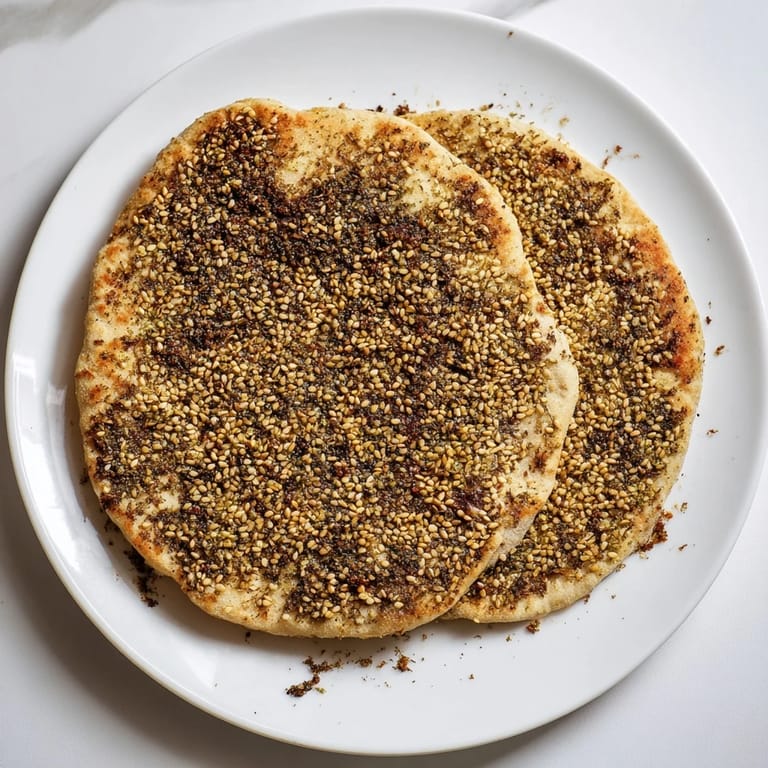
- In a small bowl, stir together the zaatar spice blend, toasted sesame seeds, and extra virgin olive oil until you have a thick, aromatic paste that coats a spoon.
- Top generously:
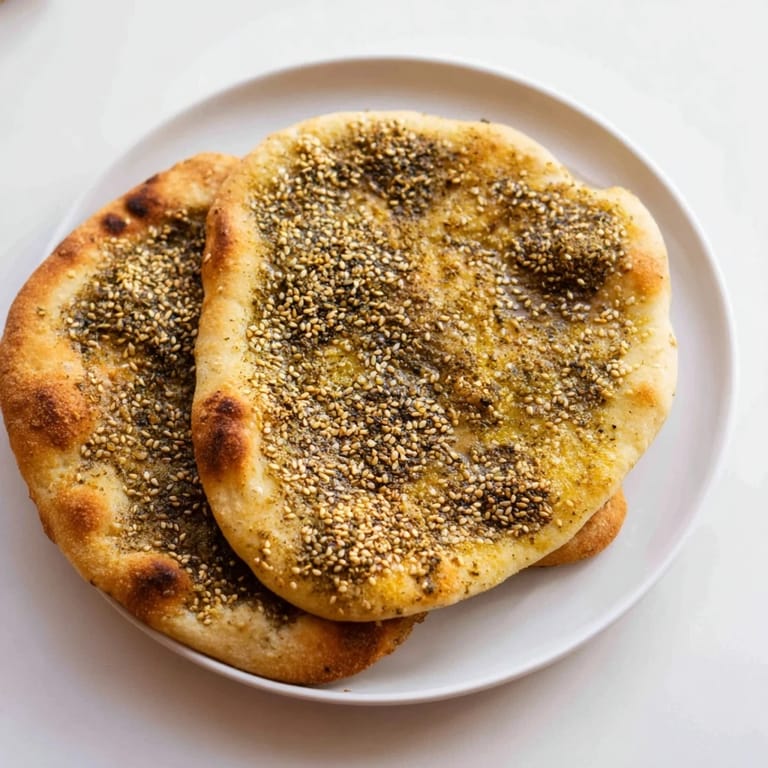
- Spread the zaatar mixture evenly over each dough round, leaving a small border around the edges so the bread can puff slightly and crisp up.
- Bake until golden:
- Slide the baking sheets into the preheated oven and bake for 12-15 minutes until the edges are crisp and golden, and the zaatar topping is fragrant and slightly darker at the peaks.
- Cool and serve:
- Remove from the oven and let cool for a minute or two, then serve warm or at room temperature with labneh, olives, hummus, or fresh vegetables.
 Save to Pinterest
 One evening, I made this bread for a small gathering of friends from different backgrounds, and watching them tear into it with genuine excitement reminded me that food is one of those rare things that speaks a universal language. The bread was gone in minutes, leaving behind only oil stains on the napkins and requests for the recipe.
The Magic of Fresh Zaatar
Zaatar isn't just a spice blend—it's a combination of dried herbs like sumac, oregano, and marjoram that creates a slightly tangy, herbaceous flavor. When you smell it mixed with sesame and olive oil, you immediately understand why this bread has been made the same way for centuries across the Levantine region. The sumac brings a subtle citrus note that brightens the whole experience, and the herbs remind you of sun-dried fields.
Variations and Additions
Once you've mastered the basic recipe, there's room to play. I've added a pinch of chili flakes for heat, scattered some pine nuts on top before baking, or even drizzled a little pomegranate molasses over the finished bread. Some days I make the dough a little thinner for crispier flatbreads, and other times I let it rest longer for a fluffier texture with more air pockets.
Storage and Make-Ahead Tips
This bread is best eaten fresh and warm, but it keeps beautifully in an airtight container for a day or two at room temperature. You can even freeze the shaped, untopped dough for up to a month; just thaw it, add the zaatar topping, and bake as usual. On lazy mornings, I sometimes prep the dough the night before and wake up to the smell of it baking—it's one of the best alarm clocks you can set.
- Store leftover flatbreads in an airtight container to keep them from drying out.
- Reheat gently in a low oven or toasted to restore some of the original crispness.
- Frozen dough should be allowed to thaw completely before topping and baking.
 Save to Pinterest
 Making this bread is simple enough that you'll want to do it often, and special enough that everyone will feel like you've made something meaningful. It's one of those rare recipes that tastes like care but requires nothing more than time and attention.
Recipe FAQs
- → What is zaatar and how is it used here?
Zaatar is a Middle Eastern spice blend typically including thyme, sumac, and sesame seeds. It is mixed with olive oil and spread over the flatbread to provide a fragrant, tangy flavor.
- → Can I substitute all-purpose flour?
All-purpose flour provides the right structure for the dough, but whole wheat or bread flour can be used for a different texture or flavor.
- → How can I make the bread fluffier?
Allow the shaped dough to rest for about 10 minutes before adding the topping to enhance softness and rise.
- → What are some good pairings with this flatbread?
This flatbread pairs well with labneh, olives, hummus, baba ganoush, or fresh vegetables, enhancing Middle Eastern dining experiences.
- → Is it suitable for vegan diets?
Yes, this flatbread is vegan friendly, using only plant-based ingredients like olive oil and zaatar without any dairy or animal products.