 Save to Pinterest
 There's something quietly magical about making labneh at home—the first time I made it, I was skeptical that something so simple could taste so luxurious. My grandmother had always bought it from the market, but one afternoon I decided to try what she called the 'lazy cook's secret': strain good yogurt, wait, and suddenly you have cheese. When I tasted that first spoonful, creamy and tangy and nothing like store-bought, I understood why she'd kept that knowledge tucked away like a treasure.
I made a batch the night before hosting a small dinner party, and as my guests arrived, the smell of labneh and warm pita bread filled the kitchen in the most inviting way. Someone asked what it was, and when I said I'd made it myself, their surprise felt better than any compliment about the main course—there's something about offering people homemade cheese that shifts the whole mood of a meal.
Ingredients
- Full-fat plain yogurt (1 kg): Use the thickest, creamiest yogurt you can find—Greek yogurt or even strained yogurt gives you a head start and yields richer results.
- Fine sea salt (½ tsp): Salt isn't just seasoning here; it draws out moisture and deepens the flavor, so don't skip it or reduce it thinking you'll adjust later.
- Extra-virgin olive oil (2 tbsp): This is your finishing touch, so choose one you actually love to taste—drizzle it generously and let it shine.
- Dried mint or zaatar (1 tsp, optional): These transform labneh from simple to unforgettable; I usually keep both on hand because I can't decide which I love more.
- Aleppo pepper or sumac (pinch, optional): A tiny sprinkle adds a whisper of tartness and warmth that feels authentically Levantine.
Tired of Takeout? 🥡
Get 10 meals you can make faster than delivery arrives. Seriously.
One email. No spam. Unsubscribe anytime.
Instructions
- Salt and stir:
- Pour your yogurt into a bowl and sprinkle the salt over it, then stir until the salt dissolves and the yogurt feels uniform. This takes maybe a minute, but it's the moment the transformation begins.
- Prepare your draining station:
- Line a sieve or colander with a double layer of cheesecloth or a thin, clean kitchen towel—this is your magic filter. Place it over a deep bowl so the whey has somewhere to escape.
- Transfer and cover:
- Pour your salted yogurt into the cloth and gather the edges up and over it like you're tucking it into bed. This gentle approach keeps the curds intact.
- Let time do the work:
- Slide it into the refrigerator and forget about it for 12 to 24 hours, depending on what you're after—12 hours gives you something spreadable and soft, while 24 brings you closer to a proper cheese. I usually check on it once just because I can't resist a peek.
- Unmold and finish:
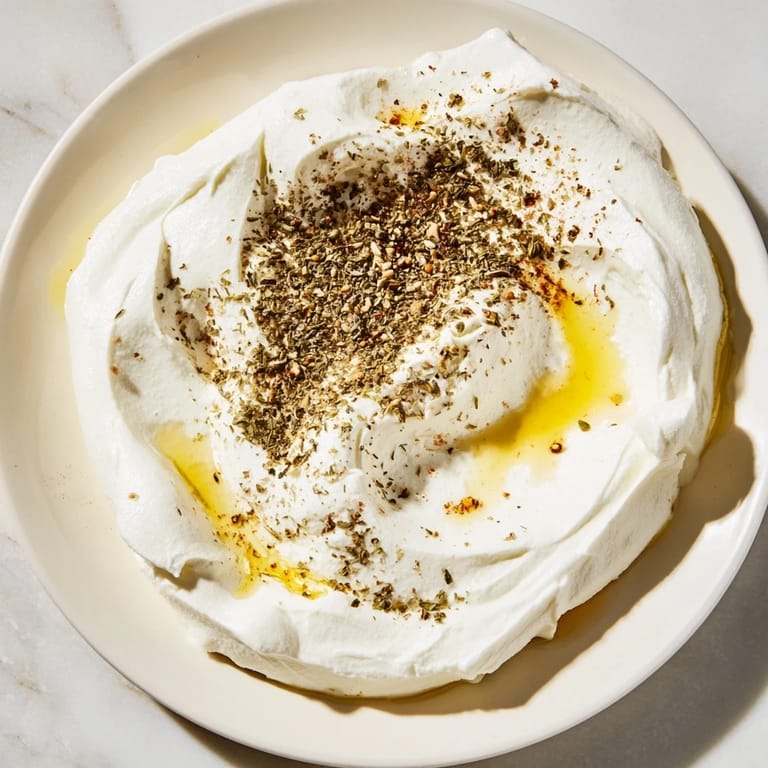
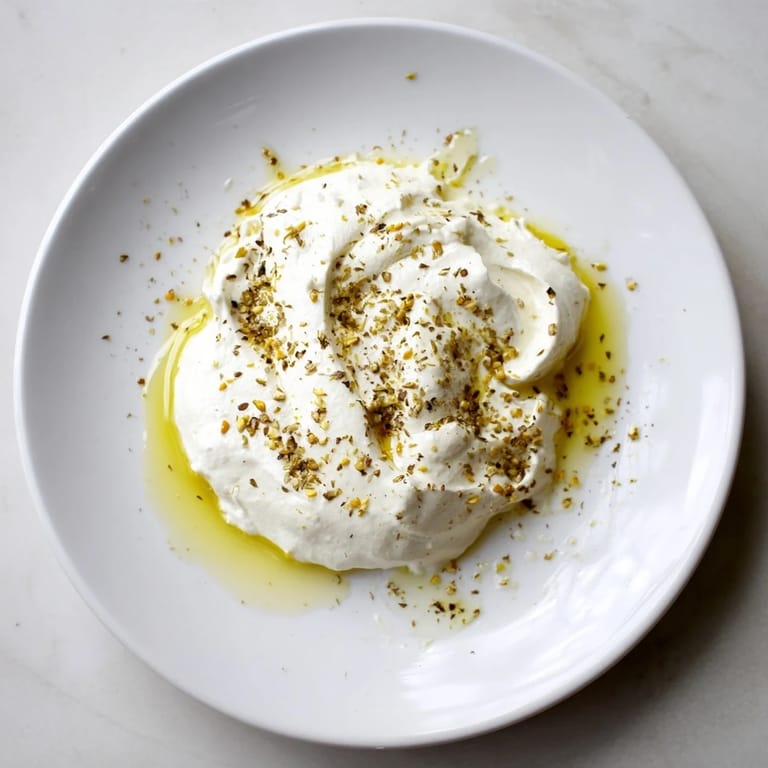
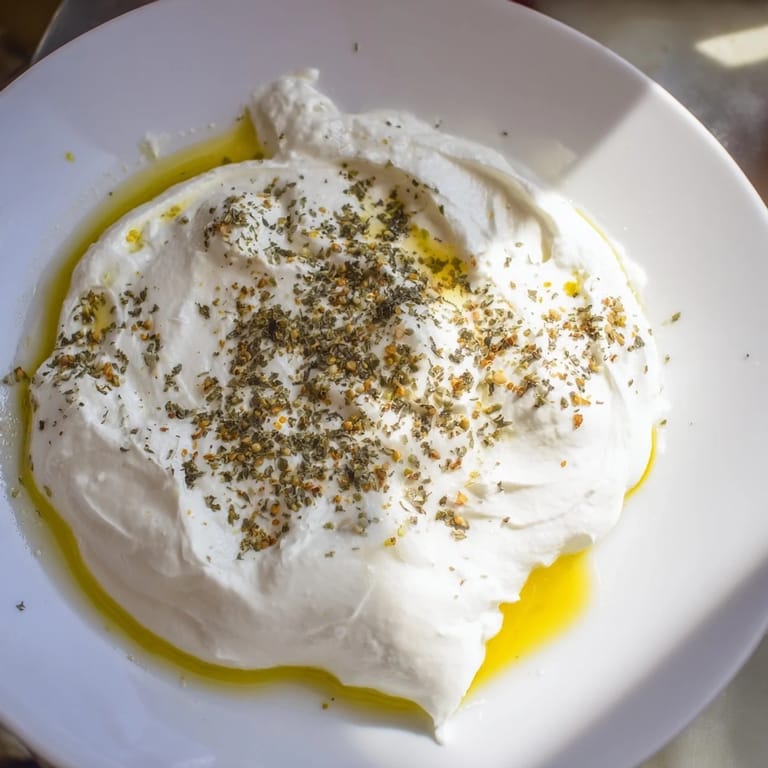
- Transfer your labneh to a shallow serving bowl, drizzle generously with olive oil, and scatter your chosen herbs and spices across the top. The olive oil will pool slightly and that's exactly what you want.
- Serve and enjoy:
- Bring it to the table with warm pita bread, fresh vegetables, or olives. Serve it cold, let people tear the bread and scoop, and watch how quickly it disappears.
 Save to Pinterest
 The moment I served labneh at a casual lunch with friends, one person closed their eyes after the first taste and said, 'This tastes like someone cared,' and that's when I realized this recipe is less about cheese and more about slowing down enough to feed people with intention. It's become the thing I make when I want to say something without words.
Transforming Labneh Into Something More
Once you master the basic version, labneh becomes a canvas—I've shaped it into small balls, rolled them in sumac and thyme, and preserved them in jars of olive oil infused with garlic cloves and dried chiles. These keep for weeks and make unexpected hostess gifts. You can also swirl it with fresh herbs, stir through crushed pistachios for crunch, or even use it as a base for a layered dip by spreading it thick and topping it with spiced ground lamb.
Timing and Patience
The beauty of labneh is that it doesn't demand your attention—I've made it the night before gathering friends, the morning before unexpected guests, or when I simply wanted something silky and good to have on hand. The straining happens in the quiet of your refrigerator, which means you can make this on a whim and still have time to attend to everything else. That quiet reliability is part of why it's become such a staple in my kitchen.
Why This Becomes a Kitchen Ritual
There's something grounding about turning something you already have—yogurt from the store—into something that feels artisanal and special. Every time I make labneh, I'm reminded that the most impressive things sometimes ask only for salt, cloth, and time. It's taught me that good cooking isn't always about complexity; sometimes it's about understanding a simple transformation so completely that you can execute it with your eyes closed.
- Start with yogurt you'd happily eat straight from the container—quality matters more than quantity.
- If you're short on cheesecloth, a clean cotton napkin or even a paper towel works, though cheesecloth drains most predictably.
- Taste the whey as it collects—it's tangy and surprisingly good in dressings, sauces, or soups if you want to use every drop.
 Save to Pinterest
 Labneh is proof that sometimes the smallest efforts yield the biggest rewards, and that's why it keeps appearing on my table. Make it once and it becomes part of your cooking vocabulary forever.
Recipe FAQs
- → What is the key step in making labneh?
Straining salted yogurt through cheesecloth for 12 to 24 hours to remove whey and achieve a thick texture.
- → How can labneh firmness be adjusted?
Strain for 12 hours for soft spreadable texture or up to 24 hours for a firmer cheese suitable for shaping into balls.
- → What garnishes enhance labneh flavor?
Drizzling extra-virgin olive oil and sprinkling dried mint, zaatar, Aleppo pepper, or sumac add traditional aromatic touches.
- → How should labneh be served?
Chilled, typically accompanied by warm pita bread, crudités, olives, or as part of mezze platters.
- → Can labneh be made dairy-free?
Yes, by using a thick plant-based yogurt alternative instead of dairy yogurt during the straining process.
- → How long does homemade labneh last?
Refrigerated labneh stays fresh for up to five days when properly stored.