 Save to Pinterest
 I learned to make hummus not from a cookbook, but from my neighbor Layla, who showed up one afternoon with a jar of tahini and a knowing smile. She taught me that real hummus isn't about following a recipe—it's about feeling the texture as you blend, tasting as you go, and never being afraid to add another drizzle of olive oil. That day, standing in her kitchen with chickpeas whirring in the processor, I realized I'd been eating hummus my whole life without ever truly making it. Now it's the one thing I can make with my eyes closed, the one dish that always feels like home.
The first time I made this for a gathering, I watched my friends scrape the bowl clean with torn pita, their fingers shiny with olive oil. Someone asked if I'd ordered it from the Lebanese place downtown, and I just smiled. That moment taught me that homemade hummus isn't just food, it's a conversation starter, a reason to linger at the table a little longer.
Ingredients
- Cooked chickpeas: Use canned for convenience or cook dried ones until they're soft enough to squish between your fingers, that softness is what makes the hummus velvety.
- Tahini: This sesame paste is the soul of hummus, always stir it well before measuring because the oil separates and you need that creamy consistency.
- Lemon juice: Fresh is non-negotiable here, it brightens every bite and balances the richness of the tahini.
- Garlic: One small clove is enough to add warmth without overpowering, but if you love garlic like I do, sneak in a little extra.
- Cold water: It loosens the tahini and helps the hummus whip into that cloud-like texture you see in mezze restaurants.
- Ground cumin: Just half a teaspoon adds an earthy, toasted note that makes the hummus feel complete.
- Sea salt: Fine salt dissolves instantly and lets you control the seasoning with precision.
- Extra virgin olive oil: Use your best bottle for drizzling, it sits on top like liquid gold and adds a peppery finish.
- Paprika or sumac: Paprika gives a sweet, smoky color while sumac brings a tangy, lemony brightness, choose based on your mood.
- Fresh parsley: A handful of chopped parsley adds color and a fresh, grassy contrast to the creamy base.
Tired of Takeout? 🥡
Get 10 meals you can make faster than delivery arrives. Seriously.
One email. No spam. Unsubscribe anytime.
Instructions
- Blend the base:
- Add chickpeas, tahini, lemon juice, garlic, water, cumin, and salt into the food processor. Let it run for a full two minutes, longer than you think you need, until the hummus turns pale and silky.
- Adjust the texture:
- If it's too thick or grainy, drizzle in cold water one tablespoon at a time while the motor runs. You'll feel it transform into something light and airy.
- Taste and tweak:
- Stop and taste it now, this is your chance to add more salt for depth or lemon juice for brightness. Trust your palate, not just the measurements.
- Plate with style:
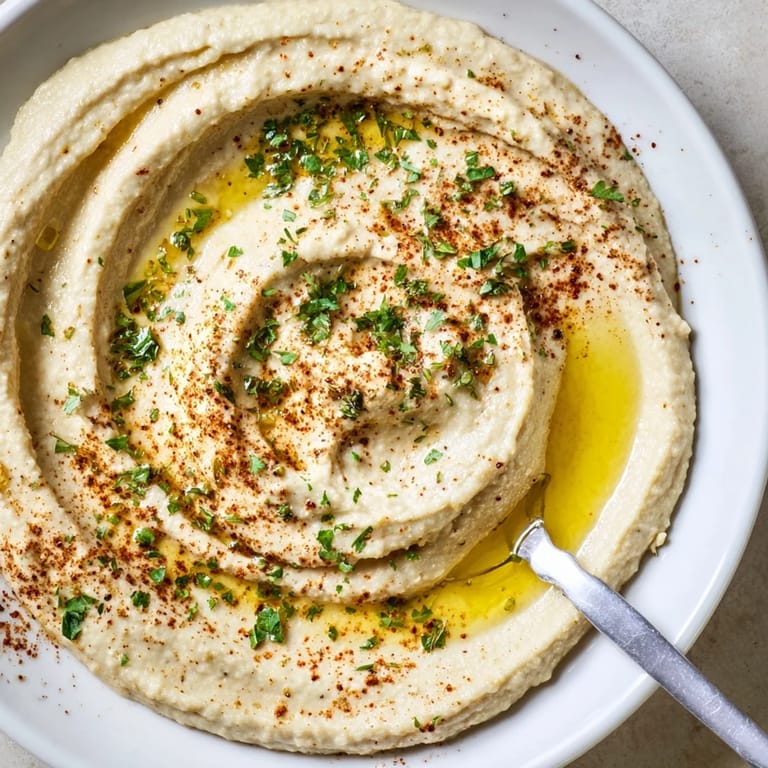
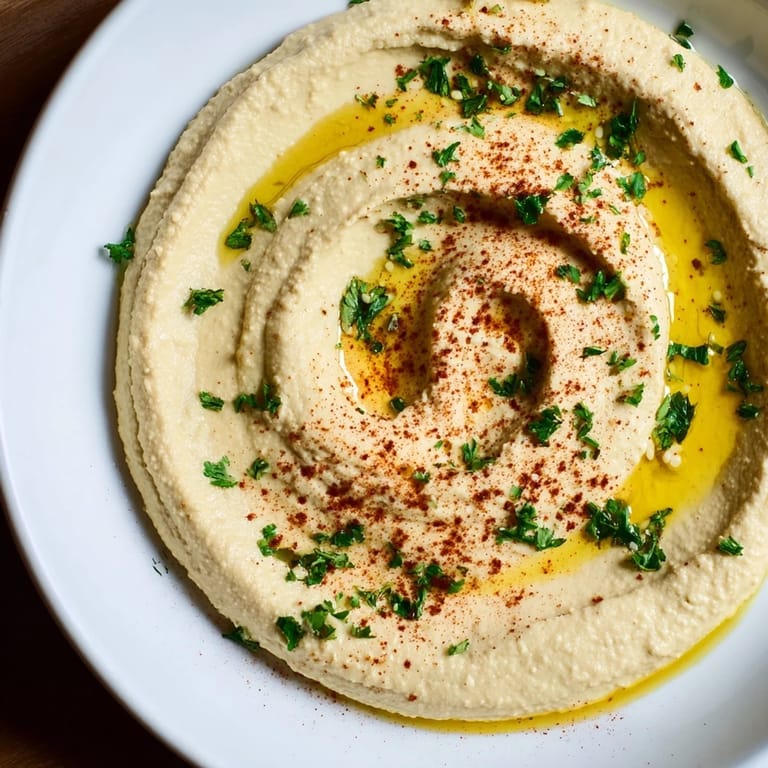
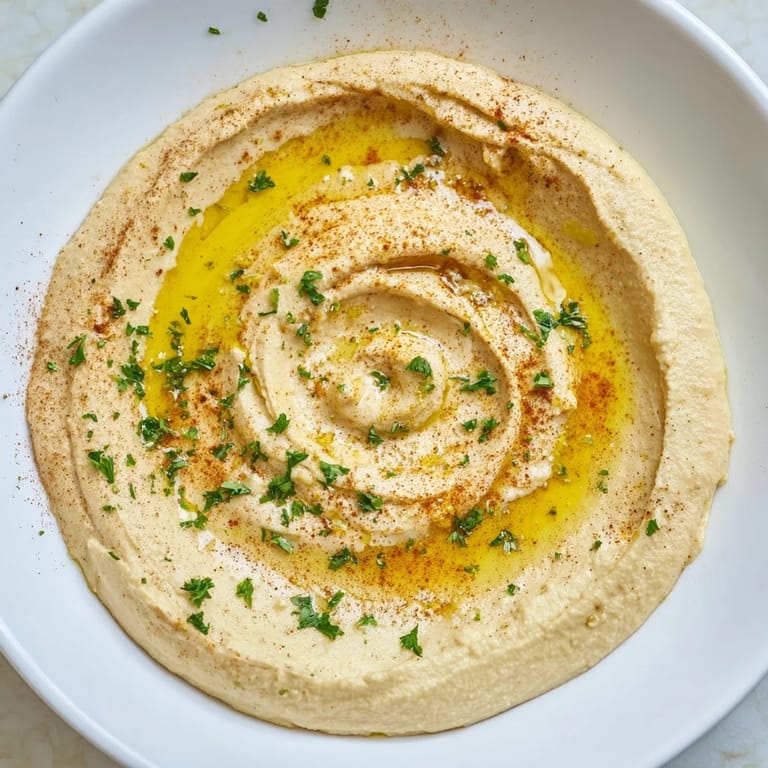
- Scoop the hummus into a shallow dish and use the back of a spoon to swirl it into soft waves or create a well in the center. This isn't just for looks, it holds the olive oil beautifully.
- Garnish generously:
- Drizzle olive oil over the top, dust with paprika or sumac, and scatter fresh parsley across the surface. Serve it immediately while it's still at room temperature and impossibly smooth.
 Save to Pinterest
 There's a moment, right after you drizzle the olive oil and step back to admire the swirl, when you realize this simple bowl of blended chickpeas has become something worth gathering around. I've served this hummus at birthday parties, quiet weeknight dinners, and lazy Sunday brunches, and every time, it disappears faster than I expect. It's proof that the best recipes don't need to be complicated, they just need to be made with care.
Serving Suggestions
I love serving this hummus as the anchor of a mezze spread, surrounded by warm pita triangles, crisp cucumber spears, and carrot sticks. Sometimes I'll add a handful of olives, a few stuffed grape leaves, and a small dish of pickled turnips for color and crunch. On busier nights, I'll slather it onto toast, top it with roasted cherry tomatoes and a sprinkle of za'atar, and call it dinner.
Storage and Make-Ahead Tips
Hummus keeps beautifully in the fridge for up to four days, tucked into an airtight container with a thin layer of olive oil on top to prevent drying. When you're ready to serve, let it come to room temperature for about twenty minutes and give it a quick stir to restore that creamy texture. I've found that making it a day ahead actually deepens the flavor, giving the garlic and cumin time to meld together.
Variations to Try
Once you've mastered the classic version, hummus becomes a canvas for whatever you're craving. I've blended in roasted red peppers for sweetness, fresh herbs like cilantro or dill for brightness, and even a spoonful of harissa for heat. Some nights I'll top it with spiced ground lamb or crispy chickpeas for texture, turning a simple dip into a full meal.
- Stir in a tablespoon of Greek yogurt for extra tang and creaminess.
- Add a pinch of cayenne or a drizzle of chili oil if you like a little heat on the finish.
- Garnish with toasted pine nuts or a handful of pomegranate seeds for a festive, colorful touch.
 Save to Pinterest
 Every time I make this hummus, I'm reminded that the best meals don't have to be elaborate or time-consuming. They just have to be made with intention, shared with people you care about, and finished with a generous pour of really good olive oil.
Recipe FAQs
- → What ingredients create the creamy texture?
The silkiness comes from blending cooked chickpeas with tahini, lemon juice, and olive oil until smooth.
- → How can I adjust the consistency?
Add cold water gradually during blending until the desired creaminess is reached.
- → What seasonings enhance the flavor?
Ground cumin, minced garlic, and fine sea salt bring depth, balanced by fresh lemon juice.
- → What garnishes are recommended?
Drizzling extra virgin olive oil and sprinkling paprika or sumac with chopped parsley add color and aroma.
- → How should the spread be served?
Serve in a shallow dish with pita bread or fresh vegetable sticks for dipping or alongside other mezze dishes.
- → Any tips for extra smoothness?
Peeling the chickpeas before blending can create an even smoother texture.