 Save to Pinterest
 There's something about the smell of tomatoes hitting hot oil that stops me mid-thought every time. I first made this soup on a rainy October afternoon when my neighbor brought over a basket of overripe tomatoes from her garden, and I suddenly realized I had everything else already waiting in my kitchen. It became the kind of dish I make now without thinking, my hands moving through the motions while the steam rises and fills the room with warmth.
I served this to my family last winter when everyone was tired and cold, and I watched my daughter actually pause between spoonfuls instead of just inhaling it. That moment stuck with me—not because it was fancy, but because something so simple made everyone feel a little more settled.
Ingredients
- Olive oil: Use a good quality oil, not the cheapest bottle. It's the foundation, and you'll taste it.
- Yellow onion: The sweetness matters here; dice it small so it softens quickly and disappears into the background.
- Garlic cloves: Fresh is non-negotiable. Minced fine, they cook in seconds and perfume everything.
- Canned whole peeled tomatoes: The juice in the can is liquid gold—don't drain it. Quality brands make a real difference in flavor.
- Tomato paste: A full tablespoon. It concentrates and deepens, doing the heavy lifting for complexity.
- Vegetable broth: Low-sodium lets you season it yourself. High-sodium versions can tip into saltiness fast.
- Heavy cream: The richness that makes this soup sing. Don't substitute; it won't be the same.
- Fresh mozzarella: Cut it into small pieces so it melts evenly and doesn't clump. Cold mozzarella straight from the package works best.
- Dried oregano: Adds an Italian backbone without being loud about it.
- Sugar: Just enough to balance the acidity of the tomatoes—you shouldn't taste sweetness, just roundness.
- Salt and black pepper: Taste as you go. You'll add more than you think you need.
- Fresh basil: Tear it by hand instead of cutting. It bruises less and stays bright green longer.
Tired of Takeout? 🥡
Get 10 meals you can make faster than delivery arrives. Seriously.
One email. No spam. Unsubscribe anytime.
Instructions
- Start with the softness:
- Heat olive oil in a large saucepan over medium heat and add your diced onion. Let it sit for about five minutes, stirring occasionally, until the edges turn golden and it becomes translucent. You'll know it's ready when the kitchen starts to smell sweet and savory at once.
- Wake up the garlic:
- Stir in your minced garlic and cook for exactly one minute—you want it fragrant, not brown. Any longer and it turns bitter and sharp.
- Deepen the base:
- Add the tomato paste and let it cook for another minute, stirring to coat the pan. This small step does something magic, concentrating the tomato flavor into something richer than you'd expect.
- Build the liquid:
- Pour in your canned tomatoes with all their juice, then use the spoon to break them apart as they hit the pan. Add the vegetable broth, oregano, sugar, salt, and pepper. The whole thing will look loose and watery, but trust this moment.
- Let it simmer:
- Bring everything to a boil, then turn the heat down and let it bubble gently uncovered for fifteen minutes. Stir now and then. The soup will darken slightly and become more concentrated as the liquid reduces.
- Make it smooth:
- Remove the pan from heat and use an immersion blender to puree until there are no visible chunks. If you prefer a chunky soup, blend only half of it and stir the pieces back in.
- Marry it all together:
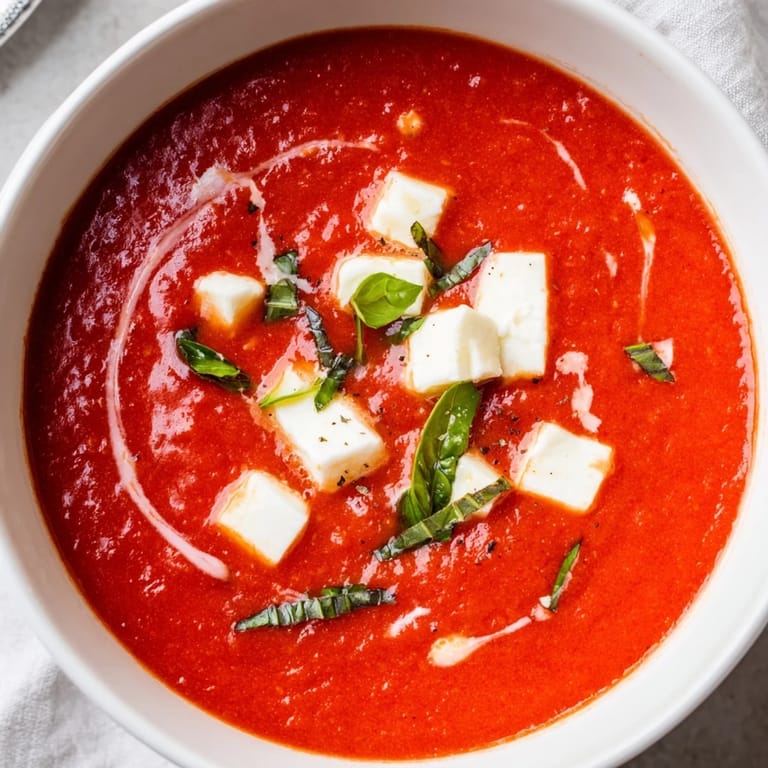
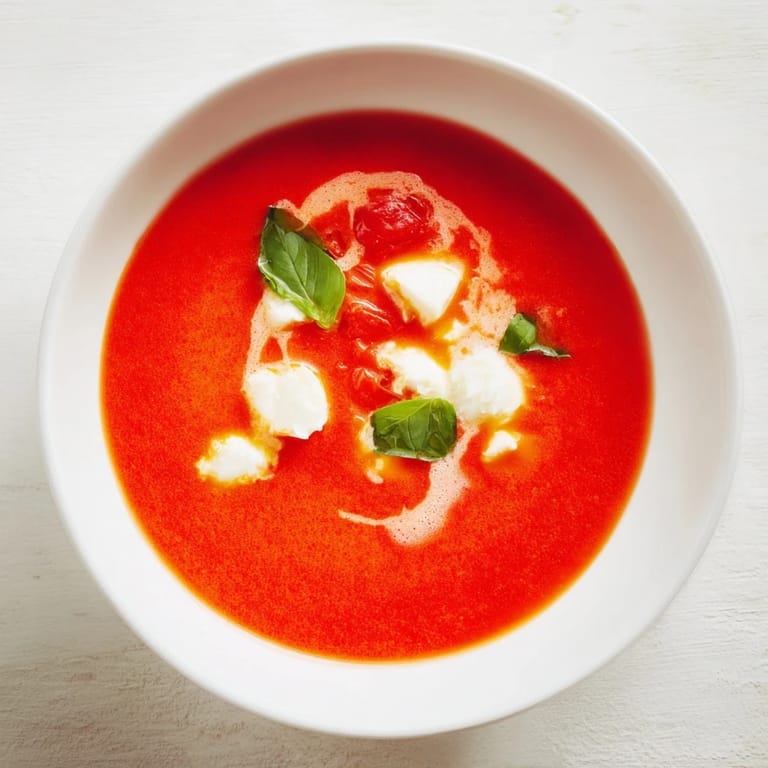
- Stir in the heavy cream, fresh mozzarella pieces, and torn basil leaves. Return to low heat and stir gently for three to four minutes, watching as the mozzarella softens and disappears into creamy pockets throughout. The heat should be gentle enough that the cream doesn't break or separate.
- Finish and taste:
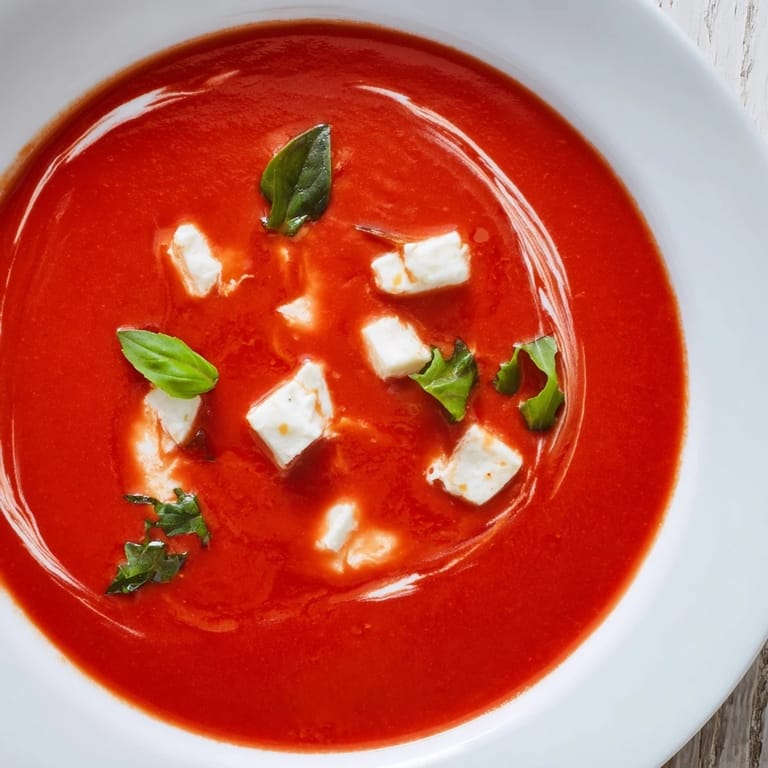
- Taste carefully. Add more salt, pepper, or even a pinch more sugar if the acidity feels sharp. Ladle into bowls, top with extra basil leaves, and serve while it's still steaming.
 Save to Pinterest
 My daughter once asked why this soup tastes different from tomato soup from a can, and I realized it wasn't the ingredients—it was the feeling of watching something come together, of being part of the process instead of just opening a lid. That question made me understand why I keep making it.
The Right Tools Make It Easy
An immersion blender is honestly the difference between thirty seconds of work and a careful transfer to a regular blender and back. If you don't have one, you can use a countertop blender, but do it in batches and let the soup cool slightly first to avoid splattering hot liquid. A wooden spoon is better than metal here—it doesn't scrape the pan or leave a slight metallic taste, and your hands feel steadier with something warm in them.
Customizing Your Bowl
Once you understand the base, you can play with it. Red pepper flakes stirred in just before serving give a gentle warmth that doesn't overpower the basil. A drizzle of really good olive oil on top catches light and adds richness that feels indulgent. Some people add a splash of balsamic vinegar for depth, or a tiny pinch of nutmeg if they're feeling adventurous. The beauty of this soup is that it's flexible enough to become what you need it to be.
Serving and Storage
This soup is best served immediately while the basil is still bright and the mozzarella is at its creamiest, though it reheats well the next day. If you need to store it, let it cool completely and keep it in an airtight container for up to three days. When reheating, do it gently over low heat on the stove rather than the microwave—high heat can cause the cream to separate and change the texture.
- Crusty bread or garlic toast is practically mandatory for soaking up every last bit.
- A simple green salad on the side keeps the meal from feeling too heavy.
- This soup freezes well if you leave out the cream and mozzarella, then stir them in after thawing and reheating.
 Save to Pinterest
 This is the kind of soup that feels like a hug you made yourself. It asks for so little time and effort, but gives back comfort in a way that stays with you long after the bowl is empty.