 Save to Pinterest
 There's something about the smell of wild mushrooms hitting hot butter that stops you mid-thought. I discovered this bisque one October when I found myself at the farmer's market with an armful of chanterelles and absolutely no plan. The vendor kept insisting they were meant for cream, not the pan I had waiting at home, and somehow that offhand comment stuck with me through three seasons of cooking before I finally listened. Now it's the soup I make when I want to feel like I've done something quietly sophisticated without the fuss.
I made this for my neighbor once when her daughter came home from university with that overwhelmed college look, and watching her eat two bowls in silence said everything. She asked for the recipe the next day, and I realized this wasn't just soup—it was the kind of dish that reminds people what good food actually tastes like.
Ingredients
- Mixed wild mushrooms (500 g): Chanterelles, cremini, and shiitake each bring their own voice to the pot—earthiness, nuttiness, and depth. Clean them gently with a damp cloth or soft brush rather than washing them, or they'll become waterlogged and sad.
- Unsalted butter (2 tbsp): This is your foundation, so use good butter if you have it. It'll carry the flavor of everything that comes next.
- Yellow onion (1 medium, finely chopped): The sweetness here is essential—don't rush this step or brown them too much, or you'll lose that gentle foundation.
- Garlic (2 cloves, minced): Mince it small so it disappears into the cream, adding whisper-thin flavor rather than chunks of garlic.
- Leek, white part only (1 small, sliced): Leeks are milder than onion and add a delicate sweetness that cream loves. Make sure to wash between the layers where soil hides.
- Vegetable or chicken stock (750 ml): Use homemade if you can, but good store-bought stock will carry you through. The quality of this liquid becomes the soup itself.
- Dry white wine (120 ml): A wine you'd drink—nothing labeled 'cooking wine.' Those 2–3 minutes of simmering burn off the harsh edges and leave the flavor.
- Heavy cream (240 ml): Cold cream stirred in at the end is the secret to that velvety finish without breaking the soup.
- Fresh thyme (1 tsp) or dried (½ tsp): Thyme and mushrooms understand each other. Strip the leaves from fresh stems if you have them.
- Black pepper (½ tsp): Freshly ground, always. Stale pepper tastes like paper.
- Sea salt (½ tsp, adjust to taste): Start conservative—you can always add more, and the stock is already seasoned.
- Ground nutmeg (a pinch): This is the whisper that makes people pause and wonder what makes this soup different. Never skip it, and never add too much.
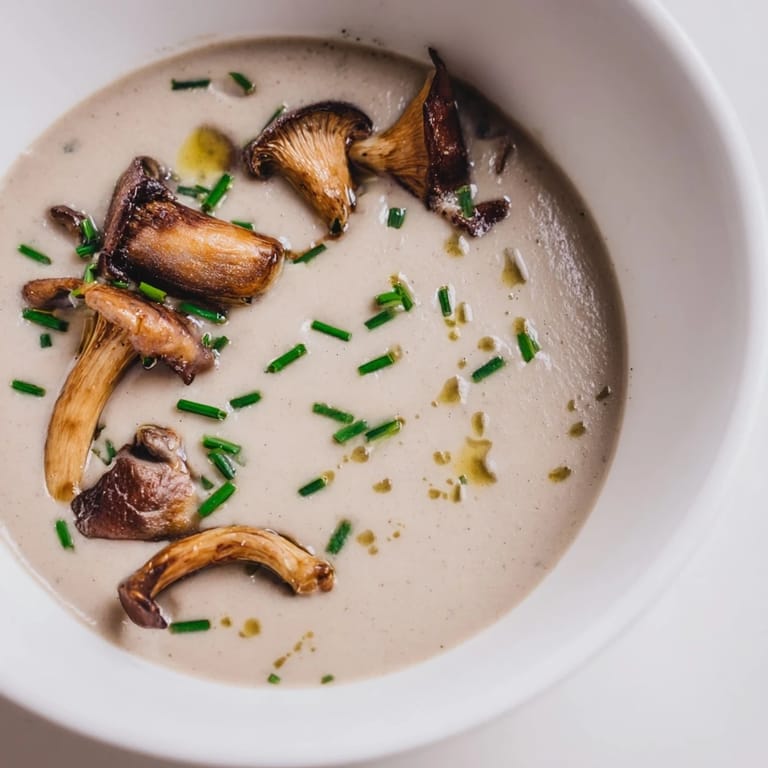
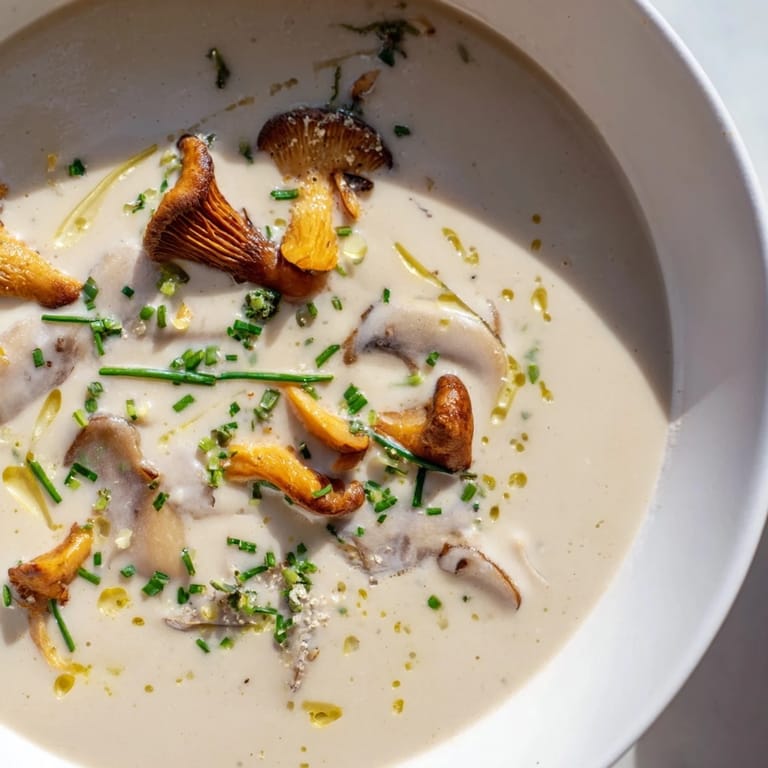
- Fresh chives or parsley and truffle oil (optional garnish): These finish the soup with a flourish, but they're not necessary if you don't have them.
Tired of Takeout? 🥡
Get 10 meals you can make faster than delivery arrives. Seriously.
One email. No spam. Unsubscribe anytime.
Instructions
- Warm Your Base:
- Melt butter in a large pot over medium heat and listen for that gentle sizzle. Add the onion, leek, and garlic, stirring occasionally until soft and fragrant without any browning—this takes about 5 minutes and is worth the patience.
- Coax the Mushrooms:
- Add your sliced mushrooms and thyme, stirring occasionally as they release their dark liquid and slowly turn golden at the edges, roughly 8–10 minutes. This is where the deep mushroom flavor comes from, so don't rush it.
- Deglaze with Wine:
- Pour in the white wine and let it simmer for 2–3 minutes, using a wooden spoon to scrape up all the caramelized bits stuck to the bottom. These are the flavor you're after.
- Build the Soup:
- Add stock, salt, pepper, and nutmeg, bring to a boil, then drop the heat and let it simmer uncovered for 20 minutes. The flavors will meld and deepen.
- Blend to Silk:
- Remove from heat and use an immersion blender to purée until the soup is smooth and creamy, working in sections if you need to. If using a regular blender, do this carefully in small batches to avoid splatters.
- Finish with Cream:
- Return the pot to low heat and stir in cold cream slowly, warming it through gently without letting it boil. Taste and adjust seasoning—you might want a touch more salt or a whisper more nutmeg.
- Serve and Garnish:
- Ladle into bowls and top with fresh herbs or a thin drizzle of truffle oil if you have it. The presentation doesn't have to be fancy, just warm and inviting.
 Save to Pinterest
 A friend once told me this soup tasted like autumn in a bowl, and I've held onto that description ever since. There's something about earthiness and cream together that feels like comfort and elegance at the same time, which is exactly why I keep making it.
Choosing Your Mushrooms
The type of mushrooms you use will shift the personality of this soup. Cremini and button mushrooms are reliable and earthy, shiitake brings umami depth, chanterelles add a delicate nuttiness, and oyster mushrooms contribute a subtle sweetness. I usually grab whatever looks fresh and mix them together because the variation creates a more complex flavor than any single type alone. If you can find dried porcini mushrooms, rehydrate them and add them to the mix—that concentrated flavor is like a secret you're sharing with the soup.
The Wine Question
The white wine serves a purpose beyond taste: it cuts through the richness of the cream and adds brightness. A dry Chardonnay, Sauvignon Blanc, or crisp Pinot Grigio works beautifully. I learned once to never use wine labeled 'cooking wine' because those bottles have added salt and vinegar that muddy the flavor. If you'd rather not use wine, substitute with more stock and a splash of fresh lemon juice at the end, though the soup will taste different—still good, just without that subtle tang.
Adjusting for Your Table
This recipe serves four generously, but life rarely fits neatly into portions. If you're cooking for two, halve everything and you'll have soup for several days. For a crowd, double the batch and simmer the stock a bit longer for deeper flavor. The soup also freezes beautifully if you skip the cream and add it fresh when you reheat, which I do whenever I've made more than I can eat.
- For a vegan version, swap butter for good olive oil and use unsweetened plant-based cream—oat cream has a sweetness that works particularly well here.
- If you want earthiness to sing louder, add a handful of rehydrated dried porcini mushrooms along with the fresh ones.
- A crisp Chardonnay or dry Riesling makes a lovely pairing if you want to pour a glass while you cook.
 Save to Pinterest
 This bisque has become my go-to when I want to cook something that feels special without the stress. It's the kind of soup that reminds me why I love being in the kitchen.
Recipe FAQs
- → Which mushrooms work best in this bisque?
A mix of wild mushrooms like chanterelle, cremini, and shiitake provide the best depth of flavor and texture for a rich bisque.
- → Can I substitute the cream for a lighter option?
Yes, plant-based creams or lighter dairy alternatives can be used for a lighter or vegan-friendly version without sacrificing creaminess.
- → How do I avoid browning the aromatics too much?
Sauté the onion, leek, and garlic over medium heat, stirring gently until softened and fragrant but not browned, usually about 5 minutes.
- → What wines pair well with this soup?
Crisp white wines like Chardonnay or dry Riesling complement the earthy mushroom and creamy flavors beautifully.
- → Can dried mushrooms be used instead of fresh?
Yes, rehydrated dried porcini or other dried mushrooms can boost flavor when added along with fresh mushrooms during cooking.