 Save to Pinterest
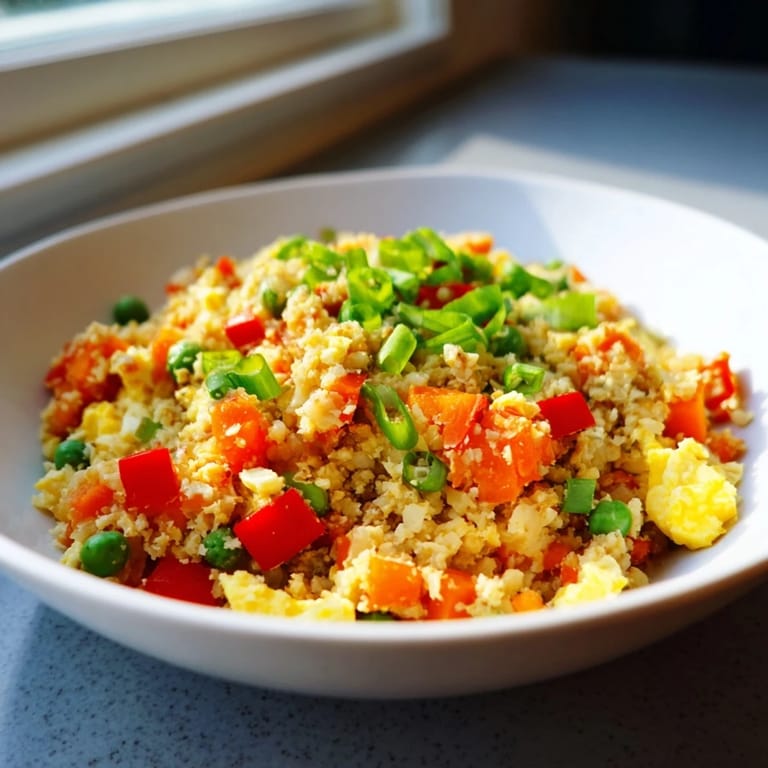
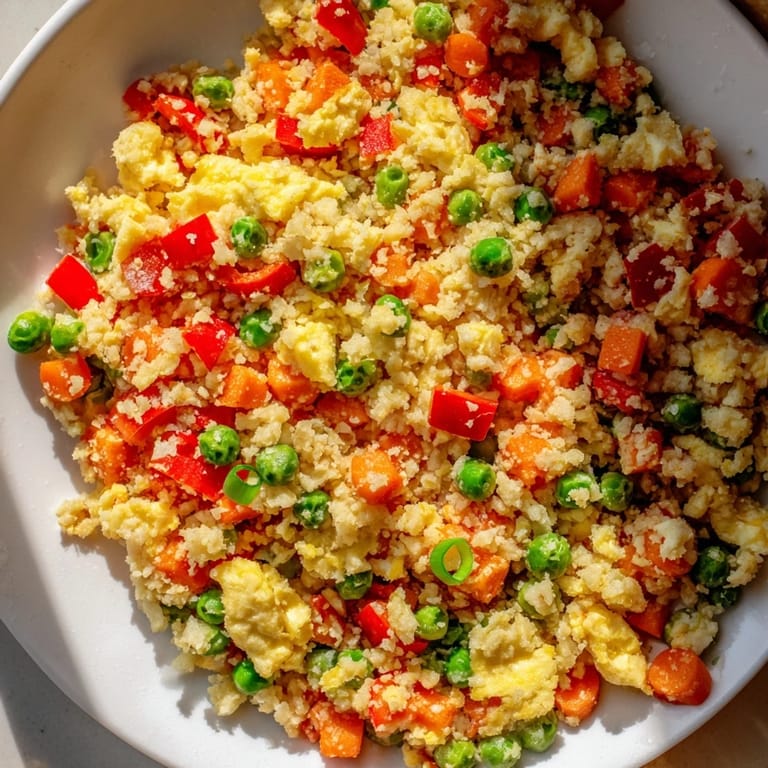
 My first cauliflower fried rice moment happened on a random Tuesday when I was standing in my kitchen staring at a head of cauliflower, thinking there had to be something more interesting to do with it than roast it again. I'd been curious about the whole grain-free fried rice thing, skeptical honestly, but within minutes of pulsing that cauliflower and getting it into a hot wok, something clicked. The kitchen filled with that perfect sesame and garlic smell, and I realized this wasn't just a health trend—it was genuinely delicious, faster than regular fried rice, and somehow felt lighter without tasting like I was missing anything.
Last summer I made this for a friend who'd just started eating lower-carb, and she was so convinced it wouldn't satisfy her that she made a side of noodles just in case. She never touched them. We ended up sitting on my patio with bowls of this stuff, talking for hours as the sun got lower and the sesame oil smell lingered in the warm air. That's when I knew this recipe wasn't just clever—it was the kind of thing people actually want to eat again.
Ingredients
- Cauliflower: One medium head (about 600 g), cut into florets—buy it fresh and relatively firm, and don't skip the patting dry step or you'll end up with mushy results instead of that nice granular texture.
- Carrot: One medium carrot, peeled and diced small—the uniform size matters because it helps everything cook at the same rate.
- Frozen peas: Half a cup—honestly, frozen is better than fresh here because they stay bright and crisp, not mealy.
- Red bell pepper: One small one, diced—the color is flavor here, and red peppers have a natural sweetness that balances the savory soy.
- Green onions: Two, thinly sliced—add half during cooking and save the rest for garnish to keep that fresh onion bite.
- Garlic and ginger: Two minced cloves and a one-inch piece grated—mince them finely so they disappear into the dish and perfume every bite.
- Eggs: Two large, lightly beaten—they scramble in seconds and add richness and protein, but you can skip them for vegan.
- Sesame oil: Two tablespoons total, divided between cooking and finishing—this is non-negotiable for the real flavor, though neutral oil works for cooking if you're stretching the budget.
- Soy sauce or tamari: Two tablespoons low-sodium—tamari if you're gluten-free, but taste as you go because low-sodium can be milder than expected.
- White or black pepper: A quarter teaspoon, plus salt to taste—white pepper is traditional but black works fine if that's what you have.
Tired of Takeout? 🥡
Get 10 meals you can make faster than delivery arrives. Seriously.
One email. No spam. Unsubscribe anytime.
Instructions
- Rice the cauliflower:
- Rinse your florets and pat them completely dry—moisture is your enemy here. Pulse them in a food processor in batches until they look like rice grains, not a paste, which usually takes about 10-15 pulses per batch.
- Scramble the eggs:
- Heat a tablespoon of oil in your skillet or wok over medium-high heat until it shimmers, then add the beaten eggs and let them sit for about 20 seconds before stirring gently until just set. They should look soft and creamy, not dried out, so pull them off heat when they still look slightly underdone.
- Bloom the aromatics:
- Add your remaining oil to the hot pan, then immediately add the garlic and ginger and stir constantly for about 30 seconds—you want to smell that fragrance bloom without anything burning. If you're cooking at high heat, things happen fast.
- Cook the colorful vegetables:
- Toss in your diced carrots, bell pepper, and peas, and let them cook for 2-3 minutes while you keep stirring—they should still have a slight crunch, not be soft. This step is quick, which is why you need a hot pan.
- Build the texture:
- Add your riced cauliflower and stir constantly for 4-5 minutes, breaking up any clumps that form—the heat will cook the cauliflower and help it absorb the pan's flavor. It should smell toasty, almost nutty, when it's ready.
- Season and finish:
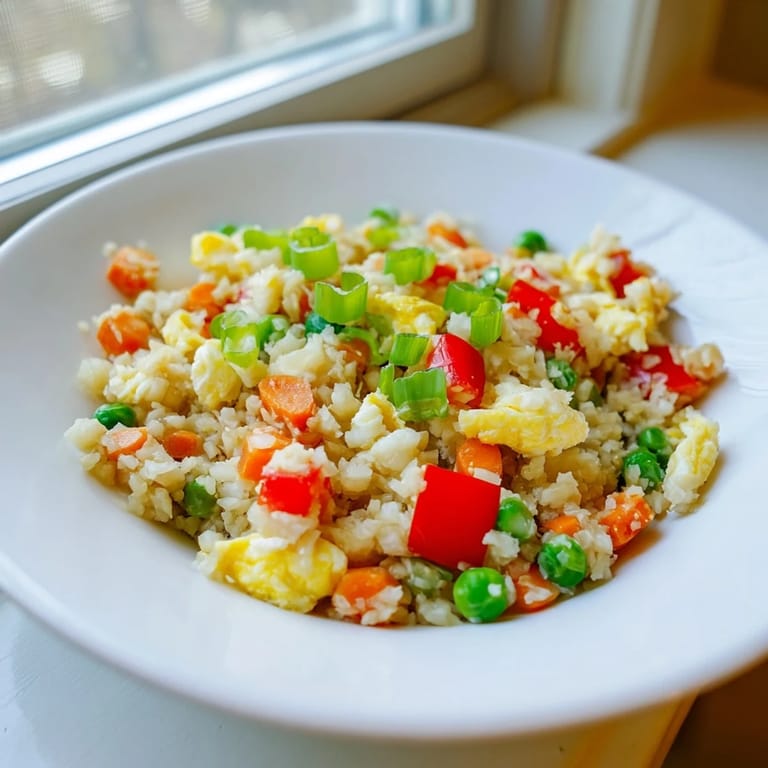
- Stir in the soy sauce, pepper, and salt, then return the eggs to the pan along with most of your green onions, tossing everything together for one more minute so the flavors marry. Drizzle with toasted sesame oil if you're using it, and serve immediately while everything's hot.
 Save to Pinterest
 There's something almost meditative about watching that pan come together, the sizzle of the wok, the steam rising, and suddenly you've got a complete meal that looks like it took way more effort than it did. I've made this on nights when I was tired and didn't want to think, and somehow it always feels like I'm doing something good for myself.
Making It Your Own
The beauty of this recipe is how flexible it is without losing its soul. I've added mushrooms, broccoli, snap peas, corn—basically any vegetable that can handle a quick sauté works here. The base of garlic, ginger, and soy sauce is what makes it taste like fried rice, so keep that foundation and play around with everything else. One time I added a little sriracha and some cashews halfway through cooking, and it became something entirely different but still recognizable.
Protein Possibilities
The eggs give you protein and richness, but they're just the beginning. I've stirred in shredded rotisserie chicken, crispy tofu cubes, even leftover shrimp when I had it on hand. For a vegan version, crumbled pressed tofu scrambled in the pan works beautifully and takes on all those savory flavors. The nice part is that nothing requires extra cooking—you're just adding something that's already cooked or cooks quickly, so you stay in that 25-minute timeframe.
Serving and Storage
Serve this hot straight from the wok while everything's still steaming and the textures are at their best. A squeeze of fresh lime juice and some cilantro on top makes it feel restaurant-quality, though it's honestly perfect plain too. Leftovers keep for three days in an airtight container in the fridge, and you can reheat them gently in a hot pan with a splash of sesame oil to revive them.
- Make extra and bring it for lunch the next day—it tastes even better cold the second time around.
- If you're cooking for someone with dietary restrictions, this naturally handles vegetarian, vegan, gluten-free, and keto without any awkward substitutions.
- Keep the sauce ingredients on hand because once you understand this formula, you can apply it to any quick stir-fry you make.
 Save to Pinterest
 This recipe became my go-to when I wanted something that felt indulgent but made me feel energized instead of heavy. It's the kind of meal that proves you don't need grains or heavy sauces to feel satisfied at the table.
Recipe FAQs
- → Can I make this ahead of time?
Yes, you can prepare the cauliflower rice and chop vegetables up to 2 days in advance. Store them separately in airtight containers. Assemble and cook just before serving for best texture and flavor.
- → How do I achieve the right texture for riced cauliflower?
Use a food processor and pulse in short bursts until the florets resemble couscous or rice grains. Avoid over-processing, which creates a wet paste. If you don't have a processor, a box grater works well too.
- → What proteins pair well with this dish?
Scrambled tofu, cooked shrimp, diced chicken, or cashews all complement the vegetables beautifully. For a vegan version, tofu scramble replaces eggs perfectly.
- → Can I use fresh ginger instead of minced?
Absolutely. Use about 1 tablespoon of fresh ginger root, peeled and minced finely. It provides the same bright, warming flavor and aroma as pre-grated ginger.
- → What's the best way to keep this crispy?
Don't overcrowd the pan when cooking. Use high heat and stir frequently to encourage browning. Avoid adding too much liquid, and serve immediately after cooking for optimal crispness.
- → Is this suitable for meal prep?
Yes, it keeps well refrigerated for up to 4 days in an airtight container. Reheat gently in a skillet with a splash of sesame oil to restore crispness and flavor.