 Save to Pinterest
 My aunt's kitchen in Algiers always smelled like this soup simmering on the stove—a particular kind of warm that made you want to stay there all afternoon. She taught me that chorba isn't just about throwing ingredients in a pot; it's about building layers of flavor, the way spices bloom when they meet hot oil, and how lamb becomes so tender it nearly dissolves into the broth. I'd watch her brown the meat slowly, never rushing, and only then did the real magic begin. That patience, that ritual, is what turned a simple soup into something I still crave decades later.
The first time I made this for my partner, I nearly burned the tomato paste because I got distracted telling them about growing up with this soup. They took one sip and went quiet in that way that means you've done something right—and asked for seconds before they'd even finished the first bowl. That's when I realized this wasn't just nostalgia; it was genuinely delicious enough to stand on its own.
Ingredients
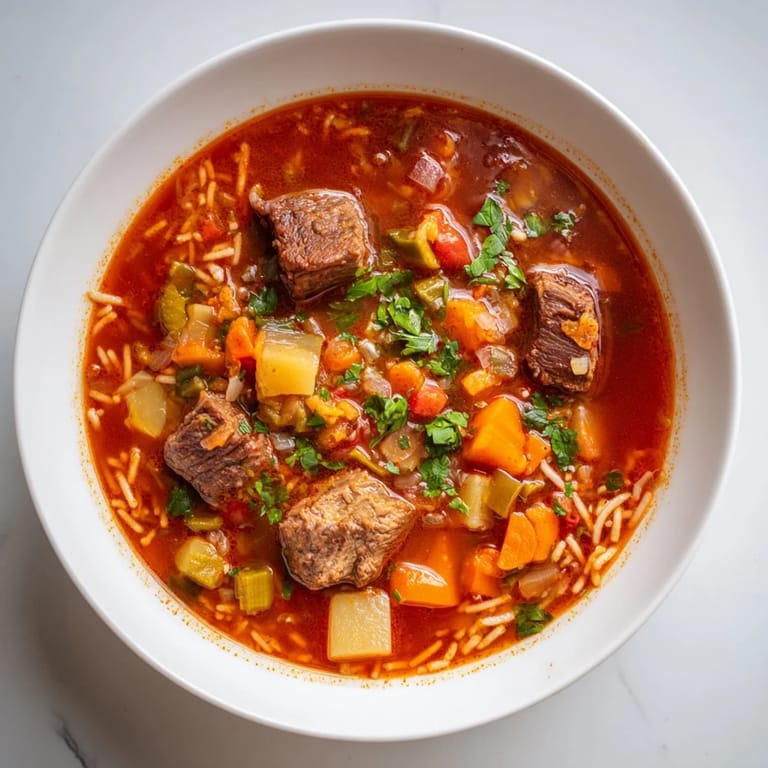
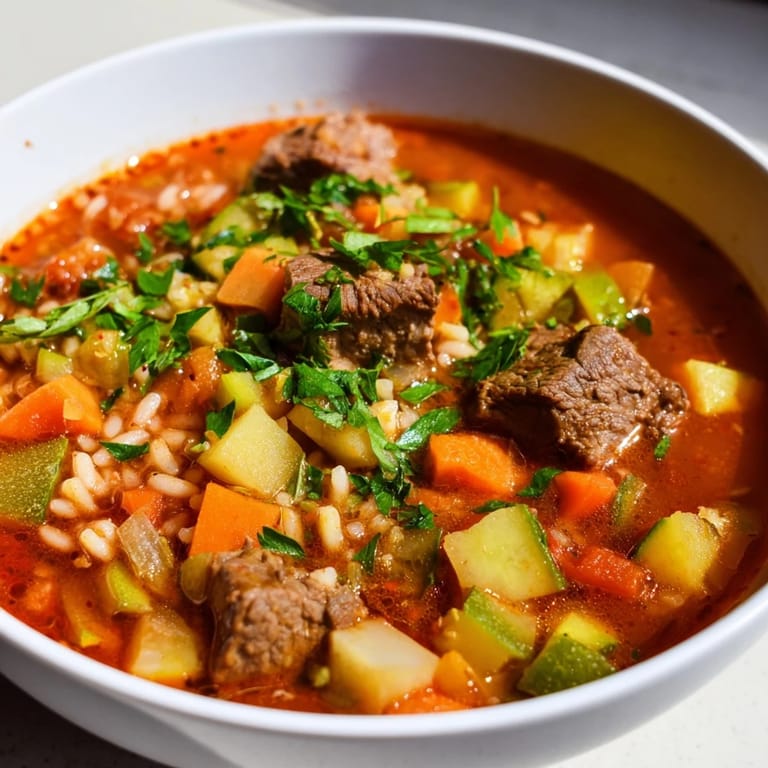
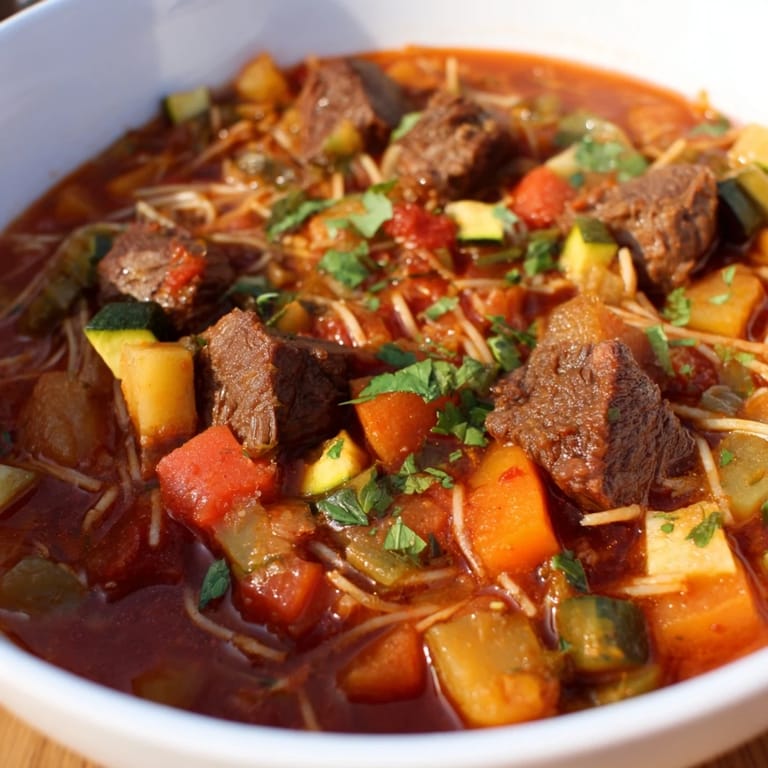
- Lamb shoulder: The collagen breaks down during the long simmer, creating that silky, unctuous broth that's the whole point—don't skip this cut.
- Onion: The foundation, and chopping it fine means it dissolves completely into the base, thickening the soup naturally.
- Carrots and celery: These three form the holy trinity that every good stock starts with, and they matter more than you'd think.
- Potato: Adds subtle body to the broth and breaks down into tender pieces that catch the spices beautifully.
- Zucchini: Added toward the end so it stays slightly al dente and doesn't turn to mush.
- Fresh and canned tomatoes: The fresh one goes in early to deepen the base; the canned adds volume and consistency—use good quality if you can.
- Garlic: Minced fine so it perfumes everything without overpowering; it gets timid if you add it too late.
- Tomato paste: This is your secret weapon—cook it in the oil and spices for two minutes so it caramelizes and loses any tinned bitterness.
- Fresh herbs: Coriander and parsley go in at the very end; they stay bright and alive this way, not cooked into submission.
- Cumin, coriander, paprika, cinnamon, black pepper, turmeric, chili flakes: This isn't a random collection—together they create warmth, earthiness, and a gentle heat that builds slowly as you eat.
- Olive oil: Use good oil here; it's doing real work browning the lamb and carrying the flavors forward.
- Water or beef stock: Stock makes it richer, but water lets you taste how good your technique is—choose what suits your mood.
- Vermicelli: Adds a slight earthiness and texture; some recipes skip it entirely, so follow your instinct.
Tired of Takeout? 🥡
Get 10 meals you can make faster than delivery arrives. Seriously.
One email. No spam. Unsubscribe anytime.
Instructions
- Brown the lamb slowly:
- Heat your oil until it shimmers, then add the lamb in a single layer—don't crowd the pan or it steams instead of browning. Let each piece get a golden crust before stirring. This takes about five minutes and it's the most important five minutes of the whole process.
- Build your base:
- Now add onions, garlic, carrots, celery, and potato. Stir occasionally and let them soften for about five minutes—you're not trying to brown them, just coax them into releasing their sweetness.
- Wake up the spices:
- Stir in the tomato paste and all your spices, then cook for exactly two minutes. Watch how the oil darkens and the whole pot smells suddenly alive—this is toasting, not burning.
- Add the tomatoes:
- The fresh diced tomato goes in now, along with the canned tomatoes and zucchini. Stir everything together so the spices are evenly distributed, and you can already start to see the sauce forming.
- Simmer low and slow:
- Pour in your water or stock and bring it to a boil, then immediately lower the heat to a gentle simmer. Cover the pot and let it bubble quietly for one hour, skimming foam from the surface as it rises—this takes five minutes of attention, not thirty.
- Add the pasta:
- After the hour is up, stir in your vermicelli and let it cook for ten to twelve minutes until it's tender but not soft. The pasta will continue absorbing liquid even after you turn off the heat, so stop it slightly before you think you should.
- Finish with herbs:
- Turn off the heat, stir in your chopped parsley and coriander, and taste. Adjust salt if needed—it should taste vibrant, warming, and complete.
- Serve with ceremony:
- Ladle into bowls, garnish with extra herbs, and offer lemon wedges. A squeeze of lemon at the table is not optional; it brightens everything.
 Save to Pinterest
 What surprised me most about this soup is how it changed my relationship with spice—not heat, but complexity. I'd always thought of warming spices as secondary, backdrop flavors, but here the cinnamon and coriander are the whole conversation. Years later, I still catch myself making this when someone needs comfort, because there's something about watching someone taste their first spoonful that feels like sharing something real.
The Poetry of Patience
Chorba teaches you something important about cooking if you're willing to listen: some things genuinely cannot be hurried. The lamb needs time to become tender, the flavors need time to marry and deepen, and you need time standing there with a wooden spoon, occasionally stirring, occasionally tasting, occasionally just breathing in the steam. This is not wasted time; this is the actual point. The finished soup is remarkable, but the hour you spend making it is where the real value lives.
Variations That Honor the Original
I've made this with chicken when I didn't have lamb, and it's genuinely good—lighter, faster, still deeply satisfying. I've added chickpeas for bulk and earthiness. I once threw in a cinnamon stick instead of ground cinnamon and got a more delicate spice profile. The core recipe is sturdy enough to bend slightly without breaking, but it's also specific enough that you know immediately when something is off. Respect the foundation and you can play within it.
Serving and Storage Wisdom
Chorba is one of those rare soups that tastes better the next day, after the flavors have had time to settle and integrate. It keeps beautifully in the fridge for three or four days, and it freezes well for weeks. Serve it hot with good crusty bread or flatbread—you'll want something to soak up the broth.
- The lemon wedges are not decoration; they're the final note that makes the whole dish sing.
- If you're serving this to guests, brown the lamb in advance and finish everything else just before they arrive so your kitchen smells incredible when they walk in.
- Make extra vermicelli and keep it on the side when storing leftovers, so the soup doesn't get starchy and heavy after a few days.
 Save to Pinterest
 This soup has a way of becoming part of your cooking vocabulary once you've made it a few times. It's not fussy, but it rewards attention—and it tastes like home the moment it touches your tongue.
Recipe FAQs
- → What type of meat is used in this dish?
Succulent lamb shoulder cubes are used, providing rich flavor and tenderness when simmered slowly.
- → Which spices create the signature flavor?
Ground cumin, coriander, paprika, cinnamon, turmeric, and optional chili flakes combine for a warm, aromatic profile.
- → Can I substitute the meat for something lighter?
Yes, chicken can be used for a lighter variation, maintaining the dish’s aromatic qualities.
- → What vegetables are essential in this preparation?
Carrots, celery, potatoes, zucchini, onions, and fresh tomatoes create a hearty and textured base.
- → How is the broth enriched without dairy?
A low-sodium beef stock or water simmers with spices and tomato base to develop rich, deep flavors naturally.
- → What is a good accompaniment to serve alongside?
Crusty bread or flatbread pairs well, helping to soak up the flavorful broth and enhance the meal.