 Save to Pinterest
 There's something about the way pesto transforms ordinary pasta that caught me off guard one Tuesday evening when I was standing in my kitchen with half a rotisserie chicken, some ricotta, and a jar of basil pesto staring me down. I'd bought those jumbo shells weeks earlier for a dinner party that never happened, and suddenly they seemed like the perfect vessel for combining everything I loved about Italian comfort food. My neighbor had just dropped off fresh basil from her garden, and the smell of it mixed with garlic made the whole decision feel inevitable.
I made this for my sister's book club night, and what struck me most wasn't the compliments but watching everyone slow down mid-conversation to really taste what they were eating. One person came back to the kitchen asking how I made it seem so effortless, and I realized then that the magic wasn't in complexity but in choosing ingredients that actually wanted to work together.
Ingredients
- Jumbo pasta shells: These wider shells hold the filling without splitting, and cooking them just to al dente means they'll have a slight bite even after baking in the sauce.
- Cooked shredded chicken: Rotisserie chicken saves time and adds flavor, though you can poach and shred your own if you prefer more control over the seasoning.
- Ricotta cheese: This is your filling's backbone, creamy and mild, so buy the freshest you can find because the difference is noticeable.
- Grated Parmesan cheese: The aged, nutty sharpness here balances the sweetness of the tomato sauce in ways softer cheeses simply can't.
- Shredded mozzarella cheese: Divided between filling and topping, this melts into binding, creamy pockets that hold everything together.
- Basil pesto: If you have time, make your own with fresh basil, good olive oil, garlic, and pine nuts, but there's no shame in quality store-bought when life gets busy.
- Large egg: This acts as the binder that keeps the filling cohesive without making it gluey or dense.
- Marinara sauce: Choose one with actual tomatoes and simple ingredients, nothing with hidden sugar that will overwhelm the pesto's delicate flavor.
- Fresh basil leaves for garnish: A handful scattered over the top just before serving reminds everyone that pesto is the star here.
Tired of Takeout? 🥡
Get 10 meals you can make faster than delivery arrives. Seriously.
One email. No spam. Unsubscribe anytime.
Instructions
- Set your stage:
- Preheat your oven to 375°F and grease a 9x13-inch baking dish with a light hand, just enough so nothing sticks. Having everything ready before you start cooking shells is one of those small decisions that keeps the whole process from feeling rushed.
- Cook the shells:
- Bring a large pot of salted water to a rolling boil and add the jumbo shells, stirring gently so they don't stick together. Cook until they're just tender enough to bite through but still have a slight firmness, usually about eight to ten minutes, then drain and spread them on a clean kitchen towel to cool slightly.
- Build the filling:
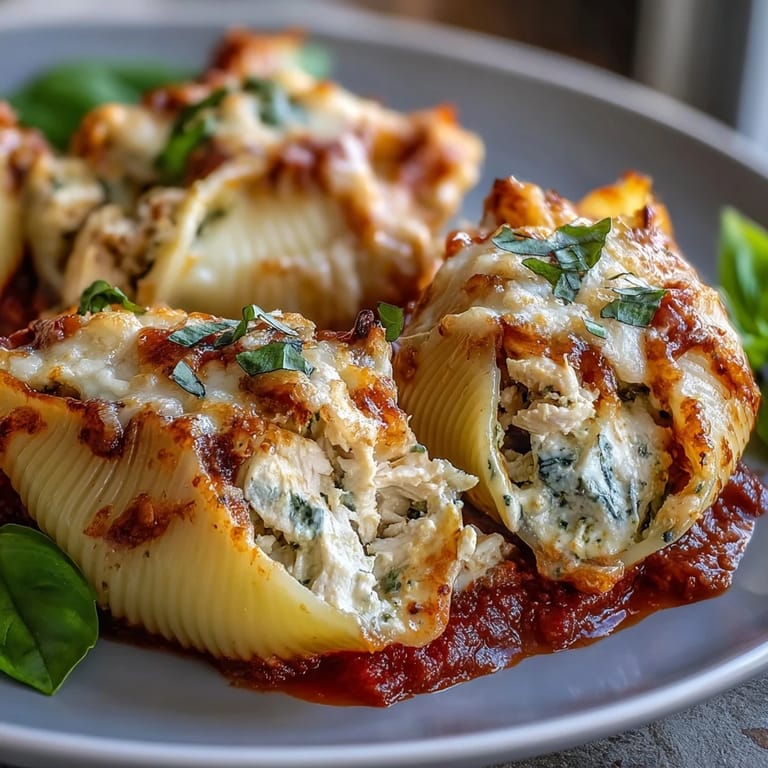
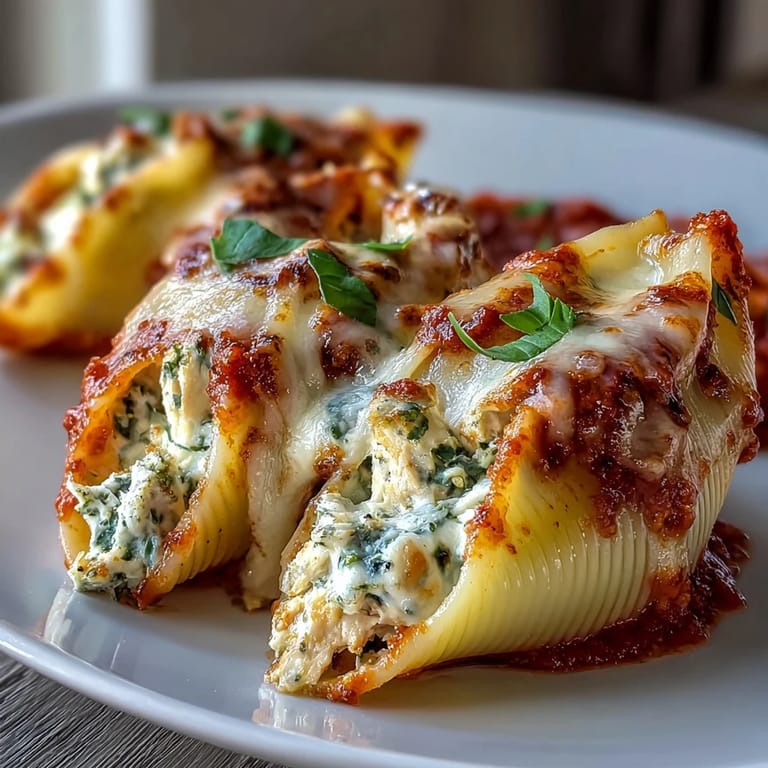
- In a large mixing bowl, combine the shredded chicken, ricotta, half a cup of Parmesan, half a cup of mozzarella, pesto, egg, salt, and pepper, mixing with a wooden spoon until everything is evenly distributed and the pesto streaks through the mixture. The color should be speckled green, and the texture should feel creamy but structured enough to hold its shape when spooned.
- Layer the base:
- Spread one cup of marinara sauce across the bottom of your prepared baking dish in an even layer, which prevents sticking and creates a flavorful bed for the shells to nestle into.
- Stuff and arrange:
- Using a spoon or small piping bag, generously fill each cooled shell with the ricotta mixture and place it open side up in the baking dish, nestling them close enough that they support each other. This is the moment where it starts looking like real food instead of ingredients.
- Top with sauce:
- Spoon the remaining marinara sauce evenly over all the stuffed shells, making sure to get sauce into the open tops and in the gaps between them.
- Add cheese and cover:
- Sprinkle the remaining mozzarella and Parmesan over the top, then cover the entire dish tightly with aluminum foil to trap steam and keep everything moist during the first phase of baking.
- Bake covered:
- Place the foil-covered dish in your preheated oven for twenty-five minutes, during which the shells will become tender and the filling will cook through completely. You'll smell the basil and cheese mingling with the tomato, and that's when you know it's working.
- Finish uncovered:
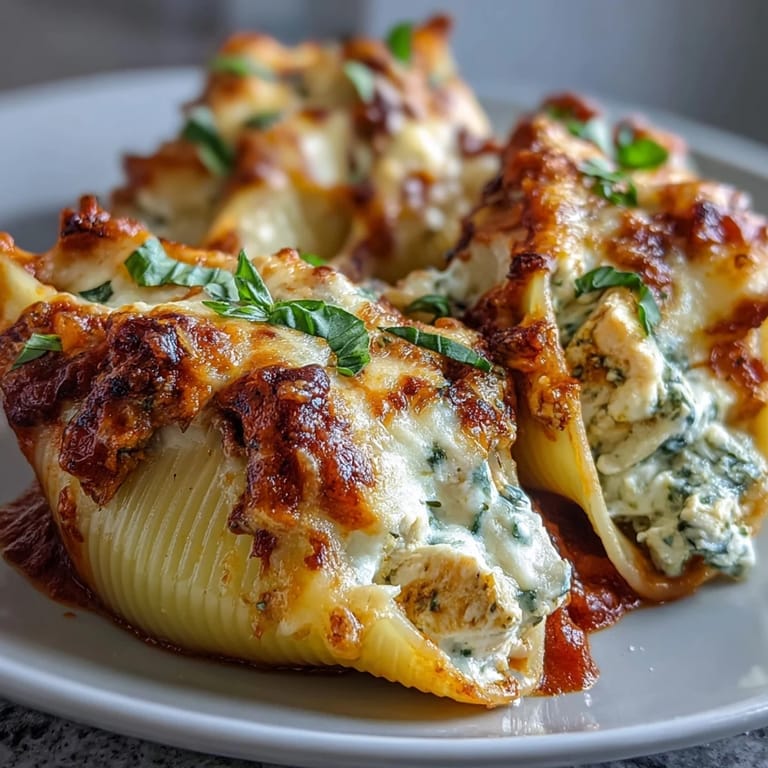
- Remove the foil and bake for another ten minutes until the cheese on top turns golden and begins to bubble at the edges, which means the whole dish has heated through and developed a slight crust.
- Rest and garnish:
- Let the dish sit for five minutes before serving so the sauce settles and the shells firm up enough to plate without falling apart, then scatter fresh basil leaves across the top for brightness and freshness.
 Save to Pinterest
 There was a moment during that book club dinner when someone asked for the recipe and my sister just smiled and said, "She wrote it down for you already," and I felt that small, quiet satisfaction that comes from feeding people something that makes them actually pay attention to their plate. Food has a way of doing that sometimes, of turning an ordinary weeknight into something worth remembering.
Making It Your Own
This recipe bends beautifully to what you have on hand or what you're craving that day. I've made it with spinach stirred into the ricotta mixture when I wanted something greener, and the earthiness of the spinach played wonderfully against the bright pesto. Some nights I add sun-dried tomatoes or roasted red peppers to the filling for complexity, and other times I keep it simple because sometimes simple is exactly what you need. The structure here is solid enough to support your experiments without falling apart.
Timing and Preparation Strategy
One of my favorite discoveries was that you can stuff all the shells hours ahead, cover them loosely, and refrigerate them until you're ready to bake. This means the active cooking time shrinks to just boiling pasta and mixing filling, then you can walk away and come back when you have time to finish. On busier weeks, I'll cook and stuff the shells in the afternoon, then slide the whole dish into the oven an hour before people arrive, which somehow makes the timing feel less pressured and the kitchen less chaotic.
Serving and Storage Wisdom
These shells are best served warm from the oven when the cheese is still melty and the sauce is steaming, but they reheat beautifully in a low oven covered with foil, which takes about fifteen minutes and doesn't dry anything out. They keep in the refrigerator for three to four days, and honestly, the flavors seem to deepen after a day, making leftovers often better than the first serving.
- Pair this with a simple green salad dressed in lemon vinaigrette to cut through the richness and brighten your palate between bites.
- A crisp white wine like Pinot Grigio or Sauvignon Blanc complements the pesto and basil better than heavier reds.
- Fresh bread for soaking up the sauce is non-negotiable, so don't skip it even if you think you will.
 Save to Pinterest
 This dish reminds me that the best meals aren't the ones that take hours or demand obscure ingredients, but the ones made with real attention to how flavors work together. It's the kind of recipe that fits into an actual life, one where you can feed people something meaningful without abandoning your own evening in the process.
Recipe FAQs
- → Can I make these stuffed shells ahead of time?
Yes, assemble the stuffed shells up to 24 hours in advance and refrigerate before baking. Add 5-10 minutes to the covered baking time if baking cold from the refrigerator.
- → What can I use instead of chicken in the filling?
For a vegetarian version, increase ricotta to 1 3/4 cups and add chopped spinach or sautéed mushrooms. You can also use ground Italian sausage, browned and drained, instead of shredded chicken.
- → How do I prevent the shells from tearing when stuffing?
Cook the shells just until al dente—slightly undercooked is better than overcooked. Let them cool for a few minutes before handling, and use a spoon or piping bag to gently fill each shell without stretching the pasta.
- → Can I freeze these pesto stuffed shells?
Absolutely. Assemble the dish, cover tightly with foil and plastic wrap, and freeze for up to 3 months. Thaw overnight in the refrigerator, then bake as directed, adding 10-15 minutes to the covered baking time.
- → What sides pair well with this dish?
A crisp green salad with vinaigrette balances the richness. Roasted vegetables like asparagus or broccoli also work well. Garlic bread and a glass of Pinot Grigio complete the Italian-American meal.
- → How do I know when the stuffed shells are done?
The dish is ready when the sauce is bubbling around the edges, the cheese on top is melted and lightly golden, and an internal thermometer reads 165°F when inserted into the filling.