 Save to Pinterest
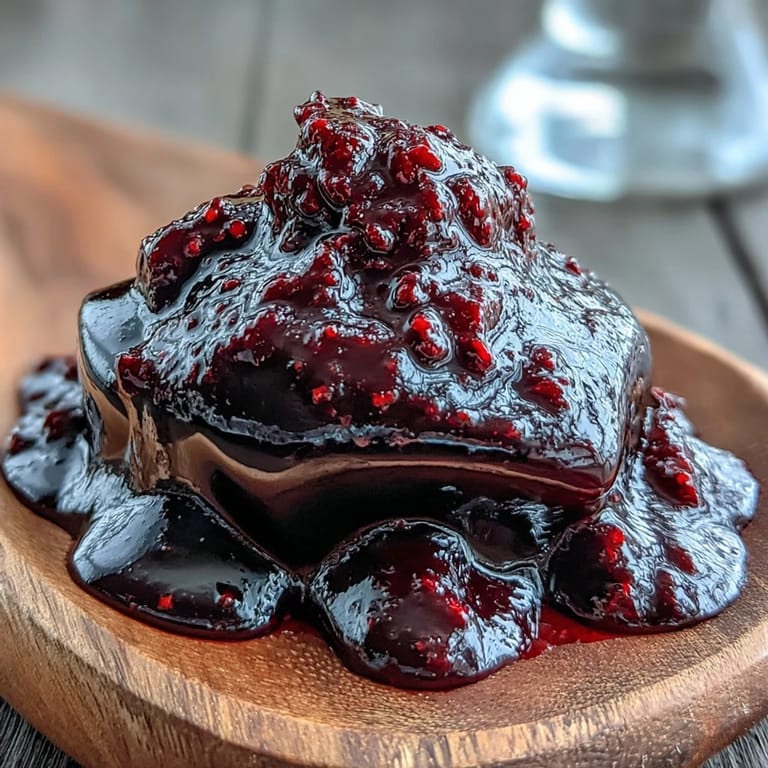
 There's a particular magic that happens when you're standing at the stove on a cool evening, watching dark purple black currants collapse into a glossy wine reduction. My first attempt at this sauce came about accidentally—I had a beautiful duck breast cooling on the counter and a handful of black currants from the farmers market that seemed to demand something more interesting than jam. The moment that wine hit the pan and the kitchen filled with that tart, winey aroma, I knew I'd stumbled onto something worth repeating.
I made this reduction for a dinner party where someone brought venison from a recent hunting trip, and I watched their face when they tasted how perfectly the bright currant tang cut through the rich game meat. That's when I understood that a good sauce isn't about showing off—it's about letting the main ingredient shine while adding just enough personality to make people pause and ask what you did differently. Since then, it's become my go-to move whenever I want to feel confident about what I'm serving.
Ingredients
- Fresh or frozen black currants (1 cup, 150 g): The star of the show—these berries provide a distinctive tart intensity that red wine alone could never achieve, and frozen ones work beautifully since you're cooking them down anyway.
- Dry red wine (1 cup, 240 ml): Choose something you'd actually drink, because the flavors concentrate as it reduces, and mediocre wine becomes obvious wine.
- Chicken or vegetable stock (1/2 cup, 120 ml): This rounds out the wine's acidity and adds body without making the sauce taste meaty or heavy.
- Balsamic vinegar (2 tbsp, 30 ml): A splash of this adds depth and sweetness that balances the currants' natural tartness beautifully.
- Shallot (1 small, finely chopped): Shallots are gentler and more refined than onions, melting into the sauce rather than announcing themselves.
- Fresh thyme sprig and bay leaf: These aromatics simmer quietly in the background, adding herbal complexity that makes people wonder what the secret ingredient is.
- Granulated sugar (2 tbsp, 25 g): Just enough to balance acidity and draw out the currants' natural flavor—resist the urge to add more unless you're specifically going for a dessert sauce.
- Freshly ground black pepper and fine sea salt: Season carefully at the end; the reduction concentrates flavors, so it's easy to over-salt early on.
- Cold unsalted butter (2 tbsp, 30 g): This final addition creates that silky, luxurious finish that makes the sauce look professional and taste indulgent.
Tired of Takeout? 🥡
Get 10 meals you can make faster than delivery arrives. Seriously.
One email. No spam. Unsubscribe anytime.
Instructions
- Start with the shallots:
- Melt your first tablespoon of butter over medium heat and let those chopped shallots turn soft and golden for a few minutes. You're not browning them—you want them gently surrendered to the heat, releasing their sweet oniony perfume.
- Build the sauce base:
- Add your black currants, wine, stock, vinegar, herbs, sugar, salt, and pepper all at once. Stir everything together and you'll notice how the currants start to break down even before the heat gets serious.
- Simmer into concentration:
- Bring it to a gentle boil, then back it down to low and let it bubble quietly for 15 to 20 minutes, stirring now and then. You're watching for the moment when the liquid is visibly thicker and has reduced to about half its original volume—the color deepens into something almost jewel-like.
- Strain for smoothness:
- Remove your herb sprigs, then push the sauce through a fine mesh strainer into a clean pan, pressing the cooked currants gently to extract all their liquid and flavor. This step transforms the sauce from rustic to refined.
- Mount with butter:
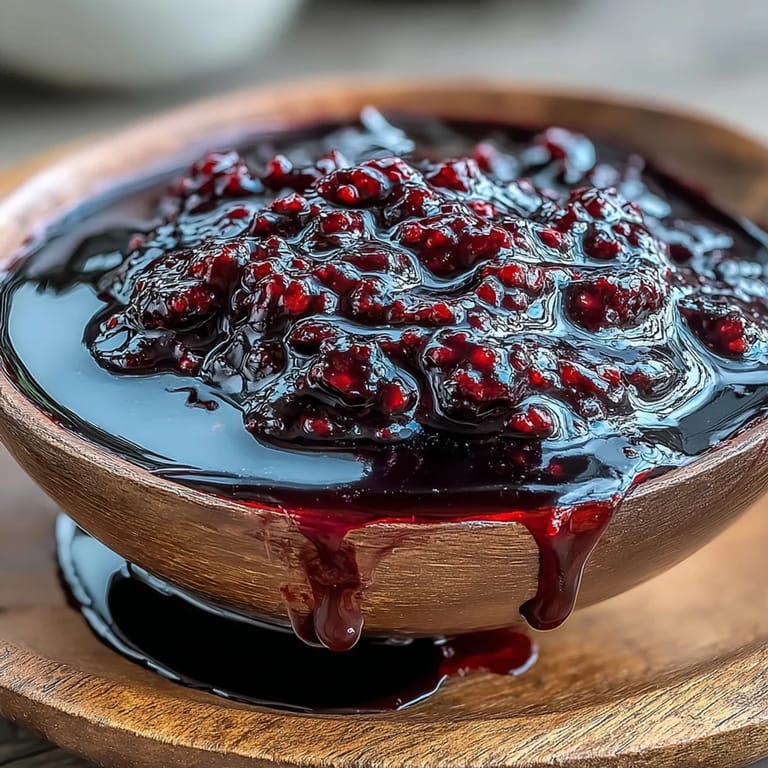
- Return the strained sauce to low heat and whisk in those cold butter cubes one at a time, letting each piece melt fully before adding the next. This isn't just about richness—the butter creates an emulsion that gives the sauce a glossy, silken finish that catches the light.
- Taste and serve:
- Adjust your seasoning one final time, because the flavors have concentrated and shifted slightly. Pour it warm over your meat, and watch what happens.
 Save to Pinterest
 One evening I made this sauce while my partner was chopping vegetables, and they kept pausing to breathe in the aroma drifting from the stove. By the time the duck was plated and the sauce drizzled across, they'd already tasted it three times on a spoon and were genuinely excited in a way that had nothing to do with hunger. That's when it clicked for me—a good sauce is the moment where cooking stops being just technique and becomes about creating an experience.
When to Make Ahead
This sauce actually improves slightly if you make it a day ahead, as the flavors settle and marry together overnight in the refrigerator. Just let it come to room temperature, then gently reheat it over low heat, whisking in a teaspoon of butter at the end to restore that glossy finish if it's lost any shine. It's the kind of sauce that lets you do the stressful cooking when you have time and space to think, leaving only a quick warm-up for the day you need it.
Variations to Explore
Once you understand the basic formula—fruit, wine, and aromatics reduced and finished with butter—you start seeing variations everywhere. A splash of crème de cassis (black currant liqueur) instead of some of the wine adds incredible depth, though it's optional and changes the character of the dish. I've also tried swapping the black currants for raspberries or even a combination of berries when I want something with different color and a brighter acidity, and each version teaches you something new about balance.
Pairing Possibilities
Duck and venison are the obvious homes for this sauce, but don't stop there—it's stunning on pork chops, especially if they're roasted until the edges are crispy and the center is still juicy. I've drizzled it over seared foie gras, spooned it alongside a beef tenderloin, and even used it as a small accent on a cheese board where it cut through rich aged cheddars beautifully. The key is pairing it with something rich enough that the tart berry notes feel like a conversation rather than a contradiction.
- Roasted duck breast or confit: the classic pairing where the sauce's tartness cuts through the fat with precision.
- Venison steaks or a venison roast: the wild game's intensity matches the sauce's complexity perfectly.
- Pork tenderloin or thick pork chops: the slight sweetness in the sauce balances the meat's savory richness in an elegant way.
 Save to Pinterest
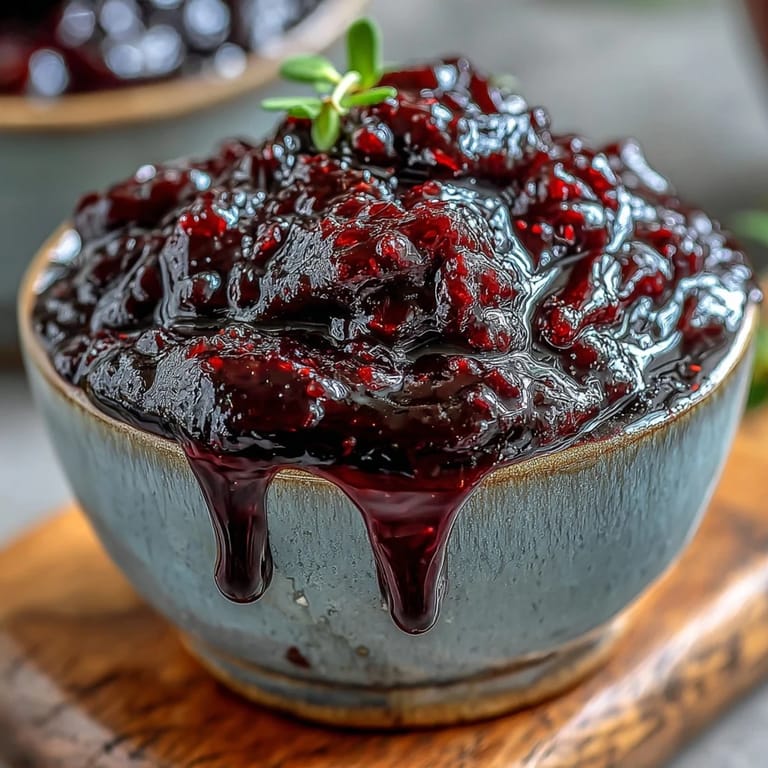
 This black currant reduction has become the sauce I reach for when I want to impress people quietly—not with flash or fussiness, but with genuine flavor and the care that comes from understanding what you're making. It's the kind of recipe that grows with you, becoming easier each time you make it until it feels like second nature.
Recipe FAQs
- → What dishes pair best with black currant reduction?
Black currant reduction complements rich meats like duck, pork, and venison beautifully. It also pairs wonderfully with charcuterie boards, roasted game birds, and even hearty mushroom dishes for a touch of sweetness.
- → Can I use frozen black currants?
Yes, frozen black currants work perfectly in this reduction. Thaw them slightly before adding to the pan, and they'll break down just as well as fresh ones during the simmering process.
- → How long does the sauce keep?
The sauce can be made up to a day ahead and stored in the refrigerator. Gently reheat over low heat before serving. For best results, add the butter finish just before serving.
- → What can I substitute for red wine?
You can substitute additional stock mixed with a splash of vinegar, or use port for a sweeter profile. For extra depth, replace part of the wine with crème de cassis.
- → Why strain the sauce?
Straining removes the skins, seeds, and cooked aromatics, creating a smooth, velvety texture. Pressing through the sieve extracts all the flavorful liquid while leaving solids behind.
- → Is this sauce gluten-free?
Yes, this black currant reduction is naturally gluten-free when made with gluten-free stock. Always verify your stock and other ingredients are certified gluten-free if needed.