 Save to Pinterest
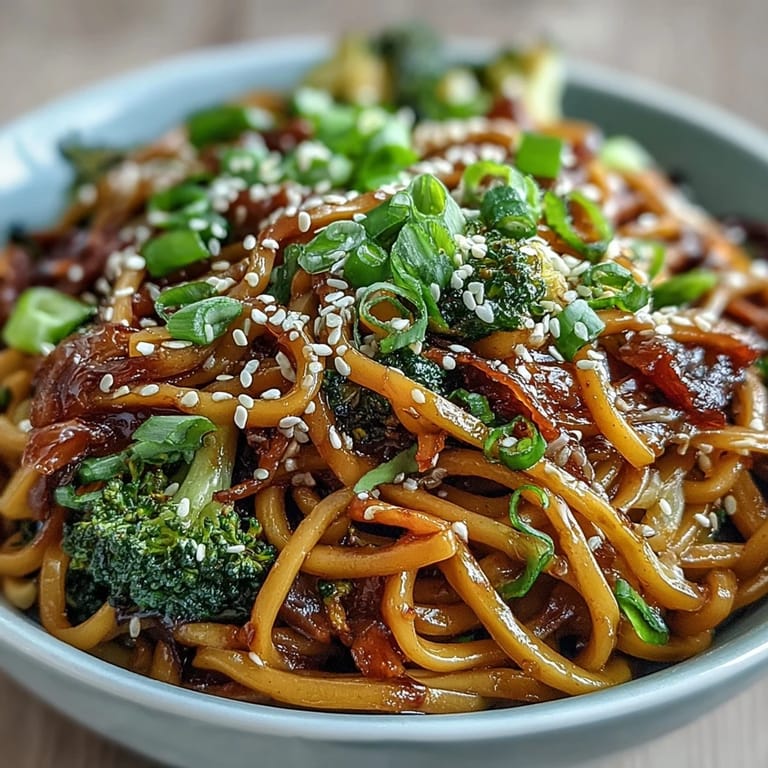
 There's something about the sizzle of noodles hitting a hot wok that instantly transports me back to a rainy Tuesday evening when my neighbor dropped off a container of homemade teriyaki noodles. One bite and I was hooked, but I wanted to understand the balance myself—that perfect tension between sweet, salty, and nutty that makes you reach for another forkful before you've even finished chewing. Now this bowl has become my go-to when I need something that feels like a hug but tastes restaurant-quality.
I made this for my partner one busy Thursday when neither of us had energy to decide what was for dinner, and watching them close their eyes after that first taste told me everything. The kitchen smelled like toasted sesame and garlic, and suddenly our small apartment felt like a place where something good was happening. That's when I knew this recipe belonged in regular rotation, not just occasional experimentation.
Ingredients
- Egg noodles, 300 g: These have just enough body to hold the sauce without turning mushy, unlike thinner varieties that can become gluey if you're not watching carefully.
- Broccoli florets, 2 cups: The florets catch pockets of sauce and provide a satisfying crunch that contrasts beautifully with the soft noodles.
- Carrots, 2 medium, julienned: Cutting them thin means they soften quickly while maintaining a slight firmness that adds textural interest.
- Green onions, 2, sliced: Save some raw pieces for garnish so you get both the cooked mellowness and a bright, oniony freshness in each bite.
- Soy sauce, 1/4 cup: The foundation of umami—this is where the sauce gets its savory backbone, so don't be tempted to use low-sodium unless you're comfortable adjusting upward.
- Mirin, 2 tbsp: This sweet rice wine adds depth that honey alone cannot achieve; if you don't have it, dry sherry works, though the flavor shifts slightly.
- Honey or maple syrup, 2 tbsp: The sweetness needs to balance the salt, and this natural approach feels more thoughtful than refined sugar.
- Rice vinegar, 1 tbsp: Just enough tang to keep the sauce from feeling one-dimensional and cloying.
- Brown sugar, 1 tbsp: This works alongside the honey to build layers of sweetness rather than one sharp note.
- Sesame oil, 2 tsp: A little goes a long way—this is about aroma and richness, not drowning everything in oil.
- Garlic, 2 cloves, minced: Mince it fine so it distributes evenly and cooks through without harsh raw edges.
- Fresh ginger, 1 tsp, grated: Grating releases the oils better than mincing, giving you more flavor per teaspoon.
- Cornstarch slurry, 1 tbsp cornstarch mixed with 2 tbsp water: This thickens the sauce so it clings instead of running, and the cold water prevents lumps when you stir it in.
- Toasted sesame seeds, 2 tbsp: Buy them already toasted if you can—raw seeds taste flat, and toasting at home requires attention so they don't burn.
Tired of Takeout? 🥡
Get 10 meals you can make faster than delivery arrives. Seriously.
One email. No spam. Unsubscribe anytime.
Instructions
- Get your noodles tender:
- Fill a large pot with salted water and bring it to a rolling boil, then add the egg noodles and cook exactly to package instructions—not a minute longer. As soon they're done, drain them into a strainer and rinse under cold running water until they're cool enough to touch, which stops the cooking process and prevents them from clumping together.
- Blanch the vegetables just right:
- While the water for noodles is heating, bring a separate pot of water to a boil and add your broccoli and carrots, letting them cook for just 2-3 minutes until they're bright colored but still have a firm bite when you press one with your finger. Drain them quickly and set them aside—you want them tender but not soft, because they'll spend time in the hot sauce later.
- Build your sauce slowly:
- Pour all your sauce ingredients except the cornstarch slurry into a small saucepan and set it over medium heat, letting it come to a gentle simmer where you see small bubbles forming around the edges. Listen for the subtle change in sound as it warms, and watch how the garlic and ginger perfume the whole mixture.
- Thicken with intention:
- Once the sauce is simmering, stir your cornstarch slurry one more time to make sure the cornstarch hasn't settled at the bottom, then pour it into the sauce while stirring constantly. Keep stirring for 1-2 minutes and you'll feel the sauce change texture under your spoon—it'll go from thin and pourable to glossy and clinging.
- Bring everything together in the wok:
- Heat your wok or large skillet over medium-high heat and add your cooked noodles, blanched vegetables, and sliced green onions, then pour the teriyaki sauce over everything. Toss continuously for 1-2 minutes until every noodle is coated and the heat brings the flavors into harmony.
- Finish and serve with care:
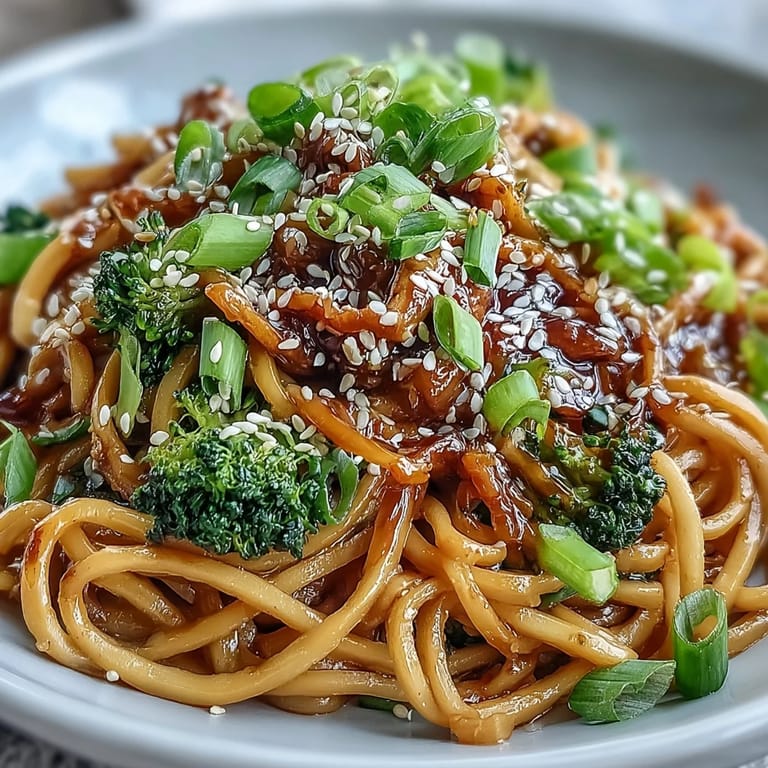
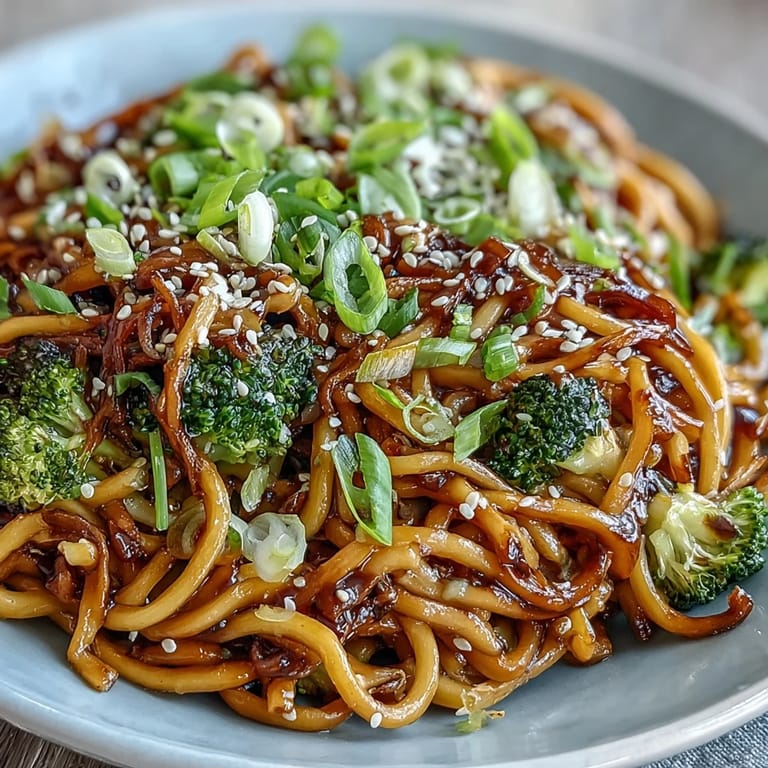
- Divide the noodle mixture among four bowls and shower each one with toasted sesame seeds and extra green onion pieces, which add both visual appeal and that fresh pop against the rich sauce. Serve immediately while the heat is still holding and the textures haven't had time to blur together.
 Save to Pinterest
 My small niece tried this for the first time and asked why regular noodles didn't taste like this, and I realized I'd been assuming this kind of cooking was complicated when really it's just about paying attention and not overthinking it. That simple question made me appreciate how unfussy this dish actually is once you understand the basic mechanics.
Making It Your Own
This bowl is genuinely flexible without becoming unrecognizable, which is partly why it's been rotating through my kitchen for years. I've added thin slices of grilled chicken breast on busy Thursdays, cubed silken tofu on vegetarian weeks, and even thin strips of sirloin when I'm feeling like making it stretch into something dinner-party worthy.
The Sauce Is Everything
I learned this the hard way by making a batch where I reduced the honey and the whole thing tasted flat and aggressively salty. The balance between sweet and savory in teriyaki is not subtle—each element needs to show up, and when even one is dialed back, the whole composition falls apart.
Preparation Wisdom
One afternoon I tried prepping everything the night before, thinking I'd save time, and the noodles absorbed moisture and stuck together like a brick by evening. Now I cook the noodles fresh or prepare all the components but dress the bowl only when I'm ready to eat, which takes all of two minutes once you have practice.
- Mince your garlic fresh rather than using jarred—it makes a noticeable difference in brightness and prevents the slightly metallic undertone that sits in preserved garlic.
- Taste the sauce before combining it with noodles so you can adjust sweetness or salt to your preference without having to rescue an entire pot.
- Keep the heat medium to medium-high when tossing everything in the wok so the noodles don't dry out or start to stick to the pan.
 Save to Pinterest
 This bowl has become my quiet victory in the kitchen, the thing I make when I want to feel capable and generous without spending hours at the stove. There's real satisfaction in knowing you can put together something this complete and this good in the time it takes to stream a single episode of something.
Recipe FAQs
- → Can I make this dish vegan?
Absolutely. Substitute egg noodles with wheat or rice noodles, and swap honey for maple syrup. The teriyaki sauce remains just as flavorful with these simple changes.
- → What other vegetables work well in this bowl?
Bell peppers, snap peas, shiitake mushrooms, or bok choy all complement the teriyaki flavors beautifully. Add firmer vegetables earlier so they cook through, and delicate ones near the end to maintain their crisp texture.
- → How do I store leftovers?
Keep in an airtight container in the refrigerator for up to 3 days. The noodles absorb sauce overnight, so you might want to drizzle with extra sesame oil when reheating. Warm gently in a skillet or microwave.
- → Can I add protein to make it more substantial?
Yes, tofu, tempeh, edamame, or grilled chicken all work wonderfully. Pan-fry tofu until golden before adding to the bowl, or stir-fry sliced chicken with the vegetables for a heartier version.
- → What can I use if I don't have mirin?
Dry sherry makes an excellent substitute, providing similar sweetness and depth. You can also use additional rice vinegar with a pinch of sugar, though mirin's unique flavor profile is ideal for authentic teriyaki taste.
- → Is the sauce very spicy?
Not at all. This version focuses on sweet and savory flavors without heat. If you enjoy some warmth, add sliced fresh chili, chili garlic sauce, or red pepper flakes to suit your taste preference.